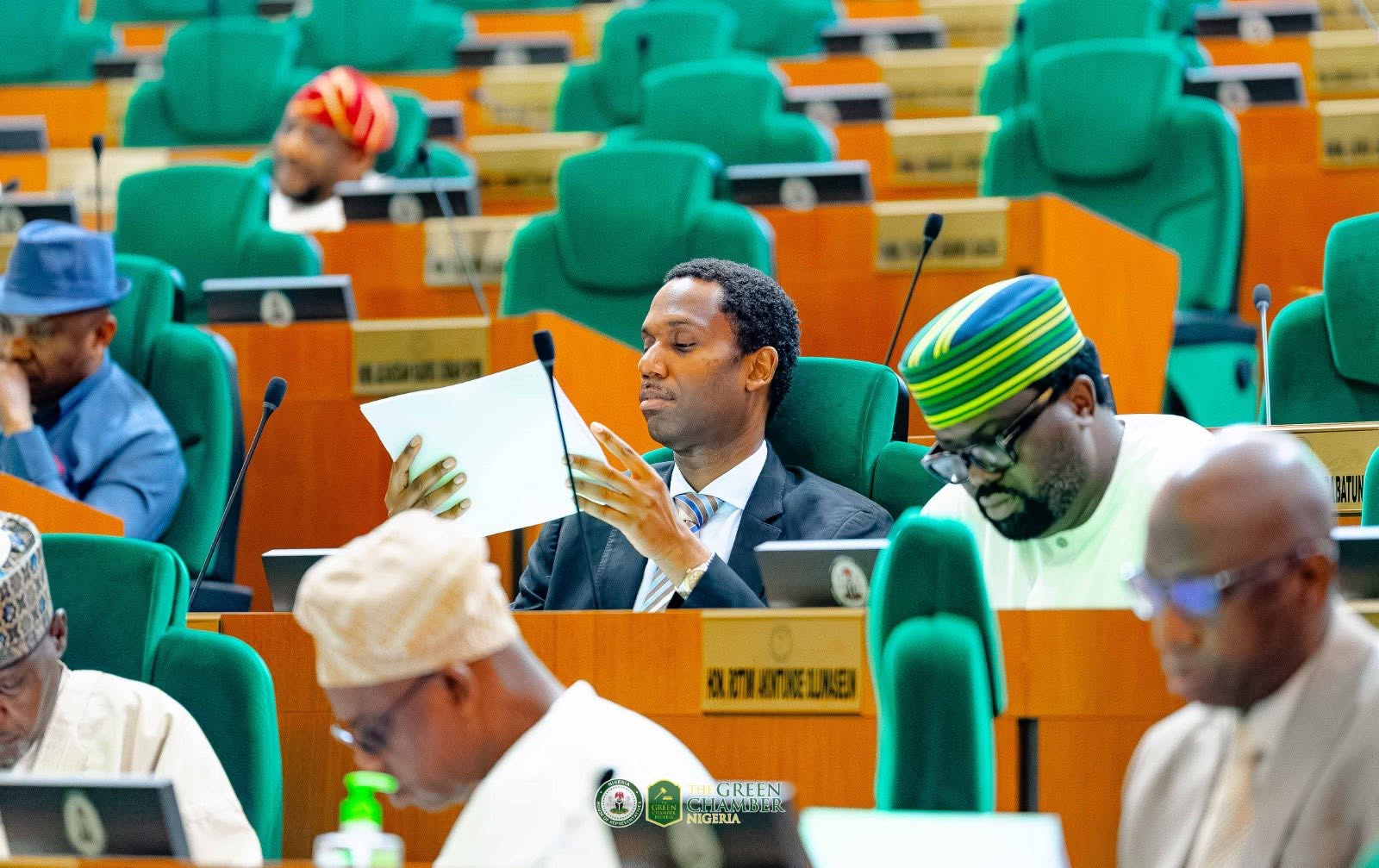
The House of Representatives on Wednesday urged President Bola Tinubu to think about using emergency powers in Delta State if ongoing political violence leads to a serious breakdown of public order.
In Edo State, police confirmed that supporters of the Nigeria Democratic Congress (NDC) were attacked during campaign activities linked to its presidential candidate, Peter Obi.
These incidents happened as the ruling All Progressives Congress (APC) denied the NDC’s claims of planned attacks on opposition candidates and their supporters.
Former Vice President Atiku Abubakar is asking for answers about a reported drop in oil revenue. Oyo State Governor Seyi Makinde's campaign also questioned a suggested cut in federal spending without reducing borrowing.
In Maiduguri, Borno State, Mr Tinubu repeated his promise to rescue kidnapped schoolchildren. At the same time, the Independent National Electoral Commission (INEC) announced it has set up a new artificial intelligence division to fight election misinformation.
The House of Representatives’ decision came after a motion of urgent public importance by Benedict Etanabene, who represents Ughelli North/Ughelli South/Udu Federal Constituency.
Lawmakers called for investigations into political violence in Delta, prosecution of those responsible, and support for victims and families of the deceased.
They urged President Tinubu to consider using his powers under Section 305 of the Constitution if the situation meets the legal requirements for emergency action. This resolution does not mean a state of emergency has been declared.
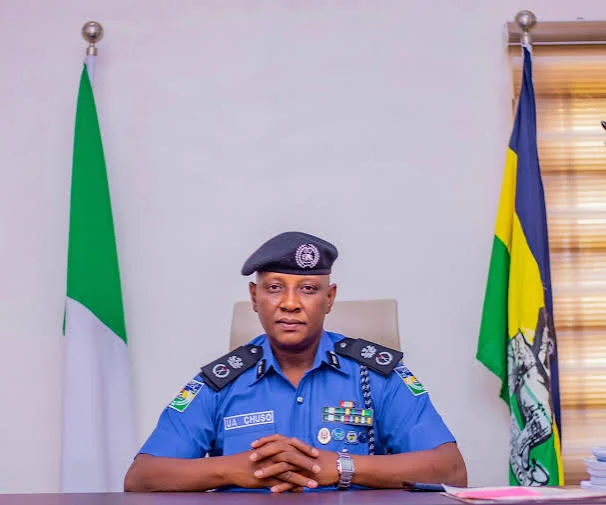
The House asked four of its committees, Police Affairs, National Security and Intelligence, Electoral Matters, and Political Parties Matters, to talk to security agencies and report back in two weeks.
They also wanted the Inspector-General of Police to gather Delta governorship candidates to discuss adherence to campaign laws.
This action came after an attack on a campaign event for former Deputy Senate President Ovie Omo-Agege of the NDC in Uduere community, Ughelli North Local Government Area.
As PREMIUM TIMES reported on Tuesday, early police investigations showed six people died, which led Inspector-General of Police Olatunji Disu to order a probe, including looking into how officers acted at the event.
The NDC named three of the deceased: former state lawmaker Moses Anaughe, human rights activist Efemena Umukoro, and party leader Nyoren Okoro.
A wounded survivor told Mr Obi and his running mate, Rabiu Kwankwaso, that he had received threats after joining an earlier NDC march and that his business was targeted.
Mr Omo-Agege and Ughelli North council chairman Jaro Egbo have given different accounts about who started the fight. Mr Egbo claimed supporters of the former senator instigated the violence. The police investigation continues.
In a statement about the Edo incident, police spokesperson Eno Ikoedem, an assistant superintendent of police, said Aimionkhale Micheal was injured along Airport Road in Benin City.
The spokesperson confirmed Mr Micheal is in the hospital and that the Commissioner of Police, Patrick Daaor, has ordered an investigation and more security in the area.
NDC National Publicity Secretary Osa Director said many supporters were hurt and campaign vehicles were damaged. The police reported only one injury and did not link the attackers to any political group.
At a press conference in Abuja on Wednesday, NDC National Chairman Cleopas Zuwoghe accused the APC of coordinating attacks to intimidate opposition candidates and their supporters. He noted incidents in seven states, including Delta, Kano, Edo, and Lagos, and asked for international attention.
The APC denied these claims in a statement from Abimbola Tooki, the special adviser on media and information strategy to its National Chairman, Nentawe Yilwatda.
Mr Tooki said the party opposes political intimidation, demands investigations, and dismissed the call for foreign intervention. The APC also claimed its supporters and campaign structures have faced attacks.
In Kano, the NDC presidential campaign council reported an attack on Maryam Golden, a social media figure linked to the Kwankwasiyya movement, on Tuesday. The political motive remains unverified.
Mr Obi defended Kwankwasiyya supporters’ practice of carrying sticks, saying it was not meant to harm others.
Wednesday’s news followed a security meeting on Tuesday where 12 political parties signed a peace agreement. The NDC did not attend, claiming security agencies failed to protect its members.
Atiku on Wednesday asked for an explanation about the drop in government oil revenue during the first half of 2026.
In a statement from Phrank Shaibu, director of strategic communication for the African Democratic Congress (ADC) Presidential Campaign Council, the former vice president pointed to Budget Office figures showing collections of ₦7.88 trillion from January to June, down from about ₦9.32 trillion a year earlier.
These figures support PUNCH’s analysis of the Budget Office’s second-quarter and half-year report, released on 7 November. PUNCH’s analysis appeared on Tuesday, a day before Atiku made his statement.
Revenue dropped by about 15.5 percent year-on-year, making up roughly 42 percent of the ₦18.65 trillion half-year target.
The ₦1.44 trillion decline and the ₦10.8 trillion shortfall against the budget target show different aspects of revenue performance. Neither number alone proves that public funds were stolen or misused.
Atiku acknowledged production issues, low oil sales, and deductions as factors in the report. He called for more transparency in production, sales, deductions, and remittances.
While PUNCH’s reporting supports these claims, the Budget Office’s fiscal tables have not been independently verified in this roundup.
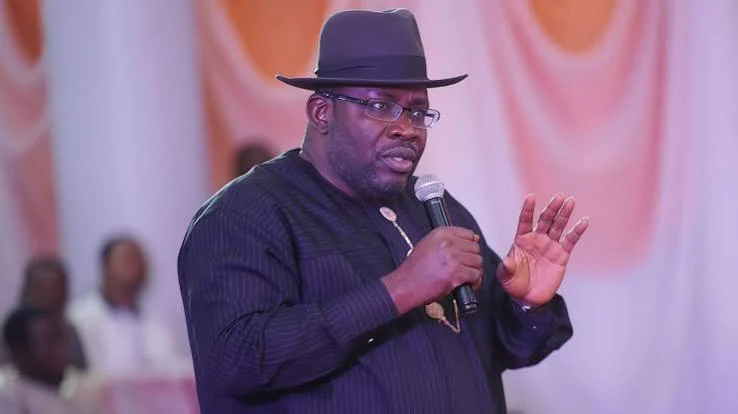
The Makinde-Daura Presidential Campaign Organisation questioned the proposed cut in federal spending without a decrease in borrowing or the fiscal deficit.
Mr Tinubu on Tuesday suggested cutting the 2026 budget from ₦68.323 trillion to ₦65.176 trillion, a reduction of ₦3.147 trillion, or about 4.6 percent.
Projected revenue is ₦33.720 trillion, while the reported deficit is ₦31.457 trillion. Planned borrowing is ₦29.218 trillion, made up of ₦18.428 trillion in domestic financing and ₦10.790 trillion in external financing.
If the deficit is calculated the same way, keeping it while cutting spending suggests a downward adjustment of projected revenue.
The campaign organisation, representing Mr Makinde with the Allied Peoples Movement (APM), also claimed project duplication and insufficient capital releases in a statement by its Director of Strategic Communications, Richard Ihediwa.
These claims need to be examined against appropriation schedules and implementation records.
In his earlier letter to the National Assembly, Mr Tinubu said the changes were due to existing obligations, including debt servicing, capital commitments, and spending by the Nigerian National Petroleum Company Limited (NNPCL) on behalf of the federation.
This explanation came before Wednesday’s criticism. There was no immediate response from the government and NNPCL to the latest fiscal claims.
Meanwhile, the Senate approved an earlier external borrowing request that Mr Tinubu had withdrawn, as well as his revised request for about $7.7 billion.
As PREMIUM TIMES reported on Tuesday, senators who spoke during the debate did not mention the earlier withdrawal. The approvals do not confirm that the funds have been accessed or create additional debts.
Former Secretary to the Government of the Federation Babachir Lawal criticized Mr Abubakar’s fuel subsidy proposal, highlighting issues from the previous subsidy system.
At his Kogi rally on Tuesday, Atiku suggested a targeted subsidy on domestically refined fuel but did not specify the rate or expected cost.
Mr Lawal left the ADC in June after Mr Abubakar won the party’s presidential primary. PREMIUM TIMES’ previous attempts to get a response from Mr Abubakar’s spokesperson, Paul Ibe, were unsuccessful.
Mr Tinubu promised to step up efforts to free kidnapped schoolchildren in Askira Uba Local Government Area during an APC presidential campaign rally in Maiduguri.
According to his media aide, Bayo Onanuga, the president told security agencies to increase operations against insurgents and urged them to surrender.
TheCable reported that 42 pupils were taken from a school in Mussa on 15 May and another 36 students from Government Day Secondary School, Lassa, on 29 June.
A PUNCH report on Saturday said all 78 children are still in captivity. Wednesday’s presidential assurance did not provide a timeline for their rescue or an updated number of those still held.
Speaking at a Rainbow Coalition town hall meeting in Gokana Local Government Area, Rivers State, Minister of the Federal Capital Territory Nyesom Wike asked Mr Tinubu and APC presidential campaign director-general Abdulaziz Yari to expand his campaign role to Imo and Kwara states.
He mentioned political challenges in both states and said mobilization for Mr Tinubu was complete in Rivers and the FCT.
There was no approval for the request reported by Wednesday evening.
INEC has set up an artificial intelligence division within its Information and Communication Technology Department to tackle fake audio, altered videos, and other types of election misinformation.
INEC Chairman Joash Amupitan shared this news through his Chief Press Secretary, Adedayo Oketola, at the Nigeria Election Risks and Readiness Summit organized by the Centre for Journalism Innovation and Development in Abuja.
The new division is different from INEC’s planned use of artificial intelligence and smart document processing for managing polling-unit results, which Mr Abubakar has called for an independent audit of.
The commission plans to hire about 1.41 million ad hoc staff, with around 700,000 expected to be used in each election phase. It extended the registration period for potential staff from two weeks to two and a half weeks.
INEC also said it is acquiring about 57,000 new Bimodal Voter Accreditation System (BVAS) devices and has decreased the number of voters assigned to each device from 1,250 to 850, which is a 32 percent reduction aimed at improving accreditation.
At a meeting with resident electoral commissioners on Wednesday, Mr Amupitan mentioned he faces threats daily.
His comments come ahead of the nationwide mock accreditation exercise set for Saturday, 28 November, which PREMIUM TIMES detailed in Tuesday’s Politics Watch.
The presidential and National Assembly elections are planned for 16 January 2027, while the governorship and State House of Assembly elections are set for 6 February.
While Saturday’s exercise will test electoral technology, the effectiveness of the misinformation division and the safety of electoral personnel will need separate evaluation.
Drop your comment
No comments yet — be the first to drop the gist 👇