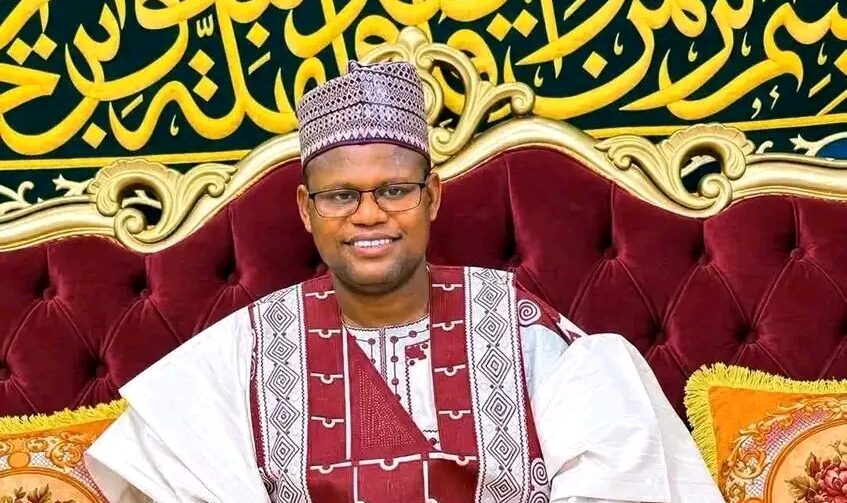
Sheikh Yahaya Masussuka was supposed to start a 20-minute speech at Muhammadu Dikko Stadium in Katsina at 11.50 a.m. on Saturday, 31 October.
His name was still on the printed programme. So was the Peace Ambassador title he was meant to receive.
Five days earlier, gunmen had killed him outside his home in Dutsin-Ma.
Despite this, many people he invited still showed up. Among them were Christian leaders, Muslim scholars who disagreed with some of his teachings, former Sports Minister Solomon Dalung, and followers who traveled to Katsina for his burial.
Whenever Masussuka’s name was mentioned, sections of the crowd cheered and praised him. Participants stayed under the sun as the programme went on.
They had come to pray for peace, security, and violence-free elections in Nigeria. The man who brought them together was not there to speak to them.
The gathering included religious figures who had different views on Masussuka’s teachings. Their calls for tolerance and justice came five days after his death. Police have not publicly identified the attackers or shared any investigative updates. The event also showed the organisers' worries about peaceful coexistence ahead of Nigeria’s 2027 elections.
From the burial ground to the stadium
On Friday, 30 October, large crowds gathered around Muhammadu Dikko Central Mosque, near the Emir of Katsina’s palace, for Mr Masussuka’s funeral.
When PREMIUM TIMES visited, mourners filled the area outside the mosque and spilled into the roads around the palace.
The funeral happened four days after Masussuka was killed in Dutsin-Ma. The Federal Teaching Hospital, Katsina, had confirmed to PREMIUM TIMES on 29 October that his remains had been embalmed, but no autopsy had been done yet.
As his remains were taken to Abatuwa Cemetery for burial, mourners chanted in Hausa, saying, “Masussuka is not dead, his virtues are still alive; shame on his enemies.”
Cries of “Allahu Akbar” (God is greatest) filled the procession. Some mourners cried openly, while others reached toward the ambulance carrying his remains.
Islamic scholars, traditional leaders, and followers from outside Katsina joined the mourning. Some later moved to Muhammadu Dikko Stadium, where prayers and religious activities continued through Friday night.
The official Unity Assembly for Peace followed on Saturday. The programme, set before the assassination, listed representatives from various Muslim groups and Christian denominations. Its goal was to promote national unity, peace, security, and violence-free elections.
For Apostle Golu Jan Silas, a Christian cleric from Barkin Ladi in Plateau State, the funeral was a first for him.
“Yesterday, I entered a mosque for the first time,” he told those present.
Mr Silas recalled a visit by Masussuka to his mostly Christian community in Plateau State in 2025, where the Islamic cleric preached peace and shared gifts.
“They killed him, but his messages are alive,” the apostle said.
Gunfire outside his home
On Monday, 26 October, Masussuka and his associate, Suleiman Abubakar, went to pay condolences after a family death. Later that evening, Mr Abubakar returned to take the cleric to his studio.
Mr Abubakar said he got there after 8.30 p.m. and unlocked the car for Mr Masussuka.
“I pressed the button to unlock the car so he could open the door and enter. Suddenly, I heard gunfire.”
He hid in an unfinished building as the shooting continued. Mr Masussuka and his companion, Adamu Abubakar, were shot. They were taken to Dutsin-Ma General Hospital, where they were declared dead.
The Katsina State Police Command announced an investigation, saying two armed men on a motorcycle carried out the shooting. President Bola Tinubu and Governor Dikko Radda condemned the killing and called for justice.
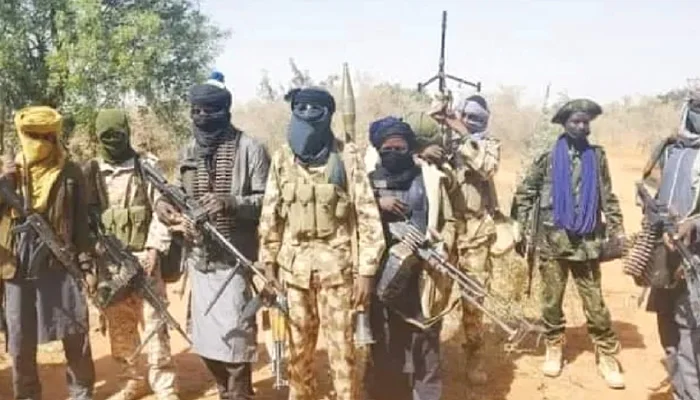
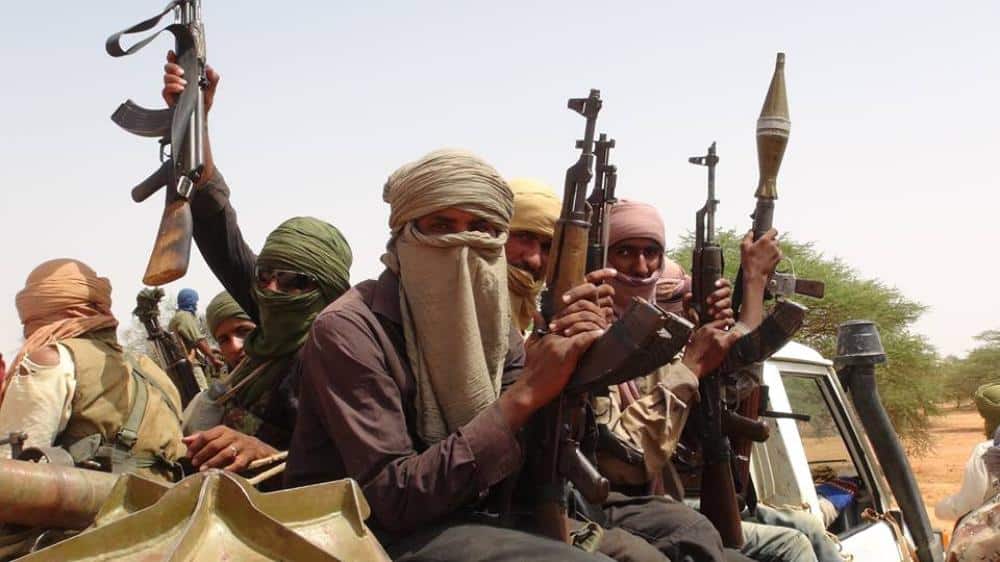
Ansaru claimed responsibility in a video obtained by PREMIUM TIMES and repeated the claim in another video reported on 3 November. Neither video confirms the attackers' identity, and police have not publicly verified the group's involvement.
Mr Masussuka had reported threats. Mr Abubakar said they informed the authorities whenever the cleric faced threats.
“Whenever we hear any statement that poses a threat, we go and inform the authorities. We don’t remain silent,” he said.
“We don’t suspect anyone. Even if someone says they will do something, that does not mean they actually did it.”
The available reports do not clarify what action investigators took over the earlier threats, whether an autopsy was done later, or what forensic evidence has been gathered.
The dispute over his teachings
Mr Masussuka focused on the Qur’an in his preaching and questioned certain Hadith narrations.
His associates said he rejected narrations he considered inconsistent with the Qur’an, disrespectful to the Prophet Muhammad, or supportive of extremism.
His teachings faced criticism, including claims that he rejected Hadith entirely. His associates denied this claim, saying he questioned specific narrations rather than every tradition linked to the Prophet.
In November 2025, the Katsina State Government intervened after receiving complaints that his teachings went against Islamic principles. It also noted a separate complaint from the cleric, who said people he identified as members of Jama’atu Izalatil Bid’ah Wa Iqamatus Sunnah (JIBWIS) insulted him and threatened him.
A statement by the Secretary to the State Government, Abdullahi Faskari, said both sides were invited for discussions before the Katsina Emirate Council. Governor Radda later directed Mr Masussuka to prepare to defend his teachings before a committee of Islamic scholars. PREMIUM TIMES has not confirmed if the committee met.

The disagreement continued into 2026. In a legal notice dated 15 June, lawyers for JIBWIS’s Katsina branch demanded he withdraw statements they found offensive to major Hadith collections and Islamic scholars, apologize, and take down certain recordings.
They warned of legal action if he did not comply within 14 days. The notice did not threaten physical violence.
Mr Masussuka later responded in a video, offering to withdraw provocative remarks if his critics did the same.
No evidence has linked the religious dispute to his killing.
Those who disagreed still came
At Muhammadu Dikko Stadium, those differences were acknowledged.
Sheikh Nuru Khalid admitted he disagreed with Mr Masussuka’s interpretations.
“I disagreed with Malam Yahaya Ibrahim Masussuka on certain perspectives of his, but I loved him for the sake of peace,” he said.
The official programme identified Mr Khalid under the Ahlussunnah JIBWIS tradition. He called for justice for those responsible for the killing and warned against retaliation.
Mannir Koza, another Islamic scholar, said he opposed calls for Masussuka’s arrest over his preaching. He also mentioned that he had personally urged Governor Radda to let the cleric continue teaching while others debated his interpretations.
“Let him preach, let us preach, and let the arguments be examined,” he said, recalling his appeal.
PREMIUM TIMES could not confirm the reported conversation with the governor.
“We can disagree with someone in our understanding, but we must live in peace,” Dr Koza told the gathering.
Other speakers highlighted the need for religious tolerance. Sheikh Ibrahim Lamido of Kaduna referred to Qur’anic teachings about the creation of different peoples and communities. He asked whether God had made a mistake by creating people with different identities.
“No!” the crowd answered.
Sheikh Yaqub Yahya Katsina criticized calling Christians pagans, noting that Islamic teaching recognizes them as People of the Book. He also urged Muslims from different schools of thought to accept one another and leave the final judgement to God.
Abubakar Surumbay, speaking for the religious circle of Sheikh Dahiru Bauchi, said Muslims and Christians must coexist for Nigeria to progress.
The Emir of Katsina, Abdulmumini Kabir Usman, was represented by the Sarkin Fadan Katsina, Abdulƙadir Isma’ila Damale, who sent condolences and support for peaceful coexistence as Nigeria approached the 2027 elections.
Former Sports Minister Solomon Dalung called Masussuka his confidant, friend, and brother. He said the organisers had planned to hold the gathering in Jos, Plateau State, but moved it to Katsina due to insecurity.
Mr Dalung said Mr Masussuka faced insults and accusations of unbelief because of his teachings, but he never responded with hostility.
“Whatever wrong has been done to you, forgive them,” he urged the cleric’s followers.
Imam Abdurrashid Kano, also known as Abdurrashid Ghana, spoke on Mr Masussuka’s behalf. The printed programme identified him as Rasheed Kano, while he was introduced at the gathering as vice-chairman of the Qur’anic Believers Harmony for Peace Initiative.
Mr Abdurrashid said Mr Masussuka had invited representatives from different Muslim traditions, including Tijaniyya and Qadiriyya followers, Shiites, Qur’an-centered Muslims, and Sunni scholars, along with Christian leaders.
“Where did you get the authority to force someone to follow your interpretation, or kill them if they refuse?” he asked.
He urged followers to stay calm while the authorities did their job.
“No violence, no insults, no abusive language,” he said. “Let us give the authorities the opportunity to do their duty.”
The honour, and the man chosen to succeed him
Mr Masussuka was set to receive a Peace Ambassador title at the gathering. After his death, Ambassador Zaharaddin Sani Amy, chairman of the Northern Peace Foundation, led a ceremony to confirm the honour posthumously.
The cleric’s eldest son, Yusuf Masussuka, was chosen to receive the certificate on behalf of his father and family.
Mr Amy recalled that the foundation had held a programme in Kebbi State around the same time in 2025, sponsored by Mr Masussuka. He appealed for support for the cleric’s family and announced another certificate recognizing his lifelong contributions to peace. The foundation also named Abdurrashid a Peace Ambassador to represent it.
A separate announcement concerned the leadership of Mr Masussuka’s initiative. Aliyu Yusuf, chairman of the Qur’anic Believers Harmony for Peace Initiative, named Mr Abdurrashid as Mr Masussuka’s successor in leadership and religious guidance, under Sheikh Muhammad Dan Gungun of Kaduna.
“Today, Sheikh Imam Rashid Ghana stands in the position of Sheikh Yahaya Ibrahim Masussuka,” Mr Yusuf declared.
Mr Masussuka’s name remained on the programme as host.
The organisers had set aside 20 minutes for his address, starting at 11.50 a.m.
He never got to deliver it.
Drop your comment
No comments yet — be the first to drop the gist 👇