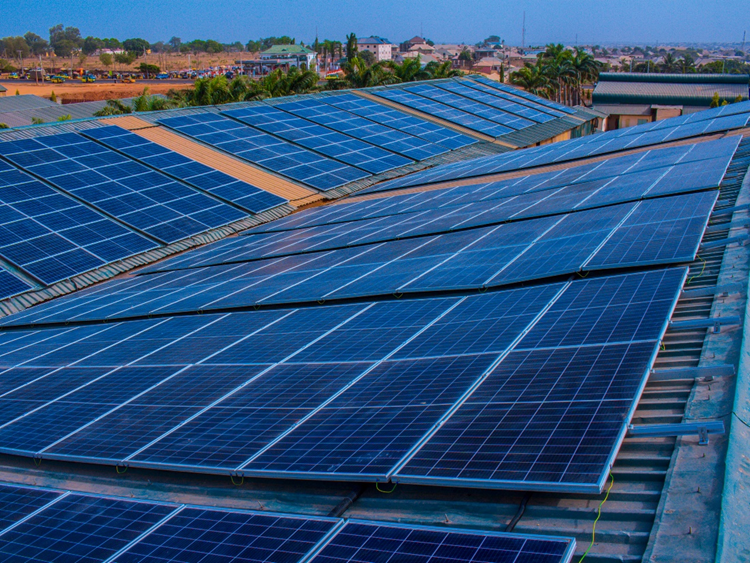
Africa’s solar energy growth is now more focused on small-scale installations. Imports of photovoltaic (PV) equipment are rising. Countries like Nigeria are adding solar systems to tackle ongoing electricity shortages, according to the International Energy Agency (IEA).
A report by the IEA, released on Thursday, shows that solar PV imports to Africa have increased since 2017. Most of this increase is from China, where imports have grown 28 times.
This rise has led to an eightfold increase in solar capacity across Africa. More people are turning to solar energy as an alternative to traditional electricity sources.
In the past, large solar projects were the main focus in Africa. Now, smaller installations are becoming the main driver of growth. Households, businesses, and industries are looking for alternatives to the unreliable electricity supply.
Nigeria, along with Algeria, Kenya, and Senegal, added over one gigawatt of solar capacity each in 2025. This shows how solar energy is being adopted across different African nations.
The growth in solar imports continues. Trade data shows that Africa imported about 26 gigawatts (GW) of solar PV equipment in 2025 alone, while about 10 GW was installed.
Since 2020, imports of solar PV equipment from China to Africa have reached around 60 GW. However, less than half of that amount has been installed across the continent.
The IEA pointed out that this difference raises questions about how quickly solar energy is being deployed. It also questions the accuracy of installation data and whether imported equipment is being stored, re-exported, or installed without being counted.
The agency said the gap between imported and recorded installed solar capacity has been about 35 GW over the past five years. This discrepancy is partly due to equipment sitting in storage for long periods and installations not recorded in the official statistics.
About 15 percent of solar imports are solar cells instead of complete modules. Some of these could be for Africa’s growing solar manufacturing industry.
While solar module production in Africa was still limited in 2025, Egypt and Ethiopia have become leading producers. Other countries, including Nigeria, are working on plans to boost local manufacturing.
The quick rise of solar technology shows the pressure climate activists are putting on world leaders. They want a shift from fossil fuels to renewable energy in a fair way.
Recently, households and businesses in Nigeria have started using solar systems as a backup power source. This is because of the unreliable electricity supply and increasing energy costs.
Frequent grid failures, old infrastructure, metering issues, gas shortages, and high debts have hurt electricity delivery in Nigeria. This has happened despite many years of investment in the sector.
The removal of the petrol subsidy in 2023 by President Bola Tinubu’s government worsened the cost-of-living crisis. Petrol prices shot up, making it more expensive to run generators.
These challenges, along with ongoing electricity shortages, have made solar energy more appealing. Consumers are looking for more reliable and cheaper options than grid electricity and generators.
Nigeria's growing solar market shows a push to rely less on the national grid. This is especially true for households and businesses facing unreliable electricity and rising costs.
The increased availability of imported solar panels and equipment has made it easier for people to access alternative energy. Nigeria is also looking for ways to boost local manufacturing and supply chains.
The rise of small-scale solar systems is changing Africa’s energy scene. Growth is moving away from large projects to smaller systems that directly serve consumers.
A decade ago, solar PV installations were mainly in large utility projects in markets like Egypt and South Africa. Now, smaller installations are leading the charge.
In 2025, Algeria, Kenya, Nigeria, and Senegal each added over 1 GW in solar capacity. The report also highlighted that South Africa is still a major player, contributing more than one-third of total capacity increases.
As Nigeria continues to adopt solar energy amid electricity supply issues and rising fuel prices, energy experts are calling for more local production, better financing, and stronger regulations. They believe this can help unlock the economic potential of the sector.
Despite the rapid growth in imports, there are still questions about how much solar equipment is actually being used in Africa. There are concerns about whether governments are accurately tracking the growth in their energy statistics.
The IEA said new tools using satellite imagery have shown that a lot of imported solar equipment is being used in projects not counted in official records. This analysis found that there is over 50 percent more utility-scale solar capacity than what governments reported.
Even with these findings, the amount of additional capacity does not fully explain the high volume of solar equipment imported, leaving a gap of nearly 30 GW.
This suggests that Africa’s solar market may be growing faster than what traditional energy statistics can capture. The exact extent of equipment being stored, re-exported, or not reported remains unclear.
In the IEA’s Stated Policies Scenario (STEPS), Africa’s installed solar capacity is expected to grow six times in the next decade. This shows that the solar market in Africa will keep expanding.
The growth is likely to involve a mix of projects. These range from large utility-scale setups to smaller systems that help households and businesses.
The rise of smaller systems could change how Africans access electricity. This is especially important in places where the grid is unreliable and expensive.
For Nigeria, this trend means chances to improve energy access, reduce reliance on diesel generators, boost local solar manufacturing, and move towards a more dependable electricity supply.




Drop your comment
No comments yet — be the first to drop the gist 👇