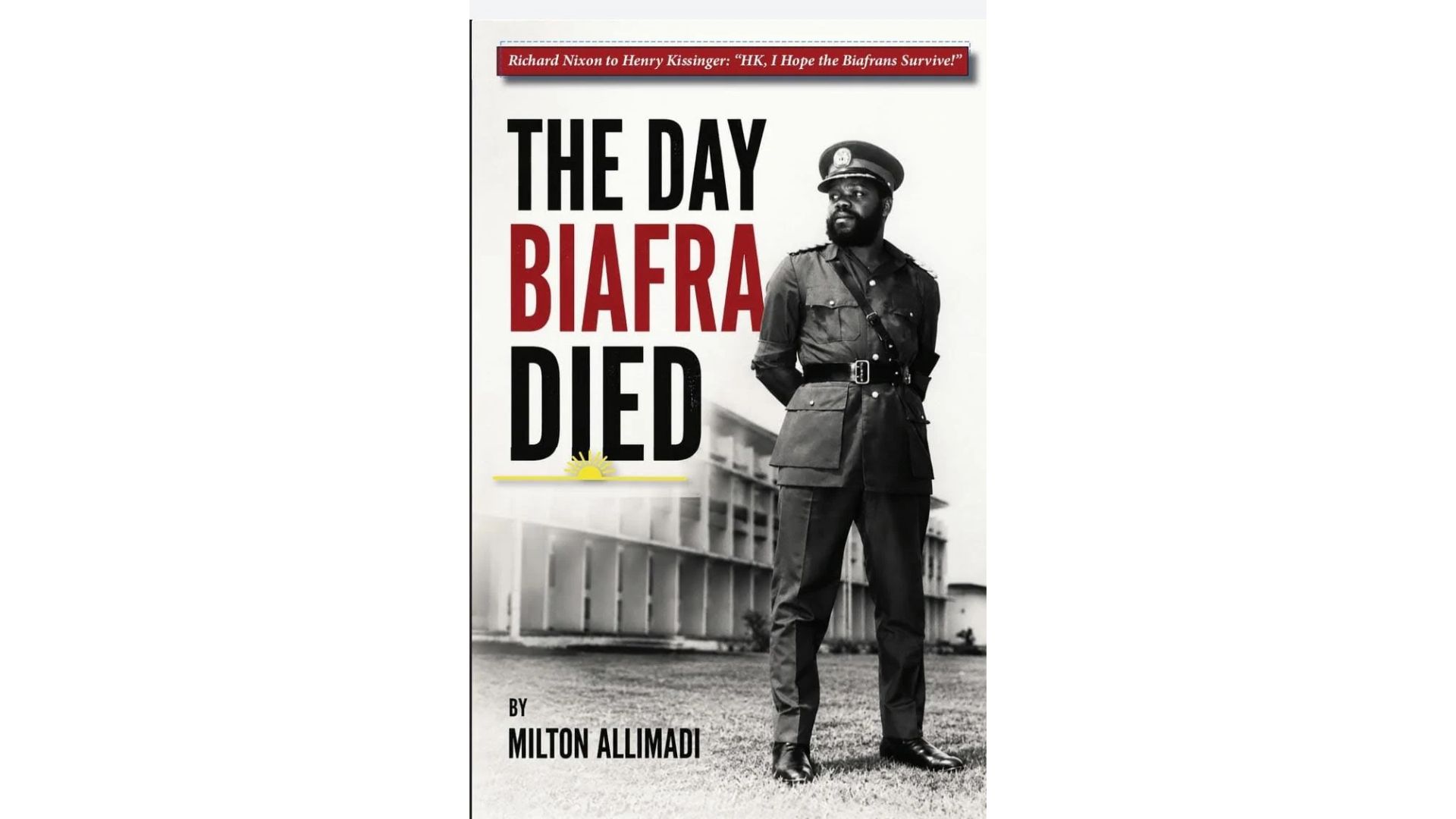
In April 1969, a Swedish pilot shared a secret military plan with an American reporter during lunch in Paris. Weeks before Biafran planes hit Nigerian military targets, senior editors at The New York Times were already in the know. In his new book, The Day Biafra Died, Milton Allimadi reveals the letters that tell the story of journalism, military secrecy, and the Nigerian Civil War.
Published by Black Star Books in September 2026, The Day Biafra Died looks at the last phase of the Nigerian Civil War. It uses old documents from The New York Times, the US State Department, and the White House. Allimadi also explores President Richard Nixon’s support for Biafra and the diplomatic choices that could have changed the war’s end.
In April 1969, two men met for lunch in a restaurant in Paris. One was Count Carl Gustaf von Rosen, a 60-year-old Swedish nobleman and experienced pilot. The other was Lloyd McKim Garrison, an American journalist who had been kicked out of Nigeria for his reports on the political situation.
Von Rosen had a secret plan. He was working to put together a small air force to attack Nigerian military sites and challenge the federal government’s strong air power over Biafra. Garrison, who worked for The New York Times, was among the first outsiders to hear about this operation.
On April 25, 1969, he wrote to Seymour Topping, the foreign news editor at the newspaper, detailing von Rosen’s plans. The letters show that senior editors at the Times were aware of the planned Biafran air strikes weeks before they happened.
More than 50 years later, journalist Milton Allimadi pieces together this meeting in his book, The Day Biafra Died. He uses Garrison’s unpublished letters and the newspaper’s old records for his research.
The documents reveal a unique relationship between a war correspondent, a foreign volunteer fighting for Biafra, and an American newspaper that held sensitive military information. Garrison arrived in Lagos in 1962 as the Times’ West Africa correspondent. He later reported on the political chaos of 1966, including the killings of Igbo civilians that led to Biafra’s independence declaration in May 1967.
His reporting put him at odds with Nigeria’s Federal Military Government, which expelled him in 1967. He continued reporting from Biafra and developed a lot of sympathy for the breakaway republic. There, he got to know von Rosen, who had flown dangerous relief missions carrying food and medical supplies into the besieged area.
Garrison had gone with the Swedish pilot on one of these missions, building a personal bond that would later give him access to sensitive information. By April 1969, Biafra had lost a lot of land. Federal troops controlled key transport routes, while Nigerian planes bombed the rebel territory.
Von Rosen believed a small, unconventional air force could change that. His plan included five Malmö MFI-9B light aircraft, originally made for training but changed to carry rockets. Their small size and ability to land on makeshift airstrips made them perfect for surprise attacks.
Instead of fighting Nigeria’s Soviet-supplied MiG fighters in the air, von Rosen aimed to destroy them on the ground. He told Garrison that the planes and volunteer pilots would arrive in Biafra around May 21, with operations starting soon after.
In his April 25 letter to Topping, Garrison wrote:
"The first operation will be a dawn sweep of Nigerian airfields."
They planned to target federal airbases and possibly ships in Lagos Harbour. Von Rosen stressed that the Swedish government had no part in his plans. His pilots were all volunteers driven by their beliefs.
Garrison recognized how big this information was, calling the planned attacks "A significant, if not bizarre, story." He started to arrange how the Times could get exclusive coverage. On April 30, Garrison wrote again to Topping, confirming he had the go-ahead to continue with his reporting plans.
He suggested coordinating coverage from both sides of the conflict. Raymond Walter Apple Jr., the Times’ Lagos correspondent, could set up near Benin City, one of the targets. Meanwhile, Garrison would head into Biafra to cover von Rosen’s squadron.
Secrecy was key. Garrison proposed telling Apple that something important was coming without revealing the details of the operation. He also suggested they use coded messages to share updates about the attack schedule.
One message, "Please tell parents travel plans firm as scheduled," would mean the operation was still on track. They referred to the plan as “Benin Talker.” This showed that the newspaper was getting ready to cover an offensive they had advance knowledge of.
The letters do not prove that the Times helped plan the airstrikes or shared military intelligence. But they do raise questions about what journalists should do when they learn of upcoming military actions. Another issue was about photographs of the attacks.


Garrison told Topping that a senior Biafran official had offered exclusive photo and film rights for payment. Garrison was interested, but Topping was cautious. He worried that paying upfront could be seen as financing a military operation. After checking with managing editor A. M. Rosenthal, Topping told Garrison not to make any advance deals. They could consider buying photos after the attacks.
Allimadi points out the difference between the editors’ worry about funding the operation and how they dealt with the sensitive military information. This is important. Journalists often receive critical information that, if revealed too soon, could put lives at risk. The letters do not prove the newspaper had to reveal von Rosen’s plans.
But they do show the ethical challenges from Garrison’s friendship with the pilot and his sympathy for Biafra. In late May 1969, von Rosen’s plan became real. His squadron, named the Biafra Babies to honor children who died from hunger, launched surprise attacks on Nigerian military sites.
The aircraft hit targets like Port Harcourt and Benin City, reportedly damaging or destroying military planes on the ground. The raids were a moral boost for Biafra. Despite the blockade and their weak military position, the republic showed it could hit important federal targets.
But this operation could not change Nigeria’s strong military edge. Five modified trainers could not fix Biafra’s shortages of weapons, fuel, manpower, and regular aircraft. Their success was mainly symbolic, lifting spirits and drawing international attention.
On May 25, The New York Times published an Associated Press article about the strikes by Swedish planes for Biafra. The report said it got its information from Sweden’s Expressen newspaper. But the Times’ internal letters showed its editors had known about the planned attacks since April.
On May 26, Garrison published his own article from Biafra titled:
"Swedish Count Describes Bombing Raids for Biafran Air Force."
He detailed von Rosen’s planes, volunteer pilots, and the attacks. Allimadi asks why the newspaper did not share its prior knowledge or get the exclusive coverage Garrison had hoped for. The documents do not clearly explain the editorial choices.
Concerns about security, protecting sources, and uncertainty about operations may have affected the newspaper’s decisions. What is clear is that the editors had confidential information about the raids before they took place.
The meeting between von Rosen and Garrison became an important point for Allimadi’s investigation into Biafra. His study of the newspaper’s archives later included American diplomatic records, showing President Richard Nixon’s private support for Biafra and White House talks about changing US policy on the issue.
But that lunch in Paris stands out as one of the most gripping parts of the book. It shows how the Nigerian Civil War pulled in foreign volunteers, journalists, and political figures into relationships that sometimes crossed professional lines.
Garrison was a journalist whose access to secret military information partly came from his friendship with von Rosen. The letters do not show that he took part in planning the attacks. They do confirm he was aware of them and worked with his editors to prepare coverage.
They also bring up a bigger question: when journalists feel personal sympathy for a cause they cover, how do they keep the independence their job needs?
Biafra eventually fell in January 1970. Von Rosen’s makeshift air force could not save the republic, and global humanitarian sympathy never led to the strong intervention its leaders wanted.
Yet this episode remains significant. In April 1969, a Swedish pilot revealed a secret military plan to an American journalist over lunch in Paris. Weeks later, Nigerian military sites were attacked. The New York Times had known what was coming.
More than 50 years later, the letters looked at in The Day Biafra Died bring this remarkable encounter and the questions surrounding it back into the spotlight.



Drop your comment
No comments yet — be the first to drop the gist 👇