
---
The Court of Arbitration for Sport (CAS) released documents on Tuesday that explain why Morocco’s challenge against Senegal’s 2025 Africa Cup of Nations victory was rejected.
CAS overturned the decision from the Confederation of African Football (CAF) that awarded Morocco the title. The ruling said the referee had the right to restart the final after Senegal’s players left the pitch temporarily.
On Tuesday, CAS set aside the CAF Appeal Board’s ruling that declared Senegal the winners by forfeiture. It reinstated the earlier ruling from the CAF Disciplinary Board, confirming Senegal’s 1, 0 win over Morocco in the final.
This ruling reversed the CAF’s 3, 0 win given to Morocco after the controversy during the final held in Rabat, returning the title to Senegal, which they earned on the pitch.
The main issue in this legal battle was whether the referee, Jean-Jacques Ngambo Ndala, could restart the match after Senegal’s players walked off in protest over a late penalty awarded to Morocco.
Morocco’s football federation argued that Senegal’s players broke Articles 82 and 84 of the AFCON rules, which should have led the referee to end the match.
But Senegal argued that the referee’s decision to continue the final was a sporting choice that could not be questioned under the field-of-play doctrine.
CAS agreed with Senegal, stating that the referee had the exclusive right to decide whether to restart or fully stop the match.
The panel noted that the referee’s signal to restart meant he believed both teams were ready to continue playing.
The arbitrators found that the referee’s decision was limited to what happened on the field, which usually protects match officials' decisions from being changed unless there is clear evidence of unfairness or bad faith.
As a result, CAS decided that Articles 82 and 84 of the AFCON regulations did not apply here because the match was resumed and finished.
The panel concluded that the referee did not make a legal mistake by allowing the game to go on.
Why Morocco’s argument failed
The Moroccan Football Federation argued that the field-of-play doctrine did not apply because this was about the consequences of Senegal’s players leaving the pitch, not just a refereeing choice.
They said the temporary walk-off broke Articles 82 and 84 of the AFCON rules, which should have made the referee end the match early. The federation also claimed the referee made a legal error and that restarting the game was not right.
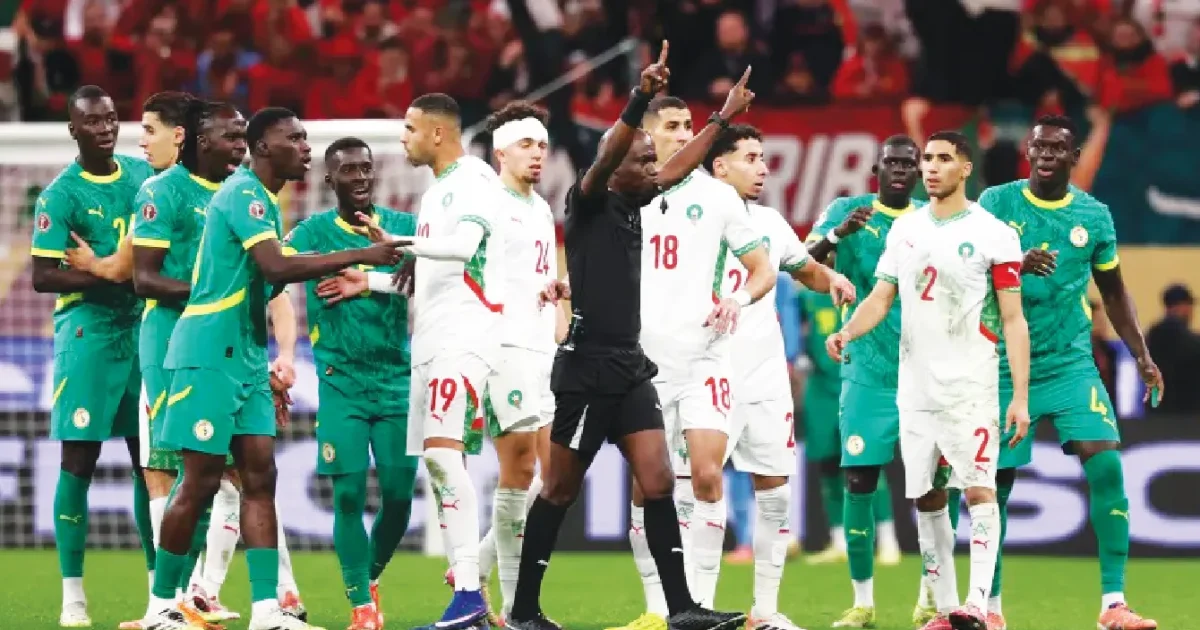


However, CAS rejected this argument, saying the referee had to make a quick decision in a tense situation, but his actions were not arbitrary.
The panel stated there was no proof that the referee’s judgment was affected by outside factors.
They also pointed out that Senegal, coach Pape Thiaw, and some players had already faced sanctions from CAF in separate disciplinary cases related to the final.
How the decision was made
The CAS panel unanimously supported Senegal’s appeal. It was led by Gérald Simon, a professor from France, and included two other professors, Ulrich Haas from Germany and Luigi Fumagalli from Italy.
The appeal was filed on 25 March, after CAF decided eight days earlier to give Morocco a 3, 0 win, stating Senegal had forfeited the final.
A hearing took place behind closed doors at CAS headquarters in Lausanne, Switzerland, on 8 October. The proceedings were in French and followed the regular arbitration timeline after both sides chose not to speed up the case.
CAS said it shared the full reasons for its decision with both parties on Tuesday and plans to publish the complete ruling later unless confidentiality is requested.
Understanding the field-of-play doctrine
The field-of-play doctrine is a key rule in sports arbitration. It limits how much CAS can change decisions made by referees during games.
This principle usually protects on-field decisions from being overturned by arbitration unless there is proof that officials acted unfairly or broke the rules.
In the Senegal-Morocco case, the central question was if the referee’s choice to restart the final was within his authority or a mistake that could be reviewed by CAF’s Appeal Board.
CAS ruled that the decision was within the referee’s power since both teams returned to the field and agreed to keep playing.
By allowing the match to continue, the referee showed that the conditions for play were met. CAS confirmed that his decision was protected by the field-of-play doctrine and could not be changed based on Morocco’s interpretation.
The ruling has now restored Senegal’s victory and cleared the dispute over the 2025 Africa Cup of Nations title. Still, the full legal details are expected to give more clarity on how far disciplinary actions can go regarding decisions made by match officials.




Drop your comment
No comments yet — be the first to drop the gist 👇