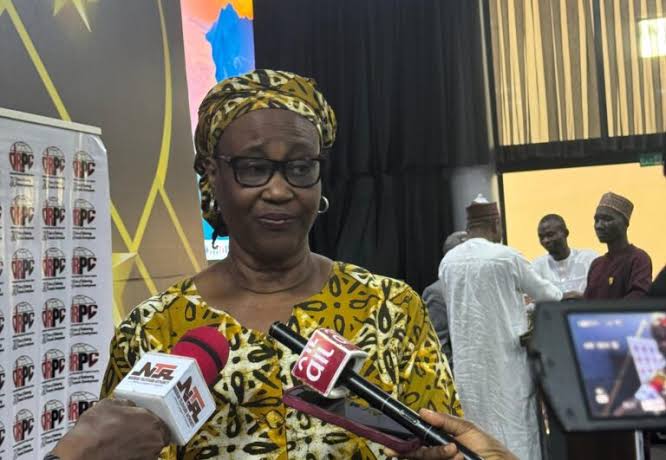
The Development Research and Projects Centre (dRPC) has called on Nigerian men, especially those in power, to back women's political participation and girls' education.
Judith-Ann Walker, the Executive Director of dRPC and a member of the Presidential High-Level Council on Women and Girls (P-HLAC), made this statement as part of the 2026 International Men’s Day, which is celebrated globally on 19 November.
Walker stated that this year’s global theme, “The Future is Everyone,” gives stakeholders a chance to think about the issues facing women and girls and how men can help tackle them.
She pointed out that women are still underrepresented in political leadership, face limited economic opportunities, and encounter barriers to girls’ education. These issues need urgent attention.
The lack of women in Nigeria’s political leadership is clear when we look at the National Assembly's makeup. According to the Inter-Parliamentary Union’s data, women hold three of the 109 Senate seats and 17 of the 360 seats in the House of Representatives.
This means that women have only 20 out of 469 legislative seats in both chambers, which is about 4.3 percent, while men occupy the remaining 95.7 percent.
The situation at the state level is not much better. After the 2023 general elections, around 48 women secured seats in the 36 State Houses of Assembly. This is less than five percent of the nearly 991 legislative seats available.
These numbers show a significant gender imbalance in Nigeria’s legislative bodies and highlight the need for efforts to ensure more women participate in political decision-making.
One key area needing more male support, according to Walker, is the push for reserved seats for women in the National Assembly and state legislatures.
Walker noted that even with ongoing advocacy for more women in politics, the call for reserved seats is an area where men in power must show stronger commitment.
She mentioned that government officials, gender advocates, and development partners have spent much of 2026 looking for solutions to these problems. There are growing calls for influential men to support decisions that promote gender equality.
Walker stressed that male support is vital for making real progress. She believes men and boys should be seen as partners in tackling gender inequality.
“Men and boys are not the problem but part of the solution,” she said, emphasizing the need to involve men in efforts to break down the barriers facing women and girls.
She highlighted the positive actions of male political leaders in Lagos, Kano, and Kaduna states, who have launched and funded Women’s Economic Empowerment (WEE) policies as examples of good male support.
However, she argued that such commitments should go beyond just launching policies. There need to be more intentional decisions that can change the conditions limiting women's participation and growth.
She also mentioned advocacy efforts in Adamawa State, which involve women in political roles under the GIZ-supported SEPIN-SUSI project. This is part of a wider strategy to promote male support.
Walker pointed out the national conference on male allyship organized by Malala Fund Nigeria in June 2026. This event was a key moment for engaging men in promoting girls’ education.
The conference, led by Co-Chair Ziauddin Yousafzai and CEO Nabila Aguele, brought together over 90 participants, including government officials, leaders from civil society organizations, and advocates for girls’ education.
Walker noted that the discussions focused on how meaningful male involvement could help remove the barriers to girls’ education and support a fairer Nigerian society.
Girls’ access to education is another urgent issue. UNICEF reported in 2022 that around 10.5 million Nigerian children were out of school, with girls making up about 60 percent of this number.
That means around 6.3 million girls were out of school at that time. Factors like poverty, insecurity, early marriage, cultural barriers, and poor school facilities continue to affect girls’ education, especially in northern Nigeria.
Walker urged organizations and individuals celebrating International Men’s Day to turn discussions about gender equality into real commitments.
She called on media professionals, traditional rulers, religious leaders, and men in influential positions to see the challenges facing Nigerian women and girls and take steps to tackle them.
“International Men’s Day 2026 is a chance for all stakeholders, including powerful men in the media and other positions, to reflect on the struggles of Nigerian women and girls, recognize their real challenges, and use this day to make just ONE decision or take ONE action to support women and girls in Nigeria,” she said.
Drop your comment
No comments yet — be the first to drop the gist 👇