
In the Name of Allah, the Most Gracious, the Most Merciful
All praise is for Allah, who created us and gave us life. He honoured us with Islam and made us valuable. He warned those who harm others of severe consequences. I bear witness that there is no god worthy of worship except Allah, who has no partner. I also bear witness that Muḥammad is His servant and Messenger. May Allah bless him greatly. To continue:
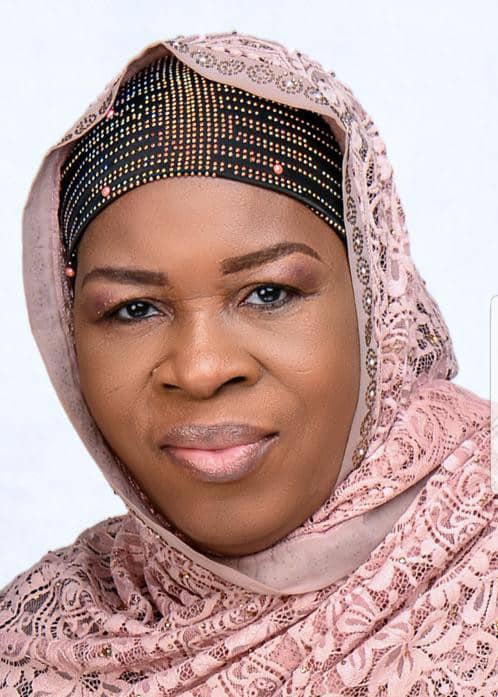
Dear brothers and sisters! On Sunday, June 21, 2026, Ummulkhair, a teacher at an Islamiyyah school and mother of four, was brutally killed and burned in Maraban Jos, Igabi Local Government Area, Kaduna State. This terrible mob attack happened due to false claims that she was trying to kidnap children.
Ummulkhair was on her way to an Islamic lecture and stopped to ask local children for directions. Quickly, false stories spread, alleging that she was trying to steal them. An angry crowd formed around her. Local security tried to help and took her to a nearby police station for her safety.
Hundreds of angry youths and residents surrounded the police station. Despite pleas from Islamic scholars, her family, and community leaders for her innocence, the mob overpowered the police. They dragged her out and set her on fire.
The Kaduna State Police Command condemned this mob violence as an attack on the law. They confirmed that some suspects have been arrested. Islamic leaders and rights groups, including Amnesty International, also condemned the killing and called for an investigation into how the mob managed to take her from police custody.
This brutal act caused widespread anger across Nigeria. It raised serious concerns about mob justice, false information, and violence from vigilantes.
Respected brothers and sisters! In any society that respects the law, no one has the right to arrest, judge, or execute another person based on mere suspicion or rumours. What we call “jungle justice,” where a mob kills a suspected person without trial, is a serious crime in Nigeria. The law may not use the term “jungle justice,” but those involved can be charged with serious crimes like murder, manslaughter, conspiracy, assault, and unlawful assembly.
Anyone who causes the death of another person unlawfully can be charged with murder or manslaughter. If someone intentionally kills another or inflicts serious harm that leads to death, they are guilty of murder. Anyone who helps or encourages a mob can also be held responsible, even if they did not strike the fatal blow.
If someone plans or agrees to kill or attack a suspect, they can face conspiracy charges in addition to murder charges. Even if the victim survives, those involved can still be charged with assault or causing serious bodily harm.
The law is clear: suspicion is not proof, and allegations do not equal conviction. Every accused person has the right to a fair trial in a court of law. Whether it’s theft, witchcraft, kidnapping, or any other claim, no one should take the law into their own hands. The correct action is to report suspects to law enforcement for investigation and prosecution.
In Nigeria, many innocent lives have been lost due to false accusations and mob violence. Once a life is gone, it cannot be brought back. Justice cannot come from lawlessness.
Let us all reject mob violence and protect human life while upholding the law.
Dear servants of Allah! Remember that Islam raised the status of women from ignorance to a place of dignity and equality. A woman’s honour is protected at every stage of her life, as a daughter, sister, wife, and mother. Her rights are given by Allah, not negotiated by culture.
In Allah’s eyes, righteousness is the only measure of greatness, not gender. The Qur’an states that both believing men and women receive equal rewards and forgiveness. Allah the Almighty says: “Indeed, the Muslim men and Muslim women, the believing men and believing women… for them Allah has prepared forgiveness and a great reward.” [Qur’an, 33:35]
For instance, the honour of a mother is highly valued in Islam. When a companion asked Prophet Muhammad (Peace be upon him) who deserves his good companionship most, the Prophet replied three times, “Your mother,” and only mentioned the father on the fourth time. The famous Hadith reminds us that “Paradise lies at the feet of your mother,” highlighting that true success comes from honouring and caring for her.
Before Islam, having a girl was often seen as a burden, leading to terrible practices like female infanticide. The Prophet Muhammad (Peace be upon him) changed this by teaching that raising daughters with love is a path to Heaven. He promised that whoever raises two daughters well until they grow will be with him in Paradise like two fingers close together.
The noble Qur’an beautifully describes spouses as garments for each other. This metaphor shows mutual protection and comfort. The Prophet Muhammad (Peace be upon him) set the highest standard for treating wives, saying: “The most perfect in faith amongst believers is he who is best in manners and kindest to his wife.”
Islam also gave women the right to keep their own wealth, bridal gifts, and inherit property long before many modern societies did. The relationship between siblings is based on duty and care. A brother has a sacred duty to support and protect his sister. The Prophet Muhammad (Peace be upon him) linked good treatment of sisters with the reward of entering Paradise.
The Islamic principle of modesty (Hijab) is often discussed as a sign of dignity and freedom. It is viewed as protection, allowing women to be appreciated for their intelligence, piety, and character, not just their physical beauty.
Dear brothers and sisters! The incident at the Banu Qainuqa’ market teaches a strong lesson about women’s honour in Islam. When a Jewish trader embarrassed a veiled Muslim woman, the Prophet Muhammad (Peace be upon him) saw this as a serious betrayal of the Constitution of Madinah and took action to expel the tribe for breaking the peace treaty.
After the victory at the Battle of Badr, some residents of Madinah began to feel envy. The Banu Qainuqa’, a wealthy Jewish tribe, controlled a central market. One day, a Muslim woman came to sell her goods. While sitting near a goldsmith’s shop, the men asked her to uncover her face. She refused, staying true to her faith. In a cruel act, the goldsmith tied her garment to her back. When she stood, her modesty was exposed. The men laughed, and she cried out in distress. A Muslim man passing by heard her scream, realized what happened, and, in anger, fought and killed the Jewish goldsmith. In retaliation, the local Jewish community attacked and killed the Muslim man.
This series of events showed a direct violation of the peace treaty, as the Banu Qainuqa’ allowed the humiliation of a Muslim citizen. The Prophet Muhammad (Peace be upon him) gathered the tribe in the marketplace and urged them to accept Islam. He warned them not to let their strength fool them into suffering the same fate as the polytheists at Badr. Instead of listening, the Banu Qainuqa’ responded with mockery, bragging about their military strength and challenging the Prophet (Peace be upon him). Seeing that they had broken the covenant and endangered the safety of the Muslim community, the Prophet declared the peace agreement over and laid siege to their fortresses. After 15 days, the tribe surrendered unconditionally. Although some wanted to punish those responsible, the Prophet ultimately agreed to exile them from Madinah to avoid further conflict.
This event sets a strong example for protecting women in Islamic history. The deliberate humiliation or exposure of a woman’s modesty was not seen as a minor issue. It was treated as serious aggression that needed a strong response. It teaches us that a woman’s dignity and safety are central to any fair society.
The Banu Qainuqa’ had promised to uphold peace and not aid enemies against the Muslim state. By allowing a member of their tribe to humiliate a Muslim woman and then killing a Muslim man, they broke their oath. The Prophet Muhammad (Peace be upon him) showed that treaties are sacred and betrayal has serious consequences.


The Prophet’s decision to hold the entire tribe accountable was not just for one crime. It was because the leaders and community members supported the humiliation of the woman. This shows the moral responsibility of a community that allows oppression instead of condemning it.
Before this incident, the Prophet Muhammad (Peace be upon him) encouraged Muslims to trade in the Banu Qainuqa’s market to build relationships. Even with the economic advantages, the Prophet prioritized moral integrity and the safety of the vulnerable over wealth.
Dear brothers and sisters! Remember that Islam sees unjustly taking a life as equivalent to killing all of humanity. It considers homicide one of the worst sins, with severe consequences. The noble Qur’an says: “If anyone kills a person… it would be as if he killed all of humanity,” showing the great value Allah places on a single life.
Deliberate murder is strongly condemned. Qur’an, 4:93 warns that the punishment for this sin is Hell, where one must stay forever, along with Allah’s anger. If a life is taken by mistake, Shari’ah offers a way of mercy. Qur’an, 4:92 requires the freeing of a believing slave and payment of blood money to the victim’s family, or fasting for two months as atonement.
Prophet Muhammad (Peace be upon him) often mentioned that murder and polytheism (shirk) are the most hated sins to Allah. He warned of a time when a killer will not know why they killed, and the victim will not know why they were killed. This highlights the need for ongoing education and self-reflection to combat crime.
Islamic law sees murder as both a spiritual and societal crime. While there are severe penalties for murder, the victim’s family has the choice to forgive or accept compensation. While murder is a grave sin, true repentance and good deeds can bring mercy. Some scholars emphasize that true repentance requires reconciliation with both Allah and the victim’s family.
Respected brothers and sisters! The story of Banu Qainuqa’ teaches us about their betrayal. They broke the Constitution of Madinah when a Muslim woman was humiliated in their market. When a Muslim defender fought back and was killed, the tribe took to their fortresses.
When the Prophet Muhammad (Peace be upon him) warned them against breaking their agreement, they arrogantly mocked the Muslims’ military strength. The Prophet (Peace be upon him) laid siege to their fortresses for 15 days. Despite their violation of the treaty and the urging of companions to punish them, the Prophet (Peace be upon him) chose to exile them from Madinah instead of executing them.
Muslim brothers and sisters! Fear Allah regarding bloodshed and murder. Know that no one will help another on the Day of Resurrection! I seek refuge in Allah from the time when the Prophet Muhammad (Peace be upon him) said: “By the One in Whose Hand is my soul, there will come a time when the killer will not know why he killed, and the one killed will not know why he was killed.” [Reported by Muslim]
Finally, dear brothers and sisters! Remember that it is against Islamic teachings to punish with fire. The Prophet Muhammad (Peace be upon him) said: “No one punishes with fire except the Lord of the fire.” This applies to all living beings.
During a journey, some of the Prophet’s companions took chicks from a mother bird and burned an ant colony. When the Prophet returned, he was unhappy and told them to return the chicks. He said: “It is not proper to punish with fire except the Lord of fire.”
On another occasion, the Prophet Muhammad (Peace be upon him) initially told a military commander to burn certain enemies. But before they left, he corrected himself, saying: “…it is only Allah Who punishes with fire, so, if you find them, kill them (i.e., don’t burn them).”
Our Islamic scholars teach that while it is allowed to carry out justice or capital punishment, burning is always forbidden for humans. We must ensure justice with compassion and respect for life. This reminds us of the importance of empathy, even in small matters, and that no one should take on the attributes of Allah.
Understanding these principles of Islamic law helps us stay within our limits and build a society based on justice and compassion, highlighting the simplicity of Islam.
I pray that Allah grants sister Ummulkhair Jannatul Firdaus, gives her eternal peace, and gives her children and all Nigerians the strength to cope with this loss that no child should endure.
May Allah be pleased with her soul. Our society may have oppressed her, but we pray that the One who created her soul grants her a place in Paradise through His mercy.
O Allah, grant victory to Islam, honour Muslims, and defeat the wrongdoers.
O Allah, bring peace to those striving for Your cause, free Your oppressed servants, and elevate the banner of the religion by Your might.
O Allah, forgive the Muslim men and women, the believing men and women, the living and the dead.
O Allah, guide our leaders to what You love and are pleased with, and lead them to righteousness and piety.
Our Lord, grant us goodness in this world and in the Hereafter, and protect us from the Fire’s punishment.
Dear servants of Allah! Remember Allah often and glorify Him morning and evening.
Our final call is that all praise is due to Allah, the Lord of the worlds.




Drop your comment
No comments yet — be the first to drop the gist 👇