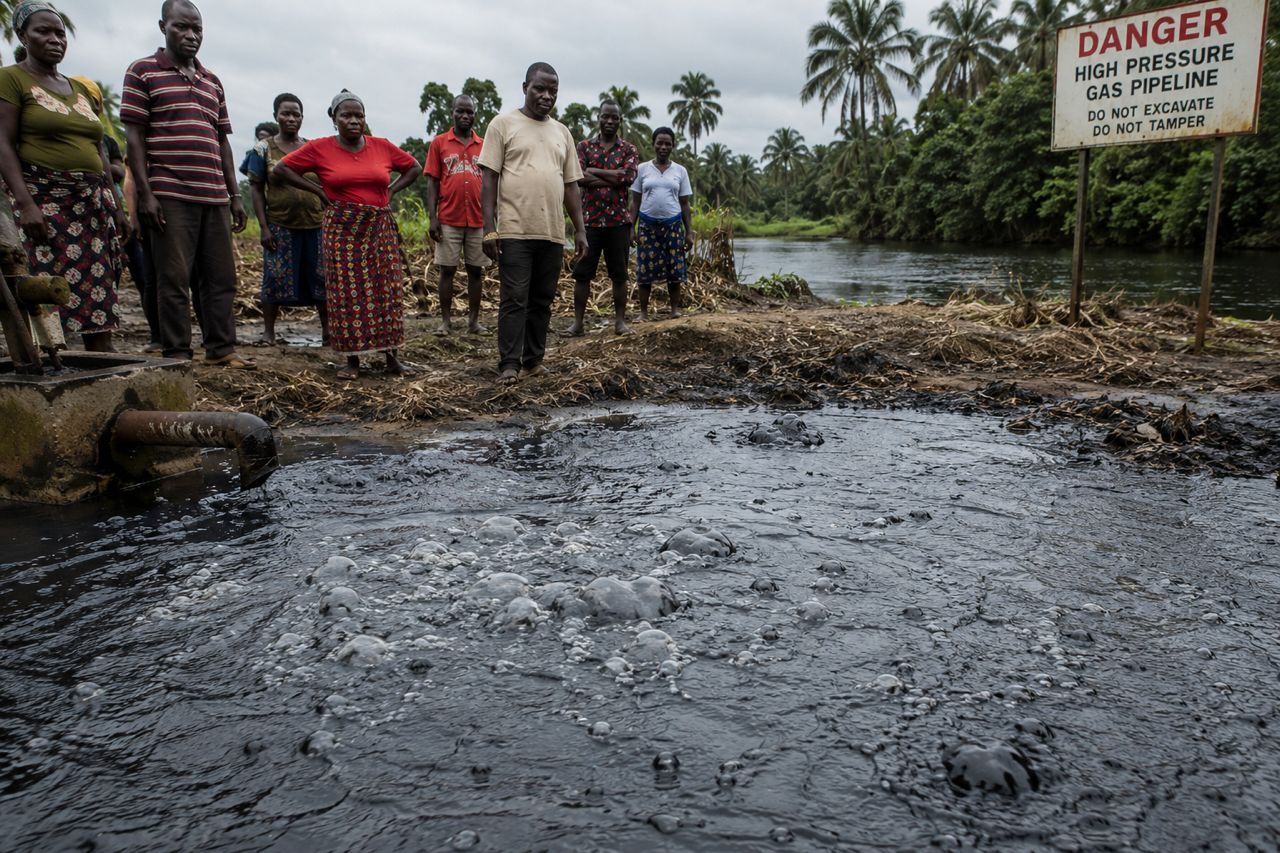
In late 2025, residents of Bille, a riverside community in Rivers State, woke up to a disturbing sight and smell.
Gas suddenly began bubbling to the surface from abandoned mono pumps and old shallow wells. This gas pushed through old pipes buried underground for years. The air was filled with a strong rotten-egg smell while water bubbled and hissed around the openings.
What seemed like a one-time event soon spread throughout the community. The constant bubbling sound and low rumble from the ground became part of everyday life, raising worries about what was happening underground and the risks it posed.
“Since October 2025, we observed that this abandoned mono pump started boiling and bubbling. We invited people from the government parastatal to come and put an end to it, but to no avail,” Josiah Sunday, a resident, told PREMIUM TIMES during a June visit to the community.
Nearly 10 months later, residents say the situation has gotten worse.
Beyond being exposed to the escaping gas, they report serious damage to mangroves and aquatic life, along with a drop in the number of periwinkles and fish that support local businesses.
Bille, in Degema Local Government Area of Rivers State, can only be reached by water and is about 50 minutes from Port Harcourt, the capital of Rivers State.
Fishing is the main job in the crowded island settlement.
On the way to the community, PREMIUM TIMES saw several military checkpoints. Armed personnel checked boats while passengers were told to raise their hands for inspection.
Once there, this reporter noticed several spots on the river surface where gas was escaping continuously. The water bubbled intensely, looking like boiling liquid. Nearby signs indicated high-pressure gas pipelines were transporting crude oil and natural gas.
Bille is home to Oil Mining Lease (OML) 18, a major oil and gas block in the eastern Niger Delta covering about 1,035 square kilometres. This area contains several oil and gas fields, including Cawthorne Channel, Akaso, and Alakiri.
Shell Petroleum Development Company initially developed this asset but Eroton Exploration and Production Company took over in 2014.
However, years of disputes, falling production, and old infrastructure have left much of the oilfield system abandoned or in bad shape.
Records show that OML 18 production fell from about 30,000 barrels per day to zero between 2016 and 2023, as ownership and control changed hands amid disagreements.
In 2023, the Nigerian National Petroleum Company Limited and OML18 Energy Limited announced the removal of Eroton as the operator of the joint venture, following the rules of the Joint Operating Agreement (JOA).
Much of the infrastructure from the 1960s and 1970s is believed to be in bad condition now.
Recent evidence from the BBC showed that Shell continued to operate the Bille oilfield and the Nembe Creek Trunk Line despite worries about environmental risks and the state of the infrastructure.
Residents and environmental advocates believe the current crisis is linked to failures in abandoned oil and gas facilities.
During the visit, PREMIUM TIMES observed gas escaping through rivers, shallow wells, boreholes, and the ground around them. Water gushing from some borehole spots turned black in containers, indicating a mix of crude oil in the flowing water. The area around the water looked rusty brown and greasy, while the water changed to black when exposed to air.
This situation has made water sources unsafe and created what experts call a very unstable environment.
“It’s an emergency. And I think the concerned authorities will treat it as such,” reacted Adeniyi Sanyaolu, a professor at the University of Uyo in Akwa Ibom State.
He described the gas seepage in Bille as a major environmental issue often seen in oil and gas production when operators do not follow the rules.
He explained that if the wells had been properly closed after abandonment, the current problems might not have happened.
Where facilities are still in use, he says urgent repairs and upgrades of old pipelines, valves, and joints are needed to stop the leaks.
He warned that the ongoing release of gas poses serious threats to both living beings and the environment. He said gases released into the air can mix with water vapour to create acid rain, leading to roof damage, clothing issues, lower agricultural output, and soil degradation.
He noted that crop damage may occur, and polluted soil might become unsuitable for farming.
He also warned of serious health issues, like cancer, breathing problems, skin diseases, and possibly infertility in humans and animals after long-term exposure.
Mr Sanyaolu added that infants might be at risk through contaminated breast milk and that the situation requires immediate action, maintenance of pipelines, or full closure of the affected facilities.
Meanwhile, the local primary school has reportedly closed because of the problem, while residents say daily life has become harder.
Community members recalled a fire incident in March when a mono pump for fetching water suddenly caught fire, confirming the presence of flammable gas in the water source.
Residents blamed regulatory agencies for their slow response to the growing crisis.
Nigeria’s upstream oil sector is overseen by the Nigerian Upstream Petroleum Regulatory Commission (NUPRC), while the National Oil Spill Detection and Response Agency (NOSDRA) is responsible for monitoring and dealing with oil pollution.
Since the gas bubbling issue began last year, the federal government announced in March that it had started an investigation into the matter. At that time, the Minister of State for Petroleum Resources (Gas), Ekperikpe Ekpo, said regulators had visited the field to find out the source and nature of the problem in the Oil Mining Lease 18 area.
Following public outcry, NUPRC announced in March that it would begin investigations.
Last month, NUPRC chief executive, Oritsemeyiwa Eyesan, said the commission was very concerned about the gas bubbling issue in Bille. She assured the community and the public that they were committed to coordinating industry efforts to tackle the situation.
The commission understands the community's worries and describes the situation as “unsavoury development” regarding public safety, the environment, and the health of the people.
“Upon notification of the incident, the commission activated a coordinated technical investigation process in line with established regulatory protocols to assess the nature and extent of the gas seepage, identify source(s) and potential causes, and propose immediate and long-term mitigation measures,” she said.
The NUPRC said the investigation is being carried out with stakeholders to ensure clear, fact-based results for long-term sustainability.
But the NUPRC said early findings and field observations suggest that the gas bubbling might be linked to underground issues that could be caused by various triggers.
“Detailed geotechnical and geological analyses are ongoing to determine the contributing factors and possible remedies for prompt implementation,” NUPRC said.

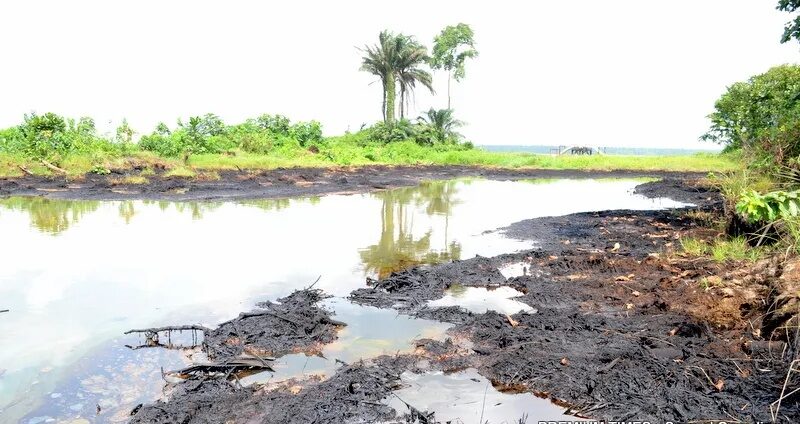
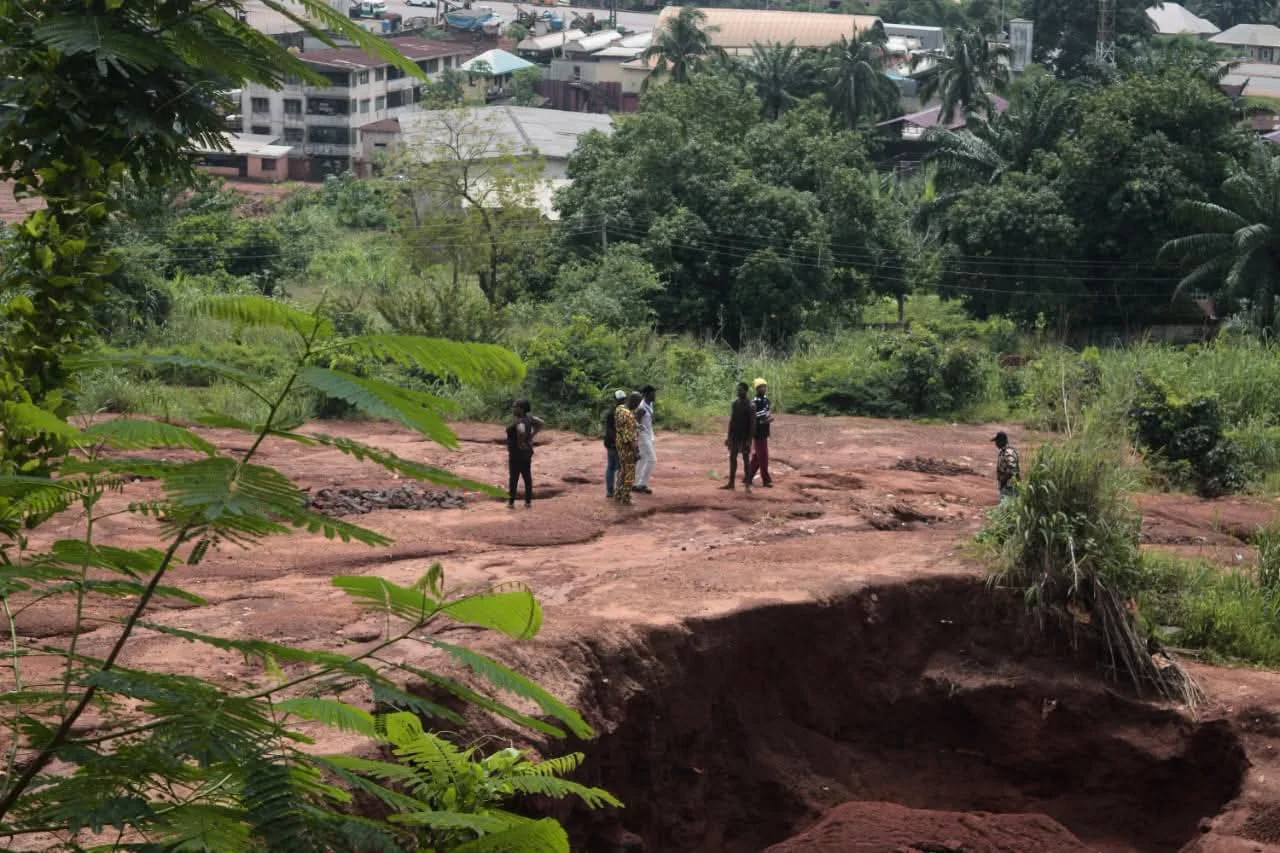
During a recent visit to the community, PREMIUM TIMES learned that NOSDRA carried out preliminary investigations in December 2025. However, results regarding water and soil contamination have not yet been made public. NOSDRA has not responded to our request for comments.
Officials from Social Action, a civil society group active in the Niger Delta, told PREMIUM TIMES that while regulators said air quality was acceptable, available data showed otherwise.
The group reported that air quality tests found methane, volatile organic compounds, and hydrogen sulfide.
They said methane levels exceeded 36 percent of the Lower Explosive Limit (LEL), indicating significant gas build-up and higher risks of fire and explosion.
Residents say daily life has become more difficult since the gas seepage started.
“The experience has not been very good at all,” said Timothy Agunbiade, a youth leader, while showing a water sample from an affected spot.
“We have identified over 74 gas leakage spots so far.”
Throughout the community, PREMIUM TIMES saw bubbling surfaces, noisy wells, and pipes making continuous gas sounds.
Women and children said the ongoing noise and fear of explosions have made it hard to sleep.
“We could barely sleep at night. Everywhere is bubbling. Mama cannot sleep again,” said Hanna Eleki, a fish and crayfish seller.
Cooking has also become risky.
Many women reported leaving their traditional cooking spots near gas seepage points after fire incidents occurred.
Residents shared stories of two people getting burns when a gas leak ignited near a cooking area.
Another resident, Patient Kojon, said water contamination has disrupted daily life.
“If you wash your body with soap, as you pour water, everything will suddenly vanish. We cannot drink the water because it has a very strong smell that makes it undrinkable.”
“We living here are at risk; we don’t know if we can experience an explosion at any time,” she added.
Meanwhile, Mr Sunday explained that many residents are starting to suffer from diarrhea, skin rashes, and breathing issues. Most of the people rely on sachet water brought from Port Harcourt.
Prince Edegbuo, Social Action’s social justice manager, believes the gas might be leaking from an abandoned and poorly closed gas well in OML 18.
He thinks the leak may have existed long before residents noticed it.
He criticized authorities for not acting quickly and called for emergency help.
His assessment was blunt, saying that the gas seepage means the people are sitting on “gunpowder.”
“People are going to die like poisoned chickens when the time comes,” he lamented.
“What I think happened in Bille is that an abandoned gas well was not properly closed; it was left abandoned for a long time.”
“The presidency should order NEMA to immediately evacuate the people of Bille.”
“So the poor can die as long as the oil is pumped every day. That is gross irresponsibility from any government.”
He called for immediate evacuation of residents, emergency healthcare support, environmental cleanup, and accountability for responsible operators and government agencies.
Deinbo Owanemi, a lawyer from Bille, said that legal responsibility lies with both the federal government and operators of the petroleum assets.
“By law, both the Petroleum Industry Act and other laws state that the federal government owns petroleum resources in Nigeria,” he said.
“So I believe that both the Federal Government of Nigeria and the operators, especially SPDC, who have reportedly passed some operations to Renaissance Energy, are all accountable for the disaster happening in Bille and the environment.
“While they take the benefits, they leave the local communities to deal with environmental disasters that ruin their ecosystem.”
Data from NOSDRA’s December 2025 assessment shows that both air and water quality in Bille have been badly affected.
Lab results reportedly confirmed methane, volatile organic compounds (VOCs), and hydrogen sulfide in the air.
Methane levels over 36 percent of the Lower Explosive Limit indicate serious gas build-up and immediate fire and explosion risks.
Experts warn that hydrogen sulfide is also very dangerous, even at low levels.
“Long-term exposure to such gases can cause breathing issues, headaches, dizziness, nausea, and, in severe cases, neurological and systemic health problems,” Social Action said.
The group noted that residents are exposed to bad air, water, and surfaces, creating multiple ways for toxic exposure.
Messages and calls seeking comments from the Minister of State for Petroleum Resources (Gas), through his spokesperson, Louis Ibah, the Nigerian National Petroleum Company Limited (NNPC), NOSDRA, and NUPRC, had not received a response by the time this report was filed. Some officials asked for time to gather details before responding.
In Bille, the bubbling continues amid fears of a major fire outbreak.
On 13 June, residents said the NNPC had stationed fire extinguishing trucks in the community.

Drop your comment
No comments yet — be the first to drop the gist 👇