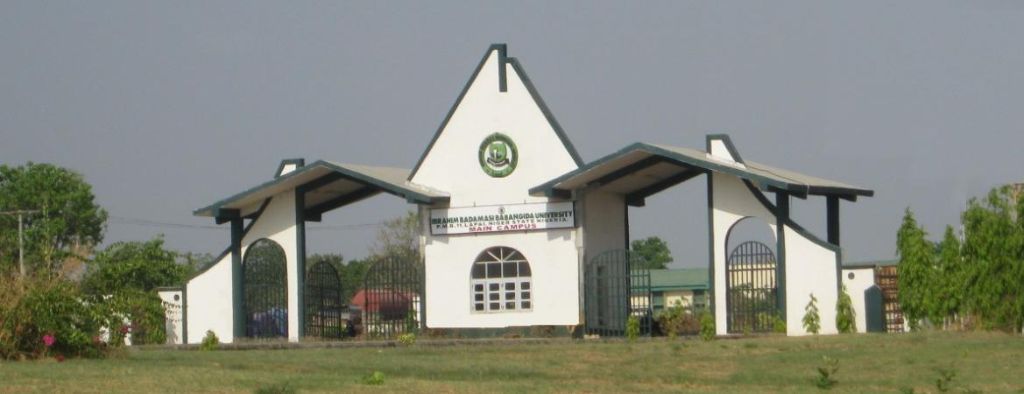
In early July, a group of student journalists gathered at the ICT Centre of Ibrahim Badamasi Babangida University (IBBU) in Lapai, Niger State, for a two-day workshop.
They learned the basics of news writing, investigative reporting, inclusive reporting, hyperlocal journalism, and digital storytelling through the Next Gen Campus Reporter Clinic. This event was organised by the Centre for Journalism Innovation and Development (CJID).
But beyond the notebooks and presentations, another important story was happening.
For many students, this training was more than just about writing better stories. It signified the start of efforts to revive the university's Union of Campus Journalists (UCJ). This body had lost its activity over the years, even with more Mass Communication students enrolling.
"When I joined, there wasn’t much activity," said UCJ president Beauty Brendan.
"Most students focused on their academics, and the union wasn’t functioning as it should."
The UCJ IBBUL Chapter started in 2020 with help from the National Union of Campus Journalists (NUCJ), led by Ibrahim Adeyemi at that time. Yakubu Mohammed, who was then the President of the Mass Communication Students’ Association (MACOSA), invited NUCJ to provide training and launch the UCJ on campus.
Zainab Abdullahi was the first president of the UCJ, according to Mr Mohammed, who now works as an investigative journalist with PREMIUM TIMES.
The union has faced challenges since the first members graduated.
"All the presidents and vice presidents the union has had were appointed when they were in their penultimate years. This made continuity a problem. Once the top executives left, a vacuum was created, leaving their successors in confusion," Mr Mohammed explained.
Ms Brendan thinks the inactivity of the UCJ has created a gap in reliable information on campus.
"We don’t have a trustworthy source of verified information," she said. "That’s one of the reasons we’re trying to revive the union."
The Importance of Campus Journalism
Her worries are shared by Andrew Ngele, the department’s Staff Adviser. He believes campus journalism is more than just a student activity.
"A university is like a small city within a larger society," Mr Ngele said. "The role journalism plays here is no different from what it does outside the campus."
He explained that a lively campus journalism union promotes transparency by allowing students to question decisions that affect them and the university community.
Mr Yakubu, a patron of the university’s UCJ, advised the outgoing executives to include first and second-year students as executives. This way, they have more time to grow the association.
He mentioned that patrons and lecturers continue to train these students while looking for successors in 100 or 200 level.
"We adopted a catch-them-young approach," he said.
"That strategy started with this current set, and honestly, it has been working. They now have a Substack handle and social media accounts where they share news and other content."
Citing Section 22 of Nigeria’s Constitution, which gives the press the duty to hold the government accountable, Mr Ngele said student journalists should see themselves as contributors to accountability within the university.
"If there are issues around infrastructure, student welfare, or the use of public resources, students should be able to ask questions," he said. "Campus journalism creates that space."
A New Generation of Student Reporters
For students like Deborah Lukman, that message hit home.
Ms Lukman found out about the training after seeing a registration link shared on her departmental platform. Curious, she looked into the program and decided to apply.
"I’ve always wanted to become a journalist," she said.
By the end of the two-day clinic, her view of the profession had changed.

"I thought investigative journalism was like what you see in movies," she laughed. "Now I understand there are ethical and professional ways of gathering information and uncovering stories."
She has several story ideas already.
"I’m naturally curious," she said. "I enjoy asking questions and helping people know what’s happening around them. Journalism isn’t just about writing stories; it’s about serving the public interest."
Challenges in Reviving IBBUL UCJ
But that curiosity needs more than just enthusiasm to thrive.
Ms Brendan knows that while students want to rebuild the UCJ, many challenges exist.
"The challenge isn’t that we don’t have ideas," she said. "We need stronger editorial skills, better equipment, and more support. Sometimes it’s even tough getting members together because everyone is balancing academics with other responsibilities."
These issues reflect a larger concern in journalism education.
Aminu Turaki, the President of MACOSA, thinks many students are drawn to journalism until they face the realities of the job.
"Many students say they want to practise journalism," Mr Turaki said. "But when they see the amount of work in reporting, writing, editing, and fact-checking, their enthusiasm begins to fade."
He observed that some students are attracted to the fame of television and media personalities without understanding the hard work behind every published story.
To help, the department has been encouraging practical newsroom experience alongside classroom lessons. This gives students chances to produce and publish stories while still in school.
"A lively UCJ gives students an independent platform to practise journalism before graduation," he said.
Learning Journalism Through Practice
Mr Ngele believes practical experiences are crucial because you cannot learn journalism just from books.
Students must learn to ask tough questions, verify facts, and report responsibly, even when it feels uncomfortable.
"I understand why students may be scared," he said. "But intimidation is part of the profession. As long as your reporting is factual and motivated by public interest, you should not be afraid to tell important stories."
For the young reporters at the ICT Centre, this lesson may be the most lasting takeaway.
The clinic did more than teach inverted pyramids, interviewing techniques, or newsroom ethics. It pushed students to see journalism as a public service and not just a career path.
The Start of a Revival
As the program ended, discussions moved from note-taking to story ideas. Students were put into teams and asked to come up with story ideas on issues affecting their campus and the nearby Lapai community.
Ms Brendan believes this renewed energy is just the beginning.
"If we keep applying what we’ve learnt here," she said, "I believe UCJ can become a trusted platform for credible campus journalism."
Whether this dream comes true will depend on ongoing mentorship, support from the university, and the commitment of students ready to do the tough work that journalism requires.
But if the talks inside IBBU’s ICT Centre are any sign, the revival of campus journalism has already started. It is not just about headlines but about a new generation of young reporters learning that the most important stories often happen close to home.

Drop your comment
No comments yet — be the first to drop the gist 👇