The Independent National Electoral Commission (INEC) has said it has not received money for the 2027 general elections.
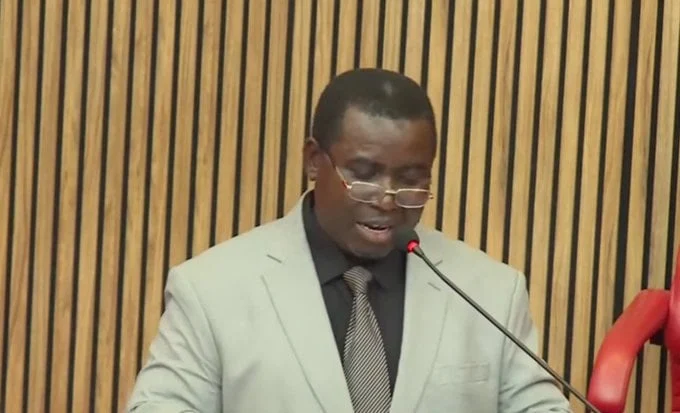
INEC's National Commissioner for Voter Education and Publicity, Malam Mohammed Haruna, made this known on Thursday in Abuja. He spoke during a session organized by the Peering Advocacy and Advancement Centre in Africa (PAACA) and Legis360.
The session brought together political parties, Civil Society Organisations (CSOs), and INEC officials. They discussed the recent Ekiti governorship election and INEC's plans for the 2027 elections.
Mr Haruna mentioned that even though they are still waiting for funds, preparations for the elections are ongoing. INEC has requested a budget of ₦873.78 billion for the elections, focusing on election operations, technology, and capital expenses.
He explained that the delay is within the legal time limit set by the Electoral Act 2026. This law states that funds for elections must be released “not later than six months before the next general election.”
He added that INEC is already planning to buy new election materials. This includes the Bimodal Voter Accreditation System (BVAS) and other equipment that were damaged or lost in earlier elections.
“Our Director of ICT has just returned from China for procurement. Not all the BVAS devices used during the last general elections were recovered. We need to place orders, and these logistics take time,” he said.
Mr Haruna also said that the commission plans to run mock presidential elections to test its technology. This is to avoid the issues with the INEC Result Viewing (IReV) portal during the 2023 presidential election.
Addressing concerns about the high cost of elections, Mr Haruna urged people to look beyond the total amount and understand election administration. He said the cost of elections in Nigeria is still low compared to other countries.
“This ₦800 billion plus sounds huge, but when you divide by the number of voters, it is about six dollars each, which is reasonable for Nigeria,” he said. “People forget that a lot of what we use is imported. The BVAS devices and many other materials come from abroad. Changes in exchange rates also affect these costs.”
On the issue of conflicting court judgments, Mr Haruna said this is a big challenge for the commission. He mentioned that last-minute court orders received just 24 to 48 hours before the Ekiti election disrupted their work and the production of election result sheets.
“When a court gives a last-minute order to include parties like the Nigeria Democratic Congress (NDC) and the African Democratic Congress (ADC), we have to change the software and update materials quickly. This gives us very little time to test everything, but we still manage to comply with the rules,” Mr Haruna explained.
He confirmed that INEC is working to talk to the relevant judicial authorities about this issue. He noted that the previous leadership of the commission did something similar before the 2023 elections.
On a recent report about a data breach, Mr Haruna assured Nigerians that INEC has strong data protection rules. He said an electoral officer who leaked sensitive information due to personal reasons has been suspended. The case has been reported to the Nigeria Data Protection Commission (NDPC), while they wait for the Police and State Security Services (SSS) to finish their investigations.
Looking back at the Ekiti election, Mr Haruna described INEC’s logistics and technology as very successful. He pointed out that the BVAS machines worked well, achieving a 98 percent accreditation rate. He noted minor technical issues with biometric capture for older voters due to age but said INEC’s support teams fixed them quickly.
He also expressed concern about vote-buying. He said voters were seen waiting for money from politicians before casting their votes.
In an interview, PAACA's Executive Director, Ezenwa Nwagwu, urged the Federal Government and political leaders to ensure INEC receives its funds early. He warned that delays force a dangerous, emergency approach to planning.
“Whenever you create an emergency, corruption is very close behind. When things are not done on time, people try to bypass rules. Politicians exploit this to undermine the process's credibility,” Mr Nwagwu said.
He added that timely financial support is important because INEC has tight deadlines for procurement. He mentioned that the commission needs to replace damaged BVAS devices from flooding in Edo during past elections.
Mr Nwagwu urged CSOs and the public to focus on political actors causing delays instead of blaming INEC for logistical issues.
“Everyone should help create an environment for INEC to do its job well. If you short-change their resources, we blame INEC for problems, but do not hold politicians who create the challenges accountable,” he said.
On the topic of conflicting court judgments, Mr Nwagwu said all stakeholders, including citizens, should address this issue. He argued that conflicts would not happen if citizens stopped taking unnecessary cases to court.
“We can copy the American system that resolves some issues without going to court. Here, everything goes to court, even up to the Supreme Court,” he said.
Mr Nwagwu noted that the interactive sessions aim to review the Ekiti election to find successes, challenges, and ways to improve before 2027. Other attendees called on INEC to set up long-term training for ad hoc staff, especially for members of the National Youth Service Corps (NYSC).
Drop your comment
No comments yet — be the first to drop the gist 👇