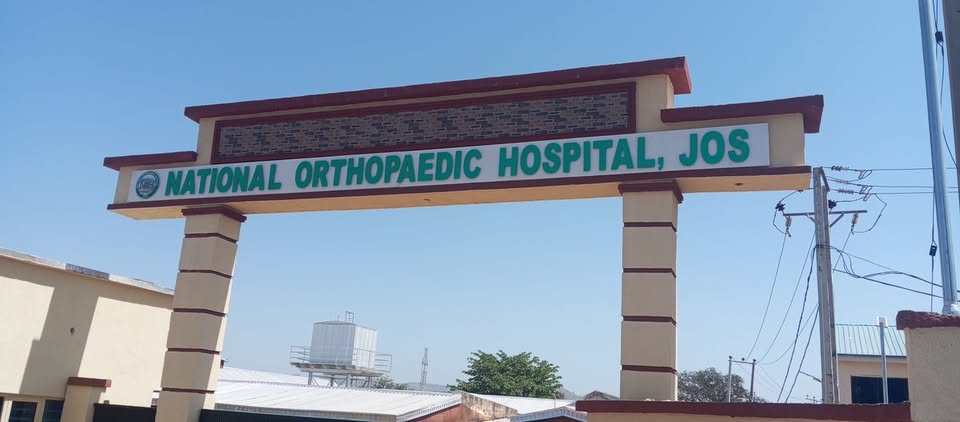
The National Orthopaedic Hospital in Jos has rejected claims of medical negligence after the death of a nursing student named Raphael Bilat.
In a statement on Wednesday, the hospital's management said its medical staff promptly activated emergency procedures and provided life-saving care.
Some of the deceased's colleagues claimed he did not receive proper medical attention.
The hospital reported that Mr Bilat arrived at its Accident and Emergency Unit at about 6:05 p.m. on Monday, 16 November. He collapsed during a football match.
Mr Bilat's death caused anger among his colleagues and the nursing community. They raised concerns about inadequate emergency facilities and delays in medical care at the orthopaedic hospital and the Jos University Teaching Hospital (JUTH), where he was later taken.
One of his colleagues, Ifeoma Onyibe, claimed that crucial emergency supplies, like oxygen, were missing when the student arrived at the hospital.
She also stated that the students waited for around two hours without seeing the doctor on duty.
The hospital responded by saying the student was in a very critical state when he came in. According to their statement, Mr Bilat was accompanied by many student nurses after he collapsed.
The hospital described him as clinically unresponsive, pale, and cold to the touch. He had fixed and dilated pupils with a Glasgow Coma Scale score of 3/15, showing he was profoundly unresponsive.
The nurses on duty started resuscitation immediately while informing the doctor on call. They set up an intravenous line and checked his blood sugar, which was 8.4 millimoles per litre.
The attending doctor confirmed that Mr Bilat was unresponsive due to cardiac arrest. This led to continued cardiopulmonary resuscitation (CPR), intravenous fluids, and the administration of 200 milligrams of hydrocortisone.
The hospital's monitoring showed a body temperature of 31 degrees Celsius, but they could not record his pulse, blood pressure, or oxygen saturation.
They stated that intravenous adrenaline was given and supplemental oxygen was supplied, but the student remained unresponsive.
The hospital claimed that efforts to resuscitate Mr Bilat were hindered by a large number of student nurses who crowded the Accident and Emergency Unit. This crowd made it hard for medical staff to manage the patient properly despite repeated requests for calm from hospital staff.
Some students reportedly insisted on performing endotracheal intubation themselves and giving what the hospital called unapproved doses of emergency medications. This included up to six ampoules of intravenous adrenaline and atropine, against the advice of the attending physician.



The hospital said this situation overwhelmed its internal security personnel and operatives of the Nigeria Security and Civil Defence Corps present at the hospital.
Despite the alleged disruptions, the management insisted that its medical team kept trying to resuscitate the student.
Later, the students asked for an ambulance to move Mr Bilat to JUTH for further treatment. At that time, the hospital reported that his body temperature had dropped to 30 degrees Celsius, his oxygen saturation was 42 percent, and his pulse and blood pressure were unrecordable.
A second doctor on call managed to reach the patient through the crowd. He reassessed Mr Bilat's condition and explained the critical situation to the students before agreeing to the transfer.
The hospital's ambulance left at 8:59 p.m. and departed at 9:05 p.m. It was accompanied by a nurse, a porter, and student representatives.
The statement said resuscitation efforts continued during the trip, but the patient stayed unresponsive with his oxygen saturation at 42 percent.
He was handed over to the Accident and Emergency team at JUTH at 9:20 p.m., and the ambulance returned to the orthopaedic hospital at 10:05 p.m.
The management maintained that it provided emergency care following national healthcare guidelines. They insisted that essential medications, intravenous fluids, and emergency drugs were used as needed.
The hospital also mentioned that another student from the same group was brought in during the incident in critical condition. They said their medical team stabilized her before she regained consciousness.
While expressing condolences to the deceased's family, his colleagues, and the nursing community, the hospital urged for calm and asked the public to respect medical procedures during emergencies.
They warned that attempts by untrained individuals to take over emergency actions and give restricted medications could harm patient care.
The hospital's statement did not clarify the exact cause of Mr Bilat's collapse or respond to all specific claims about the availability and functionality of emergency equipment, including issues related to a defibrillator.
These conflicting accounts have raised serious questions about emergency readiness, the availability of crucial equipment, and coordination between medical staff and accompanying students during critical situations.
There are also concerns about how Mr Bilat was transferred between the two federal hospitals. The orthopaedic hospital stated that Mr Bilat was handed over to JUTH at 9:20 p.m., while earlier reports said he was pronounced dead around 9 p.m.




Drop your comment
No comments yet — be the first to drop the gist 👇