
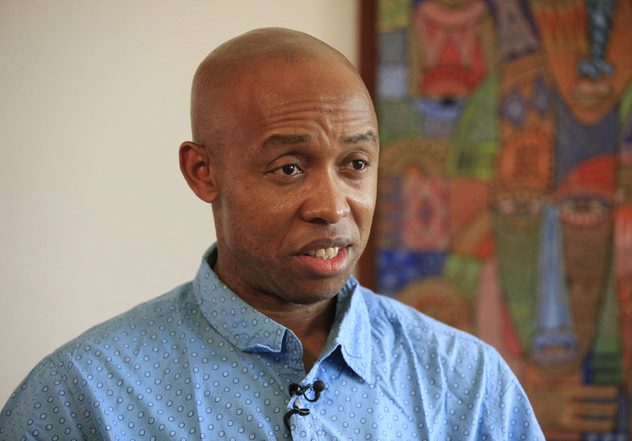
On 11th November, lawyer Kalu Kalu was on Channels Television’s “Politics Today.” He talked about Justice Peter O Lifu’s ruling from 5th November. This ruling canceled the leadership of the African Democratic Congress (ADC) led by David Mark and the decisions made under it. Kalu argued that the judgment did not clearly invalidate Atiku Abubakar’s presidential nomination. During this discussion, he referred to Justice Lifu as a “coconut judge.” The host, Seun Okinbaloye, interrupted him and asked him to take back the comment. Kalu replied, “Because of time, I do withdraw it.”
On 13th November, the NBA President, Oyinkansola Badejo-Okusanya (SAN), sent a complaint to the Legal Practitioners Disciplinary Committee (LPDC). This complaint included the recording of the broadcast, claiming Kalu made disrespectful comments about a sitting judge. The NBA made it clear that this is not a conclusion. Kalu will get a chance to respond, and the LPDC will make a decision. Based on what is known publicly, Kalu’s charge cannot be easily supported for three reasons: ambiguity, context, and perception.
What does “coconut judge” mean? The complaint seems to focus on one meaning: that it is an insult. But “coconut” is a metaphor, and metaphors can be unclear. In Nigeria, a coconut is tough on the outside and hard to crack. A “hard nut to crack” means someone who is stubborn and hard to convince. If Kalu meant that Justice Lifu is tough as a judge who will not change his mind, that is not a personal insult. It is a comment on how he judges cases. Lawyers often criticize judges in strong terms. That is not misconduct. That is part of their job. The LPDC must show what Kalu really meant and that his words could only be taken as an insult. They cannot do that. This is similar to the lesson from R v. Bentley (Deceased) [1998] EWCA Crim 2516.
In 1952, a young man named Derek Bentley was on a roof with Christopher Craig during a burglary. The police said Bentley shouted: “Let him have it, Chris.” The prosecution argued it meant: “Shoot him, Chris.” The defense said it could mean: “Give him the gun, Chris surrender it.” The jury believed the prosecution’s meaning. Bentley, who never fired a shot, was found guilty of murder and hanged in 1953, even though the jury suggested mercy. In 1998, the Court of Appeal overturned the conviction. Lord Bingham stated that Bentley did not get a fair trial. The trial judge did not properly instruct the jury on the burden of proof, shared responsibility, and the possible meanings of “Let him have it.” Bentley’s case teaches us that words can have different meanings.
The LPDC must let Kalu explain what he meant, something that TV did not allow. In June, the Court of Appeal criticized Justice Lifu’s actions in the ADC deregistration case, calling it “judicial impertinence” and “judicial rascality.” On 28th July, it overturned the deregistration. Those words are much stronger than “coconut.” They criticized how Lifu conducted a judgment, and they were justified. Kalu has the right to say that his comment falls in the same category: criticism of a ruling, not an attack on the person. The ADC’s question, “What has Kalu said that the Court of Appeal has not already said?” is rhetorical, but it highlights an important point about fairness.

This charge does not happen in a vacuum. The ADC leadership case started on 2nd September 2025 before Justice Emeka Nwite. It was moved to Justice Lifu. The Chief Judge, Justice John Tsoho, said the move happened because Nwite was promoted. But he did not explain why it had to be Lifu, who was already dealing with the ADC deregistration case. Lifu gave his judgment just three days after the Court of Appeal put a hold on it. On 1st June, ADC National Secretary Rauf Aregbesola wrote to object to the reassignment and stated he had lost confidence in Lifu. The next day, the case was assigned to Lifu. On 5th November, Lifu canceled Mark’s leadership and its decisions.
This timeline creates a feeling of bias. It does not prove bias but gives the impression that a fair-minded person would find concerning. In law, as stated by R v. Sussex Justices ex p Mc Carthy (1923) All ER Rep 233, justice must not only be done but must also be seen to be done. Kalu was commenting on this timeline during a heated moment on live TV, without time to explain. To discipline him for this while questions about the assignment and perception remain unanswered by the National Judicial Council could create a second impression: that the Bar is quicker to punish a lawyer who questions the process than to look into the process itself.
The NBA is correct that lawyers should show respect to courts. The ADC is also right that the NBA is not a political party. Both statements can be true. The way to settle this is not to punish unclear speech. It is to listen to the explanation. Bentley was hanged over four unclear words. It took 45 years to fix that mistake. We should not take 45 years to learn this lesson: when words can have two meanings, the law should not pick the worst one and punish the speaker. If “coconut” means tough or unyielding, then Kalu was criticizing a judgment. And criticizing a judgment, even strongly, is not misconduct. It is a lawyer’s duty, R v. Commissioner of Police of the Metropolis, ex p. Blackburn [1968] 2 QB 118.




Drop your comment
No comments yet — be the first to drop the gist 👇