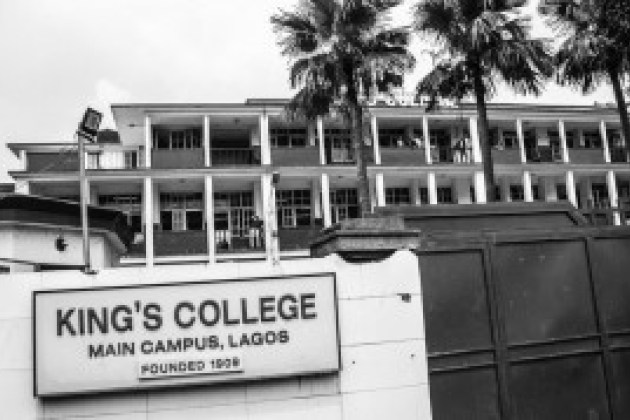
For many Nigerians, King’s College in Lagos is not just a secondary school. It stands as a symbol of academic excellence and a place where future leaders are trained.
Founded in the colonial era, this school has shaped many Nigerians who later held key positions in government, business, and education.
The school is known for discipline and academic achievement. It aimed to bring together young Nigerians from different regions to learn and grow.
But years of poor funding and bad facilities have raised doubts about whether the school still lives up to its good name.
In response, the Federal Government and the King’s College Old Boys Association (KCOBA) have agreed on a Public-Private Partnership (PPP) for the school.
This proposal has stirred up controversy, with education unions against the plan.
The government insists this is not a sale or privatization, but the argument has sparked heated discussions on how to maintain the school’s legacy while fixing its failing facilities.
The unions are worried about what this plan means for staff, the future of the school, and whether it could lead to similar situations in other unity colleges.
At the heart of the matter is a big question: how can the government fix schools that once represented the best of public education?
Education Minister Tunji Alausa said the government has no plans to sell any of the country’s Federal Unity Colleges.
He called reports saying otherwise misinformation, stressing that the government still owns these schools.
"Federal Government of Nigeria, through the Federal Ministry of Education, is not going to sell any of our Federal Unity Colleges; that is the government position, and go and write it down and hold on to that.
"So, if the unions start telling you that, ‘Oh, they are protesting because they want to sell unity colleges,’ that is absolutely false.
"We are not selling any of our Federal Unity Colleges. Government still has its responsibility."
He explained that the arrangement for King’s College aims to tackle its infrastructure and management problems while returning it to its former glory.
He mentioned that King’s College was set up to create leaders, similar to some well-known schools worldwide that have historically trained leaders.
He pointed to Eton College in the UK and Ivy League schools in the US as examples of places that have produced many leaders.
Mr Alausa noted that Nigeria once had similar schools, like King’s College and Barewa College, that raised many prominent Nigerians.
But he admitted that many Unity Colleges have badly fallen apart after years of neglect.
He recalled how, after taking office, he and the Minister of State for Education, Suwaiba Ahmad, divided the country into regions to check the state of Unity Colleges.
His visit to King’s College was unplanned and started around 7:30 a.m.
Mr Alausa found a school facing serious infrastructure and environmental issues during his visit.
He described the toilets and bathrooms as being in terrible shape, and the students’ dorms as very run-down.
The minister also mentioned that the dining areas, classrooms, and labs were poorly lit and filled with rubbish.
He said the school had ongoing electricity problems, recalling how he contacted the local electricity company and demanded that power be restored.
"I will not leave this school today if you do not come and connect this school back to electricity," he told the company’s chairman.
He noted that electricity was later restored to the Senior Secondary School, adding that the issues were not only in one part of King’s College; the Junior Secondary School also needed major repairs.
Mr Alausa also spotted another problem during his visit: parts of the school were being used as a car park.
He saw about 200 cars parked on one side of the compound, with more near the gate.
He questioned the safety risks of having a public car park in a school mostly filled with children.
The minister ordered the cancellation of this arrangement, worried that easy access could put students in danger.
This situation, he said, shows the wider management issues many Unity Colleges face.
For the federal government, the King’s College debate is not just about one school. It is part of a bigger conversation about the future of public education and Unity Colleges in Nigeria.
Mr Alausa said government money alone might not be enough to fix years of infrastructure problems in these schools.
He estimated that rehabilitating Unity Colleges would cost hundreds of billions of naira. He pointed out that the government has other pressing needs like healthcare and security.
He said even if the government had N2 trillion to spend, it still wouldn’t be enough to cover the infrastructure needs of the 115 Unity Colleges.
The minister said the government is looking into other funding and management options but insists that ownership will stay with the federal government.
He mentioned a plan to use about $20 million from a World Bank-supported program for the rehabilitation of selected Unity Colleges.

He added that the government is also considering public-private partnerships for some schools.
Mr Alausa said KCOBA proposed to take charge of rehabilitating and managing King’s College through a non-profit deal.
He noted that the association has previously invested a lot in the school but felt more work was needed to bring it back to its former glory.
"They want their past back," he said, referring to the Old Boys wanting to restore the school that shaped their lives.
Mr Alausa said the association includes successful professionals and business leaders ready to put in resources for the school without seeking profit.
He said the proposed arrangement would have strict performance targets, with the Ministry of Education monitoring progress through an oversight team.
The minister also insisted that this deal would not lead to higher school fees.
But beyond fixing buildings, the government is also worried about whether some unity colleges are still meeting their original goals.
Mr Alausa said King’s College was meant to unite students from various regions, but now over 60 percent of its students come from one geopolitical zone.
He believes this goes against the original idea of unity colleges as places where young Nigerians from different backgrounds could learn together.
Sharing similar thoughts, Ms Ahmad emphasized that the government wants to improve the learning environment and ensure quality education for students.
She stated that no teacher would lose their job because of this arrangement, and any changes would follow Public Service Rules.
She added that teachers could express their preferences for where they want to be moved.
The Minister of State also highlighted the importance of communication, saying the government has started talks with unions and set up committees to address concerns about the Memorandum of Understanding and monitor its execution.
According to her, the agreement is flexible, and valid concerns that could enhance its implementation will be taken into account.
For the Joint Workers Union of the Federal Ministry of Education, the issue goes beyond what the government calls the arrangement.
Abraham Onuche, Chairman of the Joint Workers Union, said their disagreement is not just about King’s College’s state but also about how the decision was made.
He argued that proper discussions with unions and other stakeholders should happen before any major decisions affecting Federal Unity Colleges.
Mr Onuche claimed that letting KCOBA manage King’s College could lead to other alumni associations wanting similar arrangements.
"If that King’s College goes, as we follow in law, that’s what they call precedent.
"That means old boys have set precedent, and tomorrow, another old boys association can say they also want to take over the management of their own school.
"Our demand now is one, that the minister should revoke that decision concerning King’s College and other schools," he said.
Analysts say this concern is important since many Unity Colleges have active alumni groups with strong ties to their old schools.
Unions worry that this could slowly change the nature of Federal Unity Colleges, even if the government currently claims there are no plans to replicate the King’s College model.
Chigozie Ngadi, chairperson of the Association of Senior Civil Servants of Nigeria (ASCSN), Federal Ministry of Education chapter, said the union’s main worry is ensuring that kids from poor families still get good education.
Mr Ngadi said the Old Boys Association should help the school without taking it from the public.
"We are speaking for Nigerians. We are speaking for downtrodden Nigerians to have access to good education.
"We are only demanding that poor children should have access to King’s College and quality education.
"The old boys association should give back to that society that made them what they are and not take from it," he said.
Mr Ngadi said the unions don't oppose partnerships that could improve school facilities.
However, they prefer arrangements that keep public ownership and ensure schools are open to all children, no matter their financial status.
Observers say this disagreement has become part of a larger discussion about the future of public education in Nigeria.
The government wants to secure resources quickly to prevent further decline, arguing that years of neglect need urgent attention.
But unions call for caution, questioning if public schools should be handed over to alumni groups, even if they are non-profit.
They stress the need to protect public ownership, maintain access for students, and avoid setting a dangerous example without proper discussions.
While both sides agree that the current situation cannot go on, students remain stuck in the middle of this conflict.

Drop your comment
No comments yet — be the first to drop the gist 👇