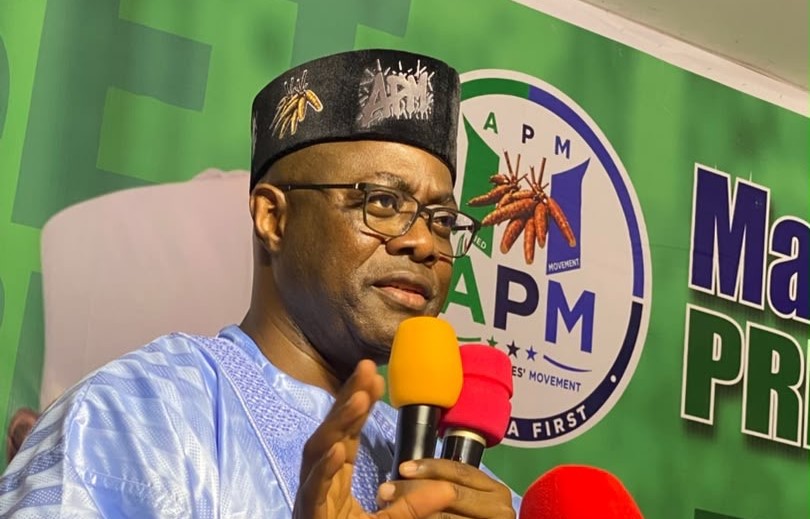
Oyo State Governor Seyi Makinde, who is also a presidential candidate for the Allied Peoples’ Movement (APM), has released a four-pillar policy plan. This is part of his Reset Nigeria agenda. The plan lays out a three-year roadmap for changing the country's economy, security, education, and political systems.
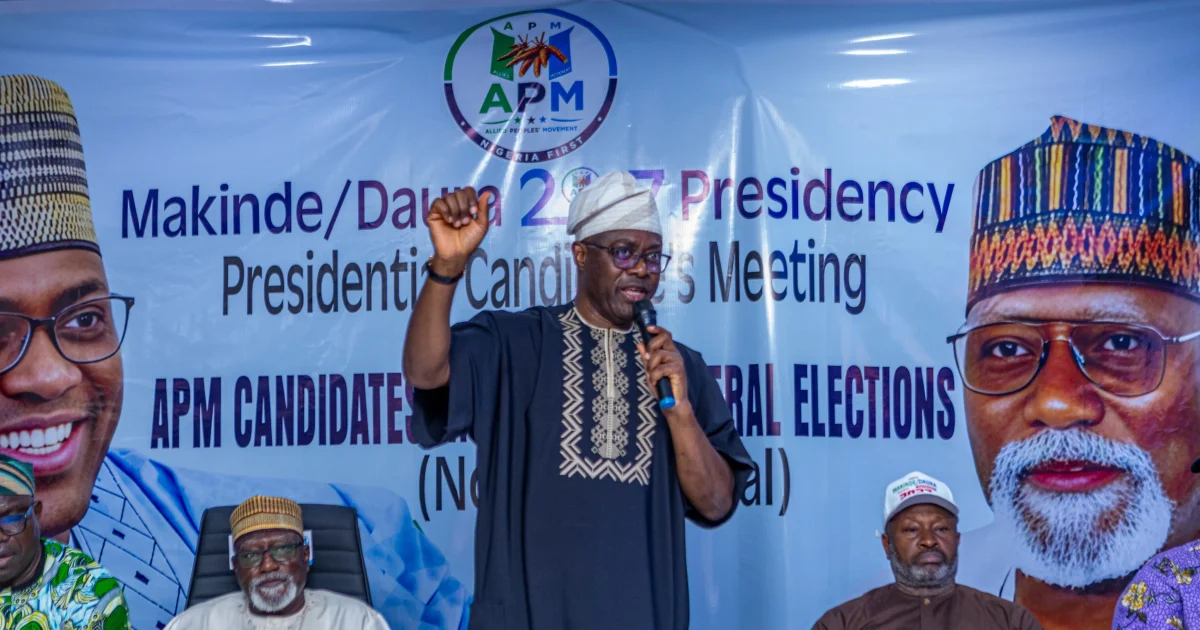
As the end of his second term approaches, Mr. Makinde is running for president with Lawal Daura, a former Director General of the State Security Service (SSS), as his running mate.
Mr. Makinde has a background in electrical engineering and business. He started Makon Engineering and Technical Services in 1997, which later became the Makon Group, focusing on oil and gas, power generation, and energy infrastructure.
His experience in engineering, energy, and business development raises questions about whether it is enough to manage Nigeria’s larger economy, given his nearly eight years in public office as governor.
In his 2027 presidential manifesto, called Reset Agenda, Mr. Makinde lists the economy as the first of four key areas. He suggests ways to boost local production, lower living costs, attract private investments, and enhance Nigeria's industrial strength.
His economic plans include the future of government-owned refineries, local crude supply, electricity, agriculture, financing for infrastructure, and regulations for businesses.
Nigeria’s economy has shown some recovery, but many families are still struggling. The National Bureau of Statistics (NBS) stated that the economy grew by 4.43 percent in the second quarter of 2026, up from 3.89 percent in the first quarter.
Yet, many people still face high living costs, especially for food and essential items. Headline inflation went down to 14.06 percent in October 2026 from 14.63 percent in September, but food inflation stayed high at 19.13 percent year-on-year, according to the NBS.
The International Monetary Fund (IMF) estimated that 63 percent of Nigerians live below the national poverty line. About 27 million people faced food insecurity in autumn 2025.
These figures highlight the difficulty of turning economic growth into better living conditions for everyone. Mr. Makinde’s manifesto notes that some policies from past administrations could support his agenda. He argues it is better to fix what is broken than to start from scratch.
“The purpose of the Economic Reset is to stop the loss, recover value for Nigerians and build systems that make the same failures less likely to happen again,” the manifesto states.
Refinery Reforms and Energy Credits
One specific proposal is to conduct independent assessments of Nigeria’s government-owned refineries within six months of taking office. Within a year, the new government would decide on one of three options for each refinery: find a capable private partner, convert it into a facility for oil, petrochemical, or storage, or shut it down properly.
The manifesto aims to finalize viable transactions within 18 months and set production or conversion goals by the end of the third year.
The plan also includes a Domestic Energy Value Credit (DEVC). This would allow Nigerians to get a share of the value of local crude oil that is refined and used at home. The idea is to lower the effective cost of eligible fuel for households and businesses.
A percentage of the budget benchmark crude oil price would establish credits for qualifying domestic fuel. Nigerians would also benefit when the price of Nigerian crude exceeds the benchmark price, based on an agreed percentage.
The manifesto emphasizes that the scheme will use digital verification and independent monitoring to prevent fraud and corruption.
It also plans to operate the credit within set fiscal limits, without fixing pump prices or creating endless subsidies. Details about funding, credit rates, and consumer benefits would be publicly shared.
For local crude supply, Mr. Makinde suggests making supply obligations clearer and enforceable. This includes monthly updates on crude volumes provided to local refineries.
He also proposes a clear pricing formula based on international benchmarks to ensure local refiners are not overcharged for export costs that do not apply to them.
Electricity Reforms
Electricity reform is another major part of the economic agenda. Mr. Makinde wants to complete the transition to coordinated federal and state electricity markets according to the Electricity Act. This would prevent fragmented state markets and overlapping rules.
“The Federal Government will remain responsible for interstate transmission, wholesale trading, national system operation and reliability standards. Qualifying states will regulate intrastate distribution, embedded generation, local supply and consumer service,” the manifesto explains.
It also proposes allowing industrial and agricultural clusters to get electricity without relying solely on the national grid.
For vulnerable households, there would be a lifeline electricity plan. Verified beneficiaries using prepaid meters would get their first 50 kilowatt-hours each month at a protected rate. Electricity suppliers would be paid only for the actual power delivered.
Agriculture, Infrastructure and Industrial Development
On agriculture, the manifesto wants a national production strategy to connect farming, security, storage, processing, transportation, and market access.
Instead of a government-controlled farming system, the new government would work with states and private investors on priority food value chains to tackle production and distribution issues.
The first priority crops are rice, maize, cassava, beans, and tomatoes. The list may change based on household spending, local production, import needs, and regional suitability.
For each selected crop, the government would create a plan covering production areas, land access, inputs, security, financing, storage, processing, transport, and prices.
The proposal includes working with states and private investors to create or expand viable production and processing hubs. The government would offer shared infrastructure and stable investment conditions, while private businesses would be expected to invest and create jobs.
Agricultural security is also part of the broader security plan. Designated agencies would identify threats and protect farms, storage facilities, and transport routes that move food to processors and markets.
For infrastructure, Mr. Makinde wants to focus on key federal roads connecting farms, industries, ports, markets, and border communities. Road projects would be assessed by how much they improve travel times, safety, and logistics costs.
He also suggests a Federal-State Road Compact to clarify funding responsibilities, standards, supervision, and timelines.
For industrial development, the new government would select no more than five national value-chain groups for priority investment. These would include food, textiles, pharmaceuticals, and construction materials linked to local minerals.
The proposal points out that the government would partner with businesses to address gaps in infrastructure, energy, skills, funding, and regulations, expecting private investors to take part in production.
It would also connect government-funded programs to actual job creation and business results, rather than just counting trained beneficiaries.
Fiscal Discipline and Business Costs
On public finance, Mr. Makinde wants to keep the Central Bank of Nigeria’s independence while pursuing price stability with a clear inflation target.
His administration would avoid defending an artificial exchange rate or creating preferential foreign-exchange systems that reward access over production.
The manifesto promises to stop routine monetary financing of federal deficits outside strict legal limits. It aims for transparency in borrowing decisions, explaining their purposes and expected returns.
One specific goal is to keep the federal fiscal deficit within three percent of gross domestic product by the end of the third year, except where the law allows temporary deviations.
He also plans to lower the federal debt-service-to-revenue ratio from 67.22 percent in January to September 2025 to no more than 50 percent.
Reducing Bureaucratic Barriers
To cut down bureaucratic hurdles for businesses, the manifesto introduces a ‘Tell Government Once’ standard. This means businesses won’t have to submit the same verified information to different federal offices repeatedly.
The government plans to apply this system to 20 high-volume federal business processes across at least 10 institutions in the first year.
A single public register would list all federal business requirements, including taxes, licenses, permits, inspections, and deadlines.
Regarding funding, Mr. Makinde states that the federal budget would mainly finance public responsibilities. Instead of creating new funds for every promise, the government would redirect existing spending from duplication and unfinished projects towards key priorities.

Security: Local Policing and Intelligence Cooperation
The second pillar, the Security Reset, aims to change Nigeria’s security setup. It proposes giving local communities more control while keeping national coordination for larger threats.
Mr. Daura, Mr. Makinde’s running mate, brings years of experience in Nigeria's intelligence services. He served in various security roles, including Director-General of the DSS from July 2015 to August 2018.
The manifesto argues that too much security authority is held at the center. It wants to give governors and communities more power to handle local threats.
It proposes completing the legal and operational frameworks for state policing, ensuring they meet national standards for training and accountability.
State police would focus on local safety and crimes, while federal agencies would handle terrorism and organized crime.
To prevent political interference, the manifesto suggests independent oversight and judicial reviews to protect citizens from misuse of state police.
Another security proposal is a common standard for handling threats among federal and state security agencies.
This framework would ensure every credible threat has a lead agency and a clear response timeline.
The manifesto also wants Security and Economic Recovery Plans for areas hit by terrorism and violence. These plans would combine security actions with efforts to restore farming, transport, schools, markets, and health services.
Education: Focus on Learning and Jobs
The third pillar, the Education Reset, targets foundational learning, school access, teacher training, and skills development.
One major proposal is a National Foundational Learning Guarantee. It aims for every child to gain the basic literacy and numeracy skills needed by the end of Primary Three.
Within three years, the government plans to ensure at least 50 percent of Primary Three students meet minimum standards in literacy and 65 percent in numeracy.
It also wants to cut the proficiency gap by at least 25 percent between the highest- and lowest-performing states.
To achieve this, the manifesto suggests providing extra teaching support, materials, and instruction for struggling children.
“Federal support will help states provide aligned materials, teaching guides, and coaching that help teachers support struggling students,” the manifesto notes.
It also plans to identify barriers keeping children out of school, like poverty and insecurity, and tailor solutions to affected areas.
For teachers, the manifesto proposes linking their professional development to classroom performance, not just attendance at training.
Technical and vocational education would also receive attention, with funding for skills programs.
In tertiary institutions, the government would emphasize practical skills and workplace experience in program accreditation, directing public research funds to projects that solve national issues.
Socio-Political Reforms: More Local Control
The fourth pillar, the Socio-Political Reset, suggests reviewing Nigeria’s federal structure to strengthen public institutions and improve social protection.
A key proposal is a Federal Responsibilities Review to be completed in the first year. This would outline which responsibilities should stay federal and which should be handled by states.
The review would also suggest constitutional amendments and funding arrangements. Responsibilities should not be transferred without the necessary resources and accountability.
For solid minerals, Mr. Makinde proposes giving states a bigger role in resource exploration and exploitation while keeping federal control over issuing mining licenses.
States would be involved in the licensing process and allowed to raise concerns about land use and environmental issues.
He also calls for public registers of mining licenses and stricter monitoring of illegal mining activities.
For local government, the manifesto suggests constitutional changes to let states create or reorganize local governments in a transparent way.
The social protection part aims to create a common system connecting federal and state programs with clear eligibility and appeal processes.
It would focus on households facing severe poverty, disability, and other shocks.
On healthcare, the manifesto proposes a primary healthcare guarantee that outlines required services and medicines for participating facilities.
Federal health funding would be increasingly tied to actual service delivery.
Three-Year Delivery Plan
Although the manifesto outlines a four-year plan, it focuses on key commitments for the first three years. The last year would be for consolidating reforms and sharing results.
In the first 100 days, the proposed administration plans to publish a Reset Delivery Plan that details responsible institutions, funding, timelines, and evidence needed to assess commitments.
A public delivery scorecard would be issued quarterly, showing the status of promises and any delays.
The manifesto states that major results would be verified by independent bodies or appointed assessors.
Mr. Makinde’s experience in Oyo State serves as an example, especially with the Fasola Agribusiness Transformation Centre. This project attracted about N20 billion in private investment and trained over 5,000 young people in three years.
It also connected agricultural production to processing facilities through improved road infrastructure.
However, questions remain about whether these efforts have led to better food production and prices for farmers.
The National Bureau of Statistics reported Oyo had the highest year-on-year food inflation rate at 34.41 percent in March 2025. This raises concerns about whether agricultural investments are making food more affordable.
There are also questions about Oyo’s fiscal independence. BudgIT’s 2025 State of States report showed Oyo generated N65.29 billion in revenue in 2024, while federal allocations made up 86.7 percent of its recurrent revenue.
Although the state’s revenue increased, it still heavily relies on federal funding.
The national proposals go beyond one state and require constitutional changes, legislative approval, and cooperation between various governments and private sectors.
Achieving these ambitious goals will depend not only on the proposed policies but also on available resources and political agreements.
Drop your comment
No comments yet — be the first to drop the gist 👇