Does Nigeria want a good relationship with South Africa, or does it prefer to act like it's in Jankara market? If Nigeria wants a good relationship, it needs to talk seriously about how to avoid its envoy being sent away and retaliating, which would leave everyone worse off. If Nigeria does not want the relationship to be at ambassador level, or if breaking ties is truly in its interest, it should say so clearly instead of practicing Jankara diplomacy.
In Isale Eko, Nigeria, there is a famous market called Jankara. This market has been around since before colonial times. It attracted people from Lagos and other parts of Nigeria to trade in food, clothes, and herbal medicine. Some say the colonial authorities moved the market to a place they called "Junk Area." The Yoruba, in their way, named it Jankara based on what they thought they heard from the British.
Research on Yoruba markets shows that they have an organized system with flexible rules. People who do not know much may think flexible rules mean there are no rules. That is not true. Jankara is not a free-for-all. It is a place where you haggle loudly, and if you are not careful, you might end up buying something different from what you wanted. It is a lively market, but it is not a place to learn about diplomacy.
Understanding Diplomacy
Relations between countries follow long-standing customs. These customs date back to the strategist Chanakya from the fourth century BC and include treaties and international law. The main guide for how envoys should act is the Vienna Convention on Diplomatic Relations, adopted on April 18, 1961, and in effect since April 24, 1964.
I want to add a note here. Today, many people accept that diplomatic talks can happen on social media instead of through private channels. Some major powers have been able to run their foreign policies this way. But smaller countries need to build a lot of strength before trying such tactics, especially with bigger countries. The Vienna Convention cannot be changed by tweets.
Recent Events in Pretoria
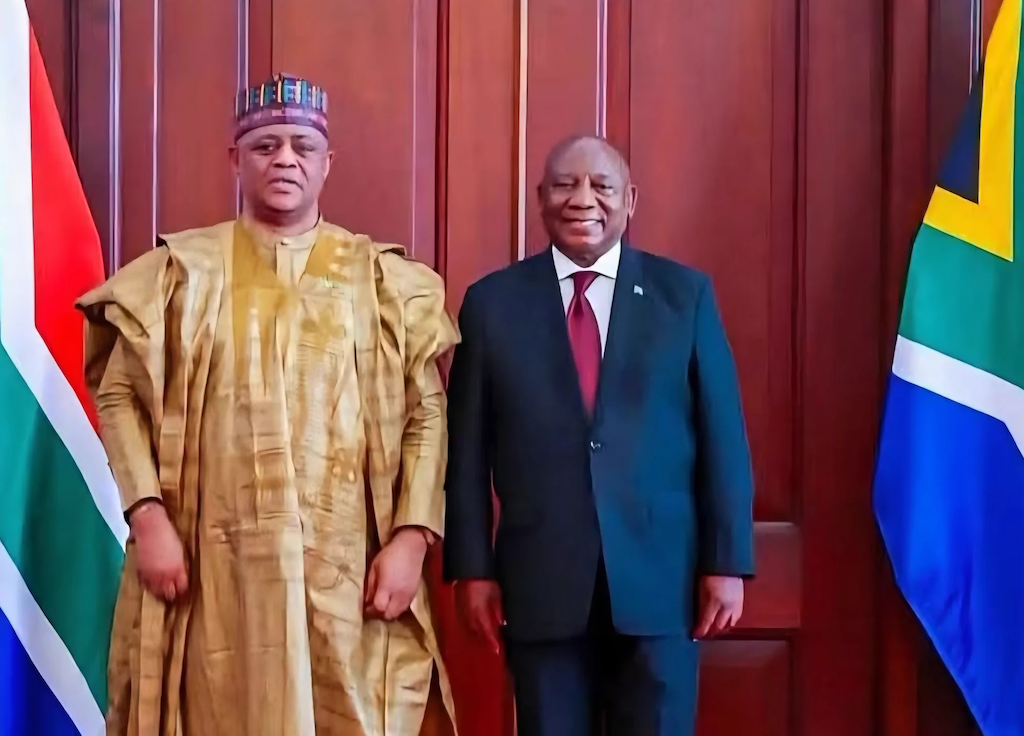
On November 13, Chief Femi Fani-Kayode (FFK) presented his Letter of Credence to President Cyril Ramaphosa at the Sefako Makgatho Presidential Guest House. He was one of 15 envoys received that day. All Nigerians should be proud of his speech. It was delivered with style, and he wore a nice Babanriga. His speech was thoughtful, elegant, and highlighted Nigeria’s support against apartheid. One could even overlook his flattering comparison of H.E. Cyril Ramaphosa to Patrice Lumumba and Madiba.
Then things got messy. Nigeria’s envoy claimed that the Presidency’s livestream cut out Nigeria’s part. He brought this up with the President during the mingling session. He went further and made it public, leading to a back-and-forth with the President’s spokesperson, Vincent Magwenya, who called his approach "grossly inappropriate." Nigeria’s High Commissioner responded in a way that would shock a Jankara trader. On November 17, South Africa’s Director-General of International Relations, Zane Dangor, sent a formal démarche. Nigeria's High Commission then claimed that FFK was "neither reprimanded nor issued any warning." So, we have a new diplomatic term: the démarche that did not happen.
The Vienna Convention Explained
The issue South Africa raised comes from Article 41(2): "All official business with the receiving State entrusted to the mission by the sending State shall be conducted with or through the Ministry for Foreign Affairs of the receiving State or such other ministry as may be agreed." A Head of State at a photo session is not the Ministry for Foreign Affairs, and X is not a channel “as may be agreed.”
Even if one thinks that complaining about a media blackout on the first day was needed, what was gained by broadcasting it, besides informing Nigeria’s Foreign Minister? If the livestream failed, whether by accident or on purpose, that is a problem for the broadcasters. The President had already acknowledged the complaint. Bringing this up with a sovereign at a State event and then sharing it with the media in an undiplomatic way is a démarche sent to the wrong address and then put out in public. How would Abuja react if the situation were reversed?
Article 41(1) also states that diplomats "have a duty not to interfere in the internal affairs of that State." I have seen another video where Nigeria’s envoy gave lectures about South Africa's situation. Prof. Toyin Falola can do that, but an envoy should not.
There’s also the timing issue. Article 13 allows a head of mission to start working once a true copy of his credentials is lodged with the foreign ministry, so it is not technically a breach of the law. But the usual courtesy is that an envoy stays quiet until the sovereign has received his letter. A viral video of him showing off to Nigerians at an Owambẹ before the presentation was a breach of that courtesy.
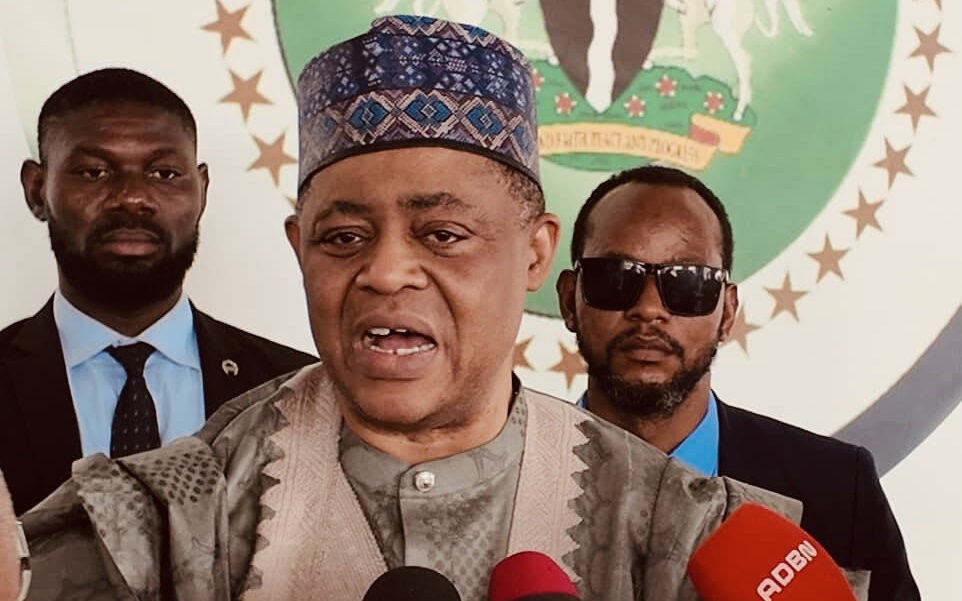
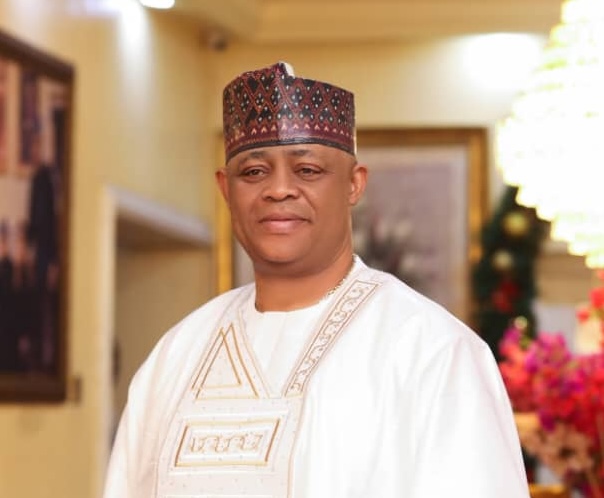
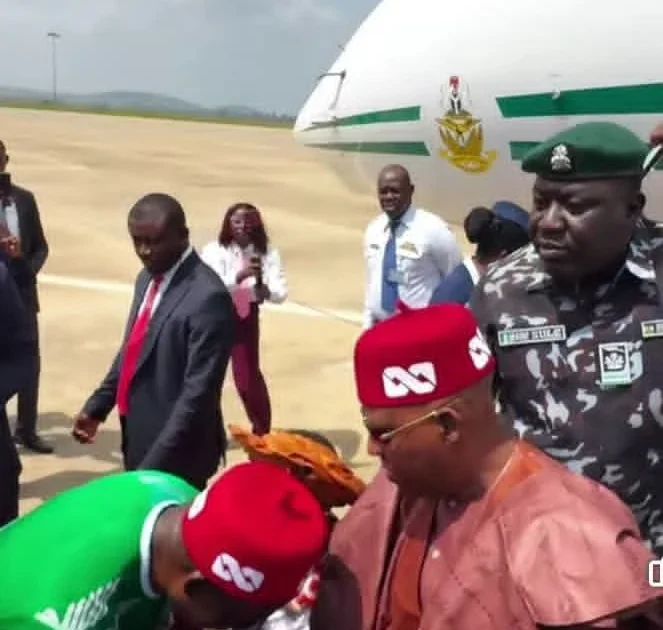
Then there was the gesture. Touching a sovereign and calling him "a brother" in a way many saw as disrespectful is not appropriate. The Yoruba would ask: "Ta l’ẹgbẹ rẹ?" meaning who is your mate? Tinubu is Ramaphosa’s brother, not FFK’s. But remember: touching is allowed at Jankara market.
The High Commissioner's Challenge
I want to be fair to FFK. No posting in Africa is tougher than Pretoria for a Nigerian envoy. FFK is Nigeria’s first main High Commissioner there in four years. He arrived after Nigerians were killed in South Africa and after xenophobic protests led Nigeria’s Ministry of Foreign Affairs to summon South Africa’s acting High Commissioner. Nigerians in South Africa want someone to stand up for them, and many at home support every action. Some Nigerians think that a strong approach is justified by how Nigerians have been treated in the past.
The Convention says an envoy must "protect the interests of the sending State and its nationals in the receiving State." But Article 3(1)(b) adds: "within the limits permitted by international law." Those eight words are important. Afrophobia and complacency by the South African State are not enough reasons for Nigeria to act undiplomatically and forget its values. The envoy’s job is to mend relationships and get support from the authorities for Nigeria’s interests. You do not win over a host government by humiliating it in public.
Where We Are Now
Nigeria’s Ministry of Foreign Affairs has spoken diplomatically. On the day of the presentation, it reported that the High Commissioner promised to strengthen ties and tackle issues through dialogue. Exactly. Then, on November 17, the same day as the DIRCO meeting, the Ministry released Press Statement No. MFA/PR/2026/304. It said it had "followed with keen interest" the High Commissioner’s recent meetings with South African officials. It highlighted "the importance of diplomatic engagement in resolving outstanding matters between our two countries," a relationship "based on African solidarity, friendship, and mutual respect." And the key line: the Ministry is reviewing "the report on the events that took place in recent days, including discussions at DIRCO." Read that carefully. No praise for the online fight. No mention of the High Commission’s talk of contempt. The Ministry also mentioned "discussions held at DIRCO": the démarche that Nigeria’s High Commission downplayed was recognized in Abuja. This is how foreign ministries convey a lot by saying little, and when a Ministry says it is reviewing what happened, an envoy should pay attention. South Africa’s Foreign Minister, Ronald Lamola, has called the matter closed, and there are reports that President Tinubu reached out to President Ramaphosa to ease tensions.
Meanwhile, Nigeria’s High Commissioner is back in Nigeria. On November 23, he met the Minister of State for Foreign Affairs, Ambassador Sola Enikanolaiye, in Abuja. He insists he has not been recalled or reprimanded, and that he came for regular consultations, to give reports, receive policy direction, and prepare for his family’s move to South Africa. One can take him at his word.
Nigeria’s Decision
The Vienna Convention, in Article 9(1), allows the host country, "at any time and without needing to explain its decision," to declare a diplomat persona non grata. What would Nigeria gain from a possible PNG? The satisfaction of exercising its right to respond? Why send someone whose actions can be predicted from the start?
It is unlikely that President Tinubu thought much about who should go where as an ambassador. President Bola Ahmed Tinubu has shown since he took office that foreign relations are not his main concern. And the Senate’s "take a bow" approach does not look good for proper oversight. FFK was first sent to Germany. Why the change? He claims he asked for South Africa for personal reasons, while others say Berlin was not interested. Neither explanation suggests that Tinubu intentionally sent a fighter to Pretoria.
Does Nigeria want a good relationship with South Africa, or does it want to act like it’s in Jankara market? If it wants a good relationship, Nigeria must have serious discussions to prevent its envoy from being sent away, leaving everyone poorer. If the goal is the latter, then why send a High Commissioner at all? If Nigeria does not want a relationship at ambassadorial level, or if breaking ties is truly in its interest, it should state that clearly instead of practicing Jankara diplomacy.
What Pretoria needs is a calm Nigerian High Commissioner who understands South Africa’s social, political, and economic issues, Nigeria's own problems that push Nigerians into South Africa, and the geopolitics that connect Africa’s two largest economies. Pan-Africanism suffers greatly with an envoy who acts as if he were the Foreign Minister and ignores the boundaries that every envoy accepts with their letter of credence.
Drop your comment
No comments yet — be the first to drop the gist 👇