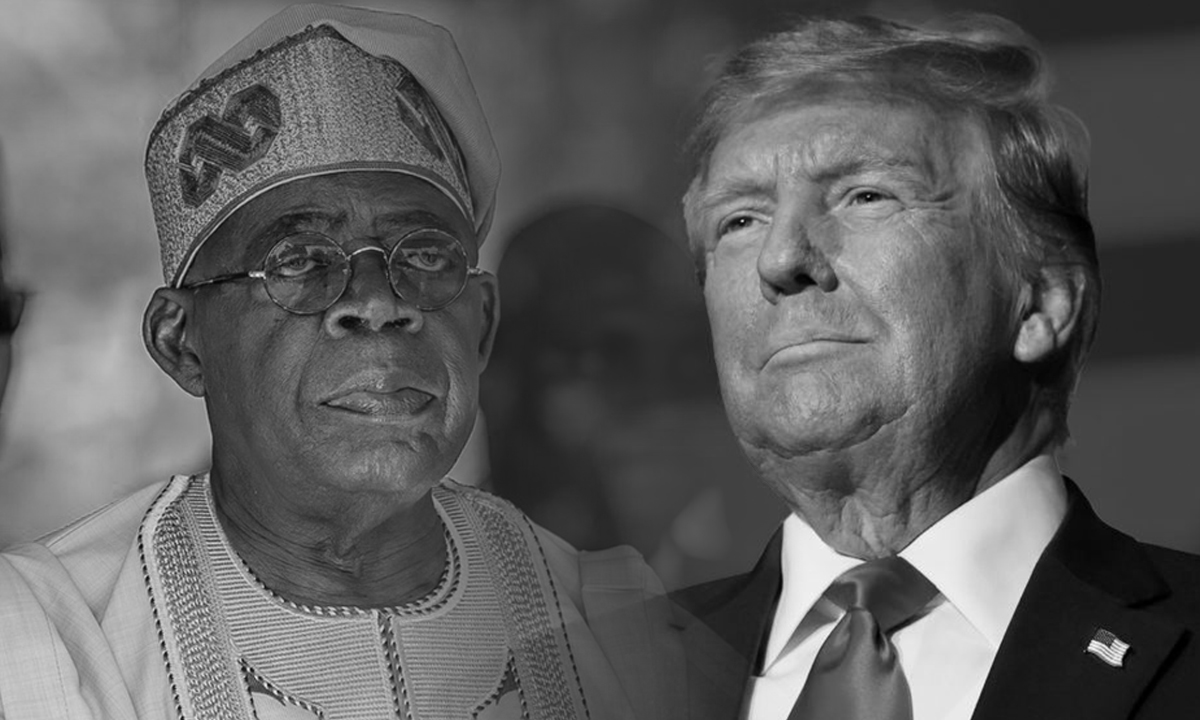
When Nigeria signed a health cooperation deal with the United States in December 2025, the government committed to more than just receiving billions of dollars in US support.
The deal requires Nigeria to share biological specimens, samples, genetic data, and information on new infectious diseases that could lead to epidemics or pandemics.
It also allows the US to share these materials with qualified American organizations working on developing medical tools and treatments, while increasing US oversight of health programs.
Under a separate agreement for sharing specimens, Nigeria must start sharing requested materials within five days of a request from the US government unless both sides agree on a different timeline.
In return, the United States plans to provide about $2.08 billion in health support between 2026 and 2030. Nigeria is expected to contribute about $3 billion in local health funding during the same period.
A review of the signed five-year Memorandum of Understanding (MoU) and its accompanying agreements shows how this deal will affect health data, disease monitoring, healthcare workers, medical supplies, and Nigeria's financial responsibilities for health programs.
It also reveals a clause that allows the US to keep using specimens and information already shared, even if Nigeria later ends the sharing agreement.
What Nigeria Agreed to Share
The main MoU and a separate Health and Medical Cooperation Specimen Sharing Agreement were signed in Abuja on December 19, 2025, by Richard Mills, the US Ambassador to Nigeria, and Muhammad Pate, Nigeria’s Coordinating Minister of Health and Social Welfare.
The specimen-sharing agreement took effect on January 18, 2026.
It covers biological specimens, samples, genetic data, and information about new infectious diseases that could cause epidemics or pandemics.
According to Article Two of the specimen-sharing agreement, Nigeria must start sharing requested materials within five days of receiving a request from the US government. It can also provide genetic data through a public database instead of directly sharing specimens with the US.
More importantly, Nigeria agreed that the US government can share the specimens and related information with American NGOs involved in developing medical tools and treatments.
The US government must inform Nigeria in writing whenever it transfers the materials to an American organization.
The agreement offers some benefits to Nigeria if medical products are created mainly from the specimens and information provided by Nigeria.
Under Article Three, the US government shall, depending on available funds and laws, help Nigeria get priority access to such products. It also includes donations of relevant medical countermeasures, possibly using funds from the main MoU to buy them.
The US is also expected to mention Nigeria and relevant institutions in publications and reports that result from using these materials and share findings that could help Nigeria's public health goals.
However, Article Five includes a clause that could have effects beyond ending the agreement.
It states that if Nigeria terminates the agreement, this shall NOT affect the US government's use of any specimens and information shared under this Agreement.
The agreement lasts for five years initially and can be renewed for another five years by mutual consent.
Missing Health Data Agreement
Beyond biological specimens, the main MoU provides for a digital health information system that will connect various medical records and databases across Nigeria.
The proposed system is expected to link electronic medical records, HIV and tuberculosis databases, lab information systems, and public health monitoring platforms.
Section 2.5 sets a goal of introducing electronic health records in 20 percent of facilities by 2026, increasing to 100 percent by 2030.
The MoU also refers to a different data-sharing arrangement between both governments, suggesting that the electronic health data of Nigerians could be shared with the US government. The MoU includes a clause to provide information on how the partnership is performing and how the funds from the US Congress are used.
Under Section 2.5.2, the arrangement is expected to last five years, renewable for another five years, and comply with local laws on personal information, data ownership, access rights, and data hosting.
However, the actual data-sharing agreement was not included in the publicly available copy of the MoU.
Appendix Five, where it is mentioned, only says "See attachment" and is marked "NOT FOR PUBLIC RELEASE."
This missing document is important because it involves a different type of information than the published specimen-sharing agreement. Without it, we cannot clearly know what information will be exchanged.
The main MoU also includes provisions for monitoring visits and audits. Under Section 4.2, Nigeria must provide controlled data access, on-site access, or other information needed to check performance indicators in up to five percent of randomly selected health facilities, clinics, labs, and programs.
These provisions also allow for audits of supply chains, government funding, and compliance with rules on the use of American assistance.
Nigeria’s Growing Financial Responsibility
Although the US plans to give about $2.08 billion under the agreement, Nigeria is expected to provide about $3 billion in domestic health funding between 2026 and 2030.
The funding schedule shows that US support will decrease as Nigeria's contribution rises.
In 2026, the US plans to provide about $501 million, while Nigeria is expected to contribute $345 million. By 2030, US support is expected to drop to $237 million, while Nigeria's contribution will rise to about $845 million.
The agreement also allows the US to cut its planned assistance if Nigeria does not meet its spending commitments. For example, under Section 5.1.1, if Nigeria increases its health spending by $720.3 million instead of the planned $845.4 million, the US could reduce its assistance by $100 million, from about $236.9 million to $136.9 million.
Nigeria’s qualifying contribution must come from government-raised funds, including loans. Grants from donors and international organizations cannot count towards this commitment.
The agreement also includes performance incentives of up to $75 million each year if Nigeria meets specific targets for processes and outbreak responses in 2027 or 2028, depending on available funds.
In an opinion piece published in The Guardian on October 20, Mr Pate defended the agreement, saying Nigeria’s contribution would stay in the country and support its health priorities. He said the commitment would be measured by actual spending, not just budget announcements.
Healthcare Workers, Medicines
The agreement also plans for the gradual transfer of responsibility for healthcare workers and medical supplies currently supported by US assistance to the Nigerian government.
Under Section 2.4, Nigeria aims to integrate US-funded frontline healthcare workers into its permanent health workforce by 2030. This includes doctors, nurses, midwives, community health workers, pharmacists, and lab personnel.
The funding schedule shows that the US will support 25,696 frontline healthcare worker positions in 2026, with its support decreasing until Nigeria takes full responsibility for these positions by 2030.
Salary support is expected to go through Nigerian government systems, while state governments will recruit, deploy, and manage personnel under agreed criteria.
For medical supplies, the agreement covers items for HIV, tuberculosis, malaria, and maternal and child health programs. It also outlines plans for gradually transferring procurement responsibilities to Nigeria’s Medipool system while strengthening local manufacturing and supply chains.
These changes mean Nigeria will eventually have to sustain workers, medicines, and programs that have depended on US assistance.
Faith-Based Providers, Legal Challenge
Another controversial provision is the funding allocation to faith-based healthcare providers.
Section 2.6.2 of the MoU states that about 10 percent of US funding, estimated at $208 million, will go to faith-based health service providers, as much as allowed by US law.
This provision faced criticism after the US Embassy highlighted Christian faith-based healthcare providers in its public explanation of the agreement. In January, the African Democratic Congress (ADC) asked the federal government to clarify whether the deal favored Christian institutions and to publish the full agreement.
PREMIUM TIMES examined the controversy in a February analysis, raising concerns about religious framing, transparency, and its impact on Nigeria’s health system.
In response to a Freedom of Information request made by PREMIUM TIMES in February, the US Embassy in Abuja, through its spokesperson, Nicole Holler, said the agreement reserved funding for around 900 faith-based clinics and hospitals, which serve more than 30 percent of the population.
Ms Holler noted that while most of the facilities were Christian, they provided services to Nigerians of all religions. She added that faith-based clinics make up around 10 percent of healthcare providers but serve over 30 percent of the population.
Mr Pate, however, insisted that the provision did not favor any religion or denomination, stating that eligible Christian and Muslim providers could benefit.
Legal Challenge Over Health Data Agreement
The agreement is also facing a legal challenge in the Federal High Court in Abuja over alleged violations of privacy rights, health laws, and lack of legislative oversight.
A lawyer, Bernard Okpi, filed a suit in March 2026, challenging the sharing of biological specimens and health information with the US.
He argued that these arrangements could violate the National Health Act 2014, the Nigeria Data Protection Act 2023, and Nigerians’ constitutional right to privacy by allowing the transfer of sensitive health information without individual consent.
He also questioned the agreement’s provisions on funding for faith-based healthcare, claiming that allocations favoring Christian institutions could discriminate against other religious groups and non-religious healthcare providers.
In his latest response, Mr Okpi stated that the matter is still pending before Justice Peter Lifu and has been adjourned to February 2027.
Mr Pate has maintained that the agreement was thoroughly reviewed by the government and was approved by the Attorney-General of the Federation.
He described the MoU as legally non-binding, emphasizing that it recognizes Nigerian law and allows either country to stop cooperation.
While the MoU outlines financial and operational commitments from both governments, Section 6.9 states that the MoU is not an international agreement and does not create legal rights and obligations under international or domestic law.
Part of Trump’s America First Strategy
Nigeria’s agreement is part of the US President Donald Trump’s America First Global Health Strategy, released on September 18, 2025, during a reshaping of US foreign aid that included reducing USAID’s role in delivering much of America’s development aid.
The strategy shifts health aid to bilateral agreements, tying investments to US national security, diplomatic, and economic interests, while requiring partner countries to take more responsibility for their health systems.
According to the US Department of State, the United States had signed 36 bilateral global health agreements, including with 25 African countries, as of October 8, 2026.
Some African countries have resisted this initiative. Zimbabwe withdrew from negotiations in February 2026 due to concerns about sensitive health data and biological resources, while Ghana rejected its proposed agreement in April over worries about access to health information.
How the Documents Became Public
Though Nigeria signed the agreements in December 2025, their full contents were not available to the public at first.
In February 2026, PREMIUM TIMES made Freedom of Information requests to the Federal Ministry of Health and Social Welfare and the US Embassy in Abuja for details about the agreement.
The ministry did not respond. The US Embassy stated the MoU was not publicly available at that time but provided information on the planned American funding, Nigeria’s contribution, and the allocation for faith-based healthcare providers.
The agreements involving Nigeria, Ethiopia, Kenya, Mozambique, and Uganda were briefly published on the US Department of State’s Freedom of Information Act Library on March 13, 2026. They were removed days later, according to Human Rights Watch.
Human Rights Watch noted that the removal came shortly after reports that the US linked a proposed $1 billion health assistance package for Zambia to access to the country’s mineral resources. However, this does not prove that the reports caused the removal.
Public Citizen criticized the removal, arguing that the agreements should be made public so affected communities, healthcare providers, and experts can understand their implications and prepare for implementation.
Public Citizen and Human Rights Watch later published copies of Nigeria’s MoU and the specimen-sharing agreement. But the data-sharing agreement is still not available in any of the publicly accessible documents reviewed by PREMIUM TIMES.
Drop your comment
No comments yet — be the first to drop the gist 👇