As Nigeria celebrates 66 years of independence, the country's story often reflects its struggles: a brutal Civil War, military coups, a canceled election, a long fight against insurgency, and a tragic crackdown on young protesters. Yet, during these tough times, sports have given Nigerians a reason to unite, cheer and, for a few hours, forget what divides them, PETER AKINBO writes.
In crowded stadiums, on busy streets filled with singing fans, in homes where strangers hugged over a last-minute goal, and on fields from Lagos to Atlanta where one goal carried the dreams of a young nation, sports have done what politics could not. They have brought Nigerians from different tribes, languages, and religions together, especially during the toughest times.
1980: Green Eagles and a nation healing after Biafra
The civil war from 1967 to 1970 took over one million lives and left lasting scars. Sports became part of Nigeria's healing process early on. In 1973, just three years after the war, the Federal Government under General Yakubu Gowon launched the National Sports Festival, called the Unity Games, to unite young people from across the country. The first event took place at the National Stadium in Lagos.
The festival also helped players join the national team. Odegbami represented Western State at the 1973 event and soon got a call-up to the Green Eagles.
Ten years after the end of the war and seven years after starting the Unity Games, the national team gave a clear sign that Nigeria could move forward.
On March 22, 1980, Nigeria beat Algeria 3-0 in the Africa Cup of Nations final at the National Stadium in Lagos, winning the continental title for the first time. Segun Odegbami scored two goals, while Muda Lawal added another. The team was coached by Otto Gloria and captained by the late Christian Chukwu.
The lineup featured players from different parts of Nigeria, like Chukwu, Odegbami, and Lawal, who came from various tribes. The squad included players from fierce club rivals. Shooting Stars of Ibadan and Enugu Rangers provided six players each, while others came from clubs like Bendel Insurance and Taraba United. Only one player, Godwin Odiye of San Francisco Dons, played abroad.
Odegbami, who finished as joint top scorer with three goals, said the players learned from each other. He described the Rangers players as “soldiers” who brought focus and discipline to the team, saying, “We influenced each other.”
Years later, former Green Eagles winger Felix Owolabi recalled how much the team meant to Nigerians recovering from the civil war. “At that time, nobody cared who was Igbo, who was Yoruba, or who was Hausa,” Owolabi said. He noted that the government was seeking ways to unite the country, and the Nations Cup was a chance for that.
Odegbami also remembered the electrifying atmosphere in the stadium, where about 100,000 Nigerians supported the team. For many, this victory became a strong symbol of a nation moving past the war's divisions.
1993: Golden Eaglets in the middle of the June 12 crisis
The next big test came in 1993. After the June 12 presidential election was annulled, protests and strikes took over the country. An interim government took over in August, and General Sani Abacha took control in November.
Amid this chaos, the Golden Eaglets went to Japan and won the FIFA U-17 World Championship. On September 4, they beat Ghana 2-1 in the final. Wilson Oruma opened the scoring, and Peter Anosike scored the winner. Oruma finished as the top scorer with five goals.
The squad, coached by Fanny Amun, included Nwankwo Kanu and Celestine Babayaro, who later became senior internationals. While politicians fought over the country's future, these teenagers brought joy to Nigerians.
1994: Africa’s champions and World Cup debut
The momentum continued in 1994 during a dark political period. Just five months earlier, General Sani Abacha took over from the interim government that followed the annulled June 12 election, and the remaining elected institutions were shut down.
Under Dutch coach Clemens Westerhof, the Super Eagles defeated Zambia 2-1 to win the Africa Cup of Nations in Tunisia on April 10.
Months later, Nigeria made its World Cup debut in the United States, topping a group with Argentina, Bulgaria, and Greece. The Eagles began with a 3-0 victory over Bulgaria on June 21, where Rashidi Yekini scored Nigeria’s first goal in the tournament. His celebration, clinging to the net, became an iconic image in Nigerian football.
Back home, the political crisis worsened. On June 11, Chief Moshood Abiola, who was believed to have won the annulled 1993 election, claimed the presidency. Two days after the win over Bulgaria, he was arrested at home in Lagos and later charged with treason. Former senators and pro-democracy activists were also detained, and unions prepared strikes that would disrupt the economy in July.
Despite the turmoil, the Eagles kept going. Nigeria lost 2-1 to Argentina on June 25 but beat Greece 2-0 to win the group. In the second round, Nigeria led Italy before losing 2-1 in extra time, but the country made its mark on the world stage.
For a few weeks, news from the U.S. was about football goals, not arrests. The team gave Nigerians something to celebrate during a time of political uncertainty.
1996: Atlanta gold in a year of isolation
No moment showed sports overcoming hardship better than the 1996 Olympics in Atlanta. Nigeria faced international isolation after the execution of the Ogoni Nine in November 1995, including writer Ken Saro-Wiwa, which drew global criticism and led to Nigeria being suspended from the Commonwealth. Earlier in 1996, Nigeria withdrew from the Africa Cup of Nations in South Africa as defending champions.
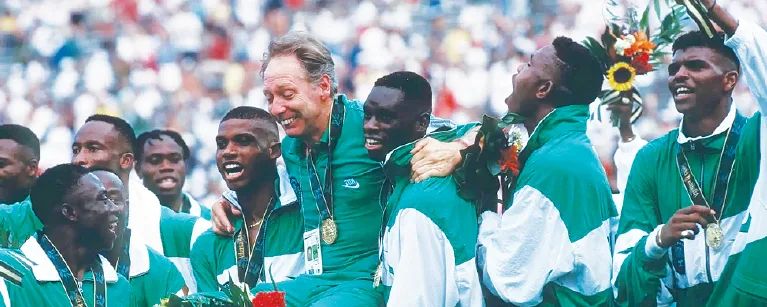
Then came a summer Nigerians will always remember. On July 29, Chioma Ajunwa jumped 7.12 meters to win Nigeria's first individual Olympic gold in the women’s long jump. Days later, the men’s football team, known as the Dream Team, staged a stunning comeback against Brazil, winning the semi-final 4-3 after extra time.
On August 3, they defeated Argentina 3-2 in the final, with Emmanuel Amuneke scoring the winner. This made Nigeria the first African country to win Olympic gold in men's football. Amuneke called it “the greatest achievement for Nigerian soccer.” Nwankwo Kanu simply expressed the joy by saying, “Nigeria is gold.”
Streets erupted in celebration when the country had little else to cheer about.
2013: Keshi’s Eagles in the shadow of insurgency
The story repeated in 2013. The insurgency in the northeast was worsening, with bombings common, and many Nigerians felt the nation was under siege. Stephen Keshi, who had led the Super Eagles to the 1994 title, took a 23-man squad to the Africa Cup of Nations in South Africa. The squad included six players from local clubs.
On February 10, Sunday Mba, one of the home-based players, scored the only goal as Nigeria beat Burkina Faso 1-0 in the final in Johannesburg. This victory surprised many who did not expect the team to go far and briefly lifted the national mood.
The players found unity amid doubts. Former defender Juwon Oshaniwa recalled how captain Joseph Yobo addressed the issue of home-based and foreign-based players. “You are no longer home-based or foreign-based. We are all one, just like a unit,” Yobo told the team.
For Keshi, the win meant more than just the trophy. “Winning this is mainly for my nation,” he said after the final.
2020: EndSARS and the athletes who spoke
The link between sports and the national spirit was tested again in October 2020 when young Nigerians protested against police brutality under the EndSARS movement. Nigerian athletes joined the cause from both home and abroad.
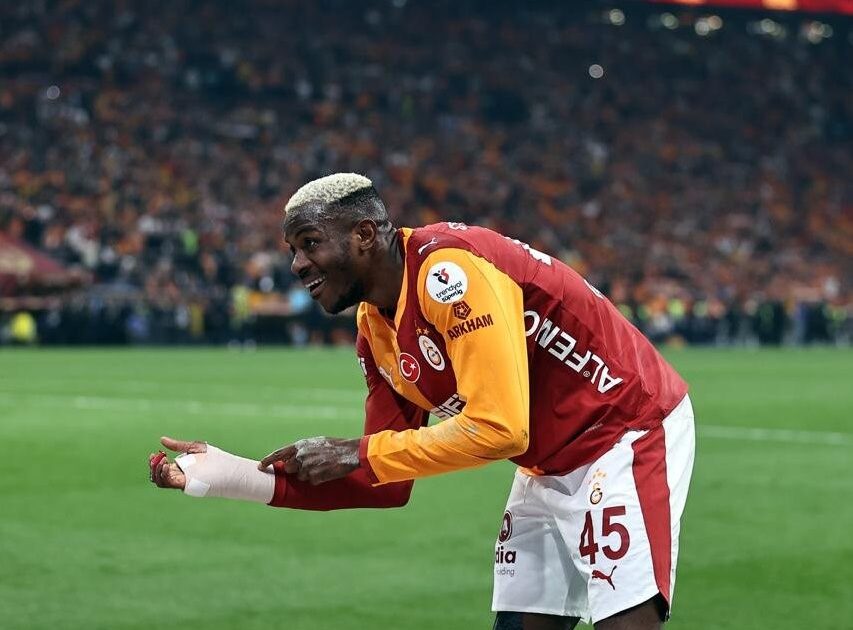
On October 18, Super Falcons striker Asisat Oshoala celebrated a goal for Barcelona in a 6-0 win over Sporting Huelva with a clenched fist in support of the protests. A day earlier, Victor Osimhen showed a shirt calling for an end to police brutality after scoring his first Serie A goal for Napoli against Atalanta, while Simeon Nwankwo did the same after scoring for Crotone against Juventus.
The protests reached a tragic peak on October 20 when soldiers fired on protesters at the Lekki Toll Gate in Lagos, according to Amnesty International and Human Rights Watch.
Striker Odion Ighalo released a video condemning the military's response to the protesters, while boxer Anthony Joshua also spoke out. “The situation has escalated; the violence and killings are horrendous. All because of people saying they want to live in peace?” Joshua said.
This moment showed that sports could still carry a voice after the final whistle. Away from trophies, the athletes who represented the country also brought attention to the concerns of young people. It was a different kind of unity born from shared grief and the demand for a better country.
The lesson at 66
From the football fields of 1980, 1993, 1994, 1996, and 2013, to the voices of athletes during EndSARS, one thread runs through Nigeria’s history.
Sports have often provided a moment for Nigerians to see themselves as one when politics failed. In 1980, Owolabi recalled a Nigeria where “nobody cared who was Igbo, who was Yoruba, or who was Hausa.” In 2013, Yobo told his players, “We are all one, just like a unit.”
Maybe that is why these sporting memories last. The trophies matter. The goals matter. But so do the moments around them: the streets filled with joy, the flags waving, arguments fading, and Nigerians finding reasons to celebrate together. At 66, that may be the greatest gift sports have given Nigeria.
Drop your comment
No comments yet — be the first to drop the gist 👇