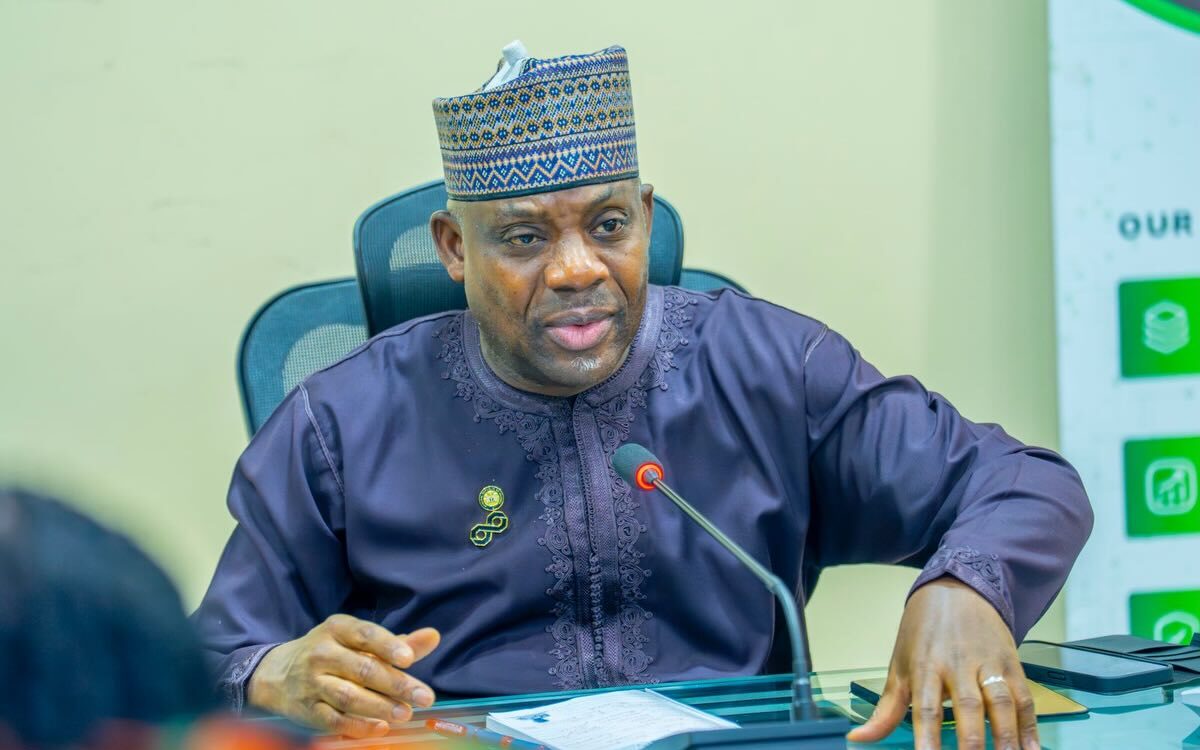
The Nigerian government will launch the Digital National Education Management Information System (DNEMIS) on Wednesday. This system is set to gather all education data for schools and students on one platform. It will also make this data available to the public in Nigeria.
During the launch, the government will also introduce the DNEMIS state implementation teams. This information comes from a statement by Folasade Boriowo, the spokesperson for the Federal Ministry of Education.
The Minister of Education, Tunji Alausa, mentioned that DNEMIS will help reduce scattered education data. It will also improve planning based on facts, boost accountability, and enhance services in Nigeria's education sector.
The creation of this platform is part of the Nigeria Education Data Infrastructure (NEDI). This is one of the reforms under the Nigeria Education Sector Renewal Initiative (NESRI).
The education ministry has also started a Learner Identification Number (LIN). This number gives every student a permanent academic identity throughout their schooling.
According to Adebayo Onigbanjo, the National Project Coordinator of the Special Programmes Operations and Implementation Unit, over 32 million students are already registered on the DNEMIS portal.
Digitising the Annual School Census
Mojoyin Adebajo, the minister's Special Assistant on Digital Communications and E-Learning, spoke to journalists in Abuja before the launch. She explained that DNEMIS was built using the District Health Information Software 2 (DHIS2) platform. This will modernise how education is managed and help make better decisions based on evidence.
The DHIS2 platform is free and open-source. It helps in collecting, reporting, and analysing data. It was developed by the Health Information Systems Programme (HISP) and supported by the University of Oslo and the Norwegian Agency for Development Cooperation (NORAD).
Adebajo said that the platform will change the Annual School Census from mostly manual processes to a digital system. This system will provide accurate, real-time information about schools, students, teachers, and educational facilities.
She pointed out the Public DNEMIS Portal as a major part of the initiative. For the first time, some official education data will be available to researchers, policymakers, journalists, development partners, and the general public.
She added that this will increase transparency, improve access to reliable information, and encourage more people to participate in shaping Nigeria's education future.
The education ministry also thanked UNICEF and the University of Oslo for their technical support. They called this partnership an example of how important teamwork is in pushing for lasting education changes.
Onigbanjo explained that this initiative aims to fix years of weak and inconsistent education data. These issues have made it hard to plan, create policies, monitor, and manage the education sector.
He also said that the education ministry created NEDI as a national framework. This framework will unify and strengthen education data management at all education levels, with DNEMIS as its main digital platform.
Onigbanjo noted that DNEMIS will provide timely and reliable data. This will help with planning, budgeting, policymaking, monitoring, and improving services. It will ensure that every learner, teacher, school, and public investment in education is included in a single national database.

Drop your comment
No comments yet — be the first to drop the gist 👇