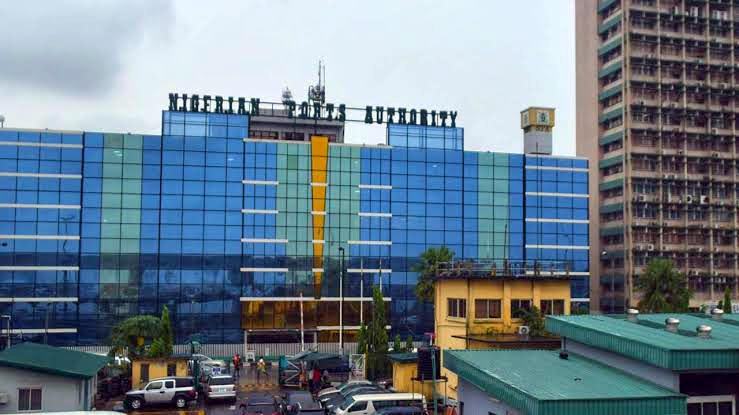
The Nigerian Ports Authority (NPA) has urged journalists to use accurate data when reporting on the maritime sector. They believe that credible journalism is key to boosting Nigeria’s trade and attracting investors.
Ikechukwu Onyemekara, the General Manager of the Authority’s Corporate Affairs Division, spoke on Tuesday at the start of a two-day Data-Driven Business and Maritime Reporting Training. This training was organized with the Premium Times Training Academy in Ikeja GRA, Lagos.
Mr Onyemekara noted that accurate reporting helps businesses, investors, and policymakers make better decisions. He warned that careless reporting could create uncertainty and hurt confidence in Nigeria’s ports.
“Good journalism is part of the environment in which trade happens. It does not dredge a channel or berth a ship, but it shapes the confidence that brings ships and cargo in the first place,” he explained.
The training aimed to enhance journalists’ understanding of the maritime economy and boost their skills in interpreting data and explaining its meaning to the public.
Mr Onyemekara, speaking on behalf of the Authority’s Managing Director and Chief Executive Officer, Abubakar Dantsoho, stated that Nigeria’s total merchandise trade hit about N41.4 trillion in the second quarter of 2026. This shows a 5.6 percent increase from the same period in 2025.
He mentioned that a large part of Nigeria’s trade, including crude oil, refined products, machinery, food, and industrial inputs, goes through its seaports and terminals.
“When our ports work well, that trade costs less and moves faster. When they do not, households and businesses pay for it, often without knowing why,” he added.
Mr Onyemekara cited the NPA’s 2025 Operational Performance Report. Cargo throughput at Nigerian ports rose by 24.8 percent, jumping from about 103.6 million metric tonnes in 2024 to 129.3 million metric tonnes in 2025.
He also shared that cargo throughput reached 68.2 million metric tonnes in the first half of 2026. This is a 12.2 percent increase from the 60.8 million tonnes recorded in the same period of 2025.
During this time, the ports welcomed 2,300 ships, up from 2,152 a year earlier. Outward cargo made up 41.9 percent of total throughput in the second quarter of 2026, which shows better export performance.
He highlighted the efforts of port workers, marine crews, haulage operators, clearing agents, warehouse staff, and traders who depend on port operations.
Mr Onyemekara also pointed out the growing role of Lekki Deep Sea Port. It handled nearly 40 percent of cargo passing through Nigerian ports in the first half of 2026. He noted that more than three-quarters of Lekki’s cargo traffic was linked to refinery operations, showing how industrial investments are changing Nigeria’s trade.
“The headline figure tells you how big Lekki has become. The breakdown tells you why, and what to watch as other cargo grows. That is the difference between reporting a number and explaining it,” Mr Onyemekara explained.


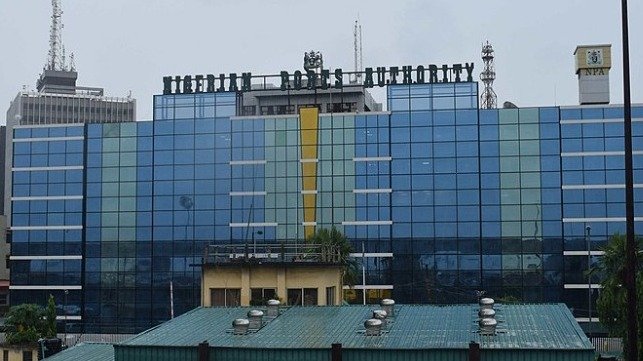
He clarified the Authority’s role in port operations. Nigeria has used a landlord port model since it concessioned port terminals in 2006. In this model, the NPA owns and manages port land and waters while private terminal operators handle cargo.
The Authority provides marine services like pilotage, towage, dredging, and navigational aids. They also maintain common-user facilities, monitor terminal operators’ obligations, and plan for long-term port development.
Mr Onyemekara urged journalists to clarify the roles of different agencies when reporting delays or operational issues. He explained that delays could result from terminal operations, documentation, customs checks, truck movements, or road conditions. It is essential for journalists to find out where the problem is before pointing fingers.
He mentioned that the NPA is working on modernizing ports, digitalization, export facilitation, and sustainability to improve efficiency.
He revealed that the Federal Government secured £746 million in UK-backed financing to modernize the Lagos Port Complex, Apapa, and Tin Can Island Port. The Authority is also fixing ports in the eastern region, including Onne, Warri, and Calabar, while supporting new deep seaports.
On digitalization, he said the Federal Government’s National Single Window started in March 2026. It provides a common platform for trade documentation and payments across government agencies.
The NPA is also rolling out a Port Community System, with help from the International Maritime Organisation, to connect terminal operators, shipping lines, government agencies, and freight forwarders.
He added that the Authority’s electronic truck call-up system, Eto, aims to improve truck movement and cut congestion around the ports.
Mr Onyemekara advised journalists to consult primary sources, compare data over time, explain percentages, and give all parties a chance to respond.
“My charge to you is simple. Let evidence lead your stories. Let context shape them. Let fairness guide them. When rumour and data disagree, follow the data. When the data is incomplete, say so and ask for more.
“We do not ask you for praise; we ask for accuracy. Where we fall short, report it. Where we make progress, report that too, with the same discipline,” Mr Onyemekara said.
The two-day training gathered journalists and resource persons to enhance reporting on business and maritime issues using data and open-source information. Media experts, including Musikilu Mojeed, Editor-in-Chief at PREMIUM TIMES; Idris Akinbajo, Managing Editor at PREMIUM TIMES; and Ray Echebiri, Editor-in-Chief at NextMoney, taught participants about open-source data and resources for reporting on Nigeria's maritime industry. They also shared techniques for analyzing data to create engaging journalism.


Drop your comment
No comments yet — be the first to drop the gist 👇