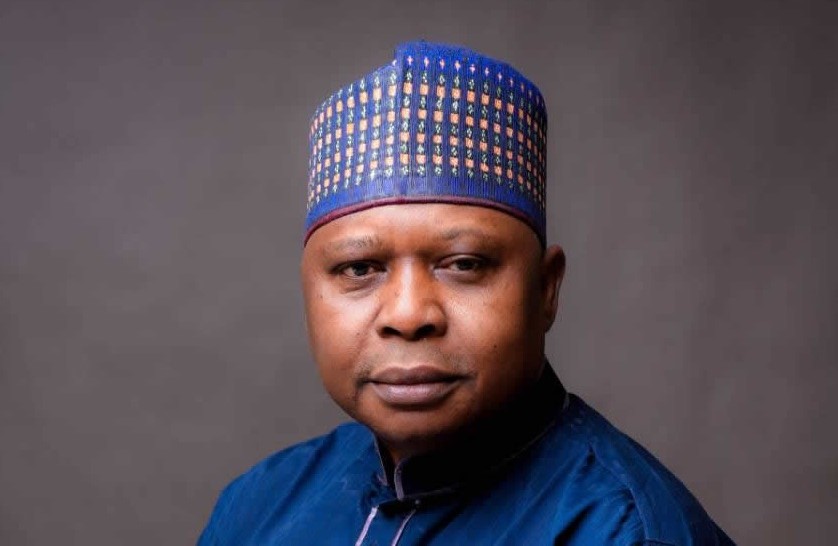
A group within the Peoples Democratic Party (PDP), led by former Minister of Special Duties and Inter-Governmental Affairs, Kabiru Turaki, has warned Nigerians not to trade their votes for money, rice, spaghetti, or other gifts during elections.
Mr Turaki urged voters to judge candidates based on their ability to provide good representation and help national growth.
He gave this advice at the second Bala Mohammed Colloquium in Bauchi, which celebrated the 68th birthday of Bauchi State Governor, Bala Mohammed.
The factional chairman stated that the quality of leaders we have is a result of the choices voters make. He warned that taking bribes or refusing to vote can lead to poor leadership.
"It is often said that a country has the leaders it deserves. That is true because they don’t become leaders unless we choose them or allow them to emerge. Some actively vote for bad leaders, while others refuse to vote, allowing bad leadership to take hold.
"We must not vote in exchange for spaghetti, rice, money, or any other gifts. We must vote based on the candidates' ability to provide good representation and contribute to national growth," he said.
He noted that Nigeria had previously produced lawmakers who offered strong and responsible representation, contrasting this with what he called the current "rubber stamp legislature."
Mr Turaki said that a weak legislature hurts democracy because it cannot effectively check the executive branch.
"In the past, we had leaders, especially lawmakers, who provided strong and responsible representation for their people, unlike the rubber stamp legislature we have now.
"A weak legislature is not good for our nation, as there will be no effective checks and balances. I commend the organisers of this event for bringing people together to reflect on the past and plan for the future."
He also urged young people to get involved in politics and governance, saying they should play a role in decision-making instead of just being used for campaigns or voting.
"Young people must be actively involved in politics and governance, as key parts of the process, and not just as decorations or statistics. We must stop saying that youths are the leaders of tomorrow; when will that tomorrow arrive? Young people are the main stakeholders of the future, and that future cannot be discussed or planned without them."
He praised Governor Mohammed for prioritising youth involvement in his government.
"I thank Governor Bala Mohammed for making youth inclusion a priority in his administration, which is clear in his choice of a successor. We cannot keep leaving the future's owners out of the discussions when planning for the future."
This warning comes amid ongoing concerns about vote buying in Nigeria, where politicians offer cash, food items, and other gifts to voters before and during elections.
Items like rice, cooking oil, and spaghetti have often been distributed during campaigns and at polling stations, especially in areas facing economic challenges. Cash payments have also been used to convince voters to back certain candidates or parties.
This practice has raised alarms among election observers and civil society groups, as it can affect voters' ability to make independent choices and distort the electoral process.
Nigeria’s election laws ban voter inducement. The Electoral Act makes it illegal to give or receive money or valuable items to influence someone's vote. Despite these rules, vote buying remains common, with reports of cash and gifts during recent elections.
The ongoing issue is also linked to poverty and economic struggles, making voters more likely to accept immediate financial or material offers from politicians.


Drop your comment
No comments yet — be the first to drop the gist 👇