
I am not here to mourn or grieve, even though it hurts. I am here to celebrate and remember a man who was real, made of flesh and blood. He lived, worked, created, influenced, and became part of our cultural heritage.
History sometimes builds institutions from buildings, rules, and organizations. But sometimes, it creates individuals whose personality, achievements, and impact become so important that they become institutions themselves.
Such individuals do not just leave marks in history. They leave a lasting presence in the hearts of people.
They are rare. A generation may see many talented people, celebrate many successful individuals, and have a few outstanding figures. But it may not produce more than a few whose presence gets tied to the identity, memory, and history of their time.
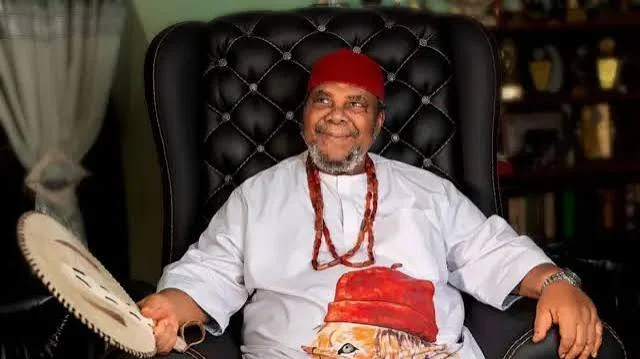
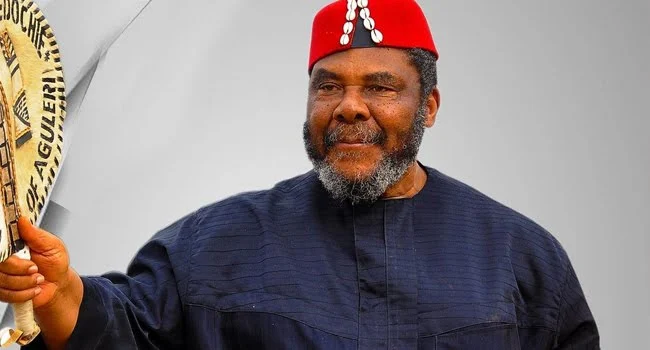
Pete Edochie was one of those rare individuals.
More Than Just a Cultural Figure
In the days after his passing on Wednesday, 25 November 2026, at age 79, Edochie has been called a cultural icon, a veteran artist, and a cultural ambassador. He was all of these things. But these titles do not fully capture the greatness of the man or his unique place in our culture.
Pete Edochie was more than those labels. He was beyond his performances, awards, recognition, and contributions to Nigerian cinema. He was an institution.
There is a big difference between being honored as an individual and becoming an institution in the memory of a people.
It is deeply moving when someone like Pete Edochie passes away. When an actor dies, we remember the art and the characters they played. But when someone like him goes, it feels different. We feel the loss of a cultural institution, a familiar voice, and a personality that shaped our understanding of ourselves.
A generation does not often see many like Pete Edochie.
How Edochie Became Okonkwo
To understand his cultural significance, we need to look back at Okonkwo.
When Chinua Achebe created Okonkwo in Things Fall Apart, he gave African literature one of its most memorable characters. Okonkwo was not just strong and ambitious. He was a complex symbol of masculinity, tradition, pride, courage, vulnerability, and the sad results of being rigid in personal identity.
Then came Pete Edochie.
In his role as Okonkwo, Edochie did something remarkable. He did not just act like a character from a book. He brought that character to life in a way that connected with generations of viewers.
His voice, presence, and strong screen personality made it hard to tell where the actor ended and the character began.
For millions who watched the show, Okonkwo was Pete Edochie.
But Edochie’s impact was not just about playing Okonkwo. Through Achebe’s Things Fall Apart, African proverbs found a strong place in world literature. Achebe famously said proverbs are “the palm-oil with which words are eaten,” showing their importance in communication and culture. Edochie helped bring that wisdom to life on screen, giving it a strong voice and human touch.
A Wise Voice Behind the Screen
Interestingly, his love for proverbs went beyond the scripts he acted in. In a February 2014 interview with Saturday Tribune, he was asked whether the proverbs people loved in his movies were written down or came from him. His answer was telling: “They come from me.” When asked if he meant all of them, he replied, “Yes, everything.”
This shows us the man behind the famous screen personality. Edochie was not just reading lines; he was sharing his own wisdom and insights in his performances.
He also cared about language. In that same interview, he said he turned down scripts with bad language because he wanted to keep the standards people expected from him. “I am a lover of linguistic decency,” he said. He knew people looked up to him and did not want to let them down.
Outside of movies, Edochie offered thoughts that showed a deep understanding of people and how we relate. He compared people to the fingers on one hand, saying if one finger gets hurt, the whole hand feels it. On disagreements, he said, “We can have intellectual disagreement but not market-women quarrels.”
His popular sayings were also memorable. “Beware of the naked man who offers you clothes” teaches us to see through people's true intentions. “If you sell your father’s land to buy a trumpet, where will you stand to blow it?” warns against losing what is important for short-term pleasure. And “The death of a lion cannot be announced by a goat” speaks to the importance and impact of certain figures.
These sayings, along with many others he is known for, helped him become one of Nigeria's most recognized voices for proverbs. Not all the sayings came from him; some belong to older African oral traditions, while others became popular through his work. But the way he delivered them was uniquely his own.
The link between Achebe and Edochie is interesting.
Achebe showed that African proverbs could enrich world literature. Edochie showed that the same cultural wisdom could shine on television and become part of modern discussions.
One gave proverbs a strong literary platform; the other gave Achebe’s famous character a memorable visual and vocal identity.
That is a remarkable achievement. It is where performance becomes part of cultural memory, something bigger than just entertainment.
Perhaps the closest comparison is Professor Ali Mazrui’s The Africans: A Triple Heritage. Mazrui used television to explore Africa’s history and traditions, making them understandable to many people. Edochie used one character to make the wisdom and moral lessons of Things Fall Apart feel real. Mazrui’s work was analytical; Edochie’s was dramatic. But both turned a medium often seen as simple entertainment into something of cultural importance.
Finding New Purpose After a First Career
There is another side to Pete Edochie’s story that makes his life even more impressive. Before he became a leading figure in Nigerian cinema, he had already made a name in broadcasting.
Edochie joined the Eastern Nigeria Broadcasting Corporation (ENBC) in 1967 at 20. He started as a junior assistant after finishing secondary school at St. John’s College, Kaduna. He stayed with the organization as it became the Anambra Broadcasting Service (ABS), rising to Director of Programs, Deputy Managing Director, and sometimes Acting Managing Director.
So, he was not just someone who suddenly became famous through acting. By the time Nigerian viewers saw him as Okonkwo in the 1987 adaptation of Things Fall Apart, he was already an experienced broadcaster and media leader with two decades of work behind him.
His voluntary exit from ABS to become a full-time actor marked a new chapter.
There is something valuable in this part of his life. Many people spend years building careers, only to struggle for a sense of purpose when they retire. Retirement can bring tough questions about identity and future goals.
Edochie’s story gives us a different view.
He moved from broadcasting to acting and went on to create a remarkable career that made him one of Africa's most famous actors. He did not just find a way to fill his time after broadcasting. He discovered a new path where he achieved great success.
Think about it. A man already established in a tough profession, recognized for his work, still had another successful chapter ahead. He moved from behind the microphone to in front of the camera, from broadcasting to acting, and became a cultural reference point.
His life teaches us that potential does not end when work does. The end of one journey does not mean the end of contributions to society. Sometimes, the most significant part of a person’s life begins when others think their best work is done.
This might be another reason why calling Pete Edochie an institution makes sense. His significance was not based on one achievement or one identity. He showed that he could excel in one field and leave a lasting legacy in another.
A Legacy That Can't Be Replaced
There is yet another aspect of his importance.
He belonged to a group of African actors whose work helped establish Nigerian cinema's cultural influence. He became a well-known face and voice of an industry that would reach audiences beyond Nigeria.
His passing raises a big question: What happens when a people lose someone who has become part of their cultural legacy?
We can train actors. We can set up film schools, build studios, fund productions, and create chances for new talent. We can make stars. But can we create another Pete Edochie?
Maybe that's the difference between creating talent and creating an institution.
Institutions like this are not made by promotion or self-claim. They grow through years of achievements, consistency, impact, authenticity, and time. Their authority comes from generations who find something lasting in their work.
When they are gone, what remains is not just their work. It is their legacy.
Pete Edochie has left us that legacy.
There will be other actors. There will be other great performances. There will be other voices that capture audiences. But there will be only one Pete Edochie, just as there was only one Okonkwo as we came to know him through his unforgettable performance.
Maybe this is the hardest part of saying goodbye: realizing that those who become institutions in our lives are still human.
Their bodies will age. Their voices will eventually fade. But the places they filled in our hearts do not easily become empty.
Some people live, work, and pass through history. Others become part of what that history means for those who come after them.
Pete Edochie was an institution who came as a human. And institutions like him do not completely fade away. They become part of our shared memory.
Pete Edochie, a man by birth, an institution by living, a legacy by memory. Fare thee well.


Drop your comment
No comments yet — be the first to drop the gist 👇