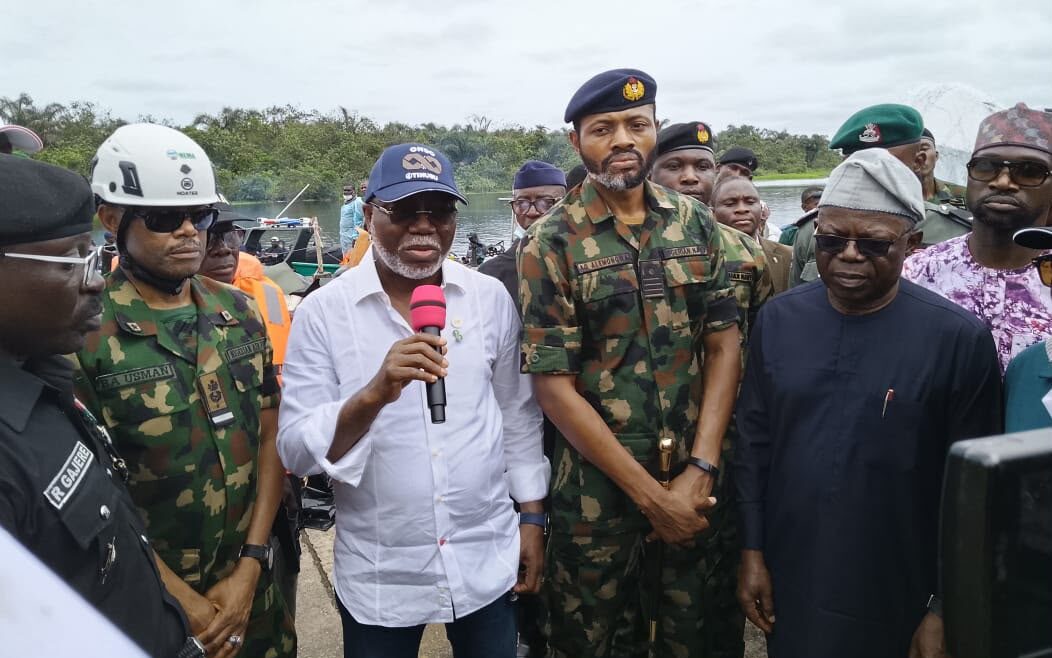
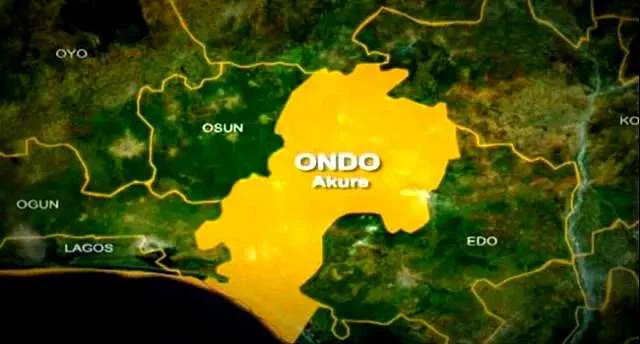
Search efforts continued on Wednesday at the site where a Nigerian Air Force plane crashed in Igbokoda, Ondo State. Divers were unable to find the main body of the aircraft.
The divers included members of the Police, Navy, and local residents, as well as officials from the National Emergency Management Agency (NEMA). They managed to recover some human body parts and pieces of the aircraft.
Ondo State Governor Lucky Aiyedatiwa spoke to journalists during his visit to the crash site. He was joined by personnel from the Nigerian Navy, Nigerian Air Force, divers, and the South-west Director of NEMA, along with the Director of the State Emergency Management Agency and local residents who joined the rescue efforts since Monday.
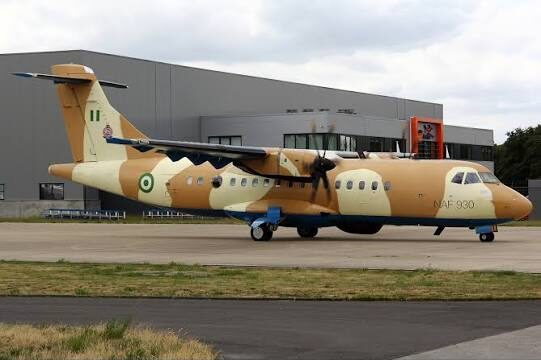
The ATR-42 aircraft was carrying Nigerian Air Force personnel on a special mission from Benin to Lagos when it went down in Igbokoda on Monday morning. Officials from the Nigerian Air Force said there were 26 people on board when it crashed.
Governor Aiyedatiwa confirmed that no survivors had been found. He noted that only body parts, clothes, jackets belonging to Air Force personnel, and broken pieces of the aircraft were recovered for further investigation.
He said the main body of the aircraft has not been seen as it is believed to be submerged in the swamp. Aiyedatiwa, who is from the local area, explained that accessing the site was difficult. He directed the Ministry of Works to send two swamp buggies to improve access through the waterways.
These machines have helped the rescue teams move larger boats closer to the crash site. They are also being used to dig into the soil in search of more wreckage or the main body of the aircraft.
The governor mentioned that the aircraft had still not been spotted at the time of his visit. Navy personnel and local divers continued their search in the deeper parts of the area for possible bodies and the cockpit.
Aiyedatiwa said only the pilot could explain what caused the crash and that the occupants were likely to have died. He suggested that the swamp's nature and depth may have caused the aircraft to sink deeply into the mud.
"From construction experience and analysis of this area, to get to refusal level, it’ll get to about 30 metres deep," he said, adding that the aircraft might have been completely buried in the mud.

He also mentioned that jet fuel was leaking into the water, polluting the area with aviation fuel. Aiyedatiwa said he was thankful the crash did not happen in the middle of the community, as that would have been a major disaster.
Residents who witnessed the incident reported that the aircraft seemed to be coming down with a noise suggesting engine trouble and looked like it was about to land in the community. The pilot managed to steer the aircraft away from the community, landing about 200 metres away in the swamp.
The governor stated that only the pilot could have explained the effort to maneuver the aircraft. Aiyedatiwa also expressed his condolences to the families of the deceased and the Nigerian Air Force. He described the victims as capable young Nigerians who had committed to defending the country.
He doubted that any of the victims could be rescued based on what was seen at the crash site. "May their souls rest in peace," he prayed.
The governor urged search and rescue teams to keep working hard to recover the remaining parts of the aircraft and the victims' bodies. Earlier, the Commander of the Nigerian Navy Forward Operating Base in Igbokoda, Andy Alemongwa, updated the governor on the search-and-rescue progress.
On the same day, the Flag Officer Commanding the Western Naval Command, Abubakar Mustapha, and the Air Officer Commanding the Logistics Command of the Nigerian Air Force, Abubakar Suleh, visited the crash site of the ATR-42.
Mustapha, a rear admiral, conveyed the Chief of Defence Staff Olufemi Oluyede's appreciation to the Ondo State Government, local communities, emergency agencies, and other stakeholders for their support since the accident.
He urged everyone involved to remain calm and cooperate with the various agencies working on the recovery operation. The team assessed the situation and gave technical advice to help with the recovery of the submerged aircraft and its contents.
As part of the recovery efforts, they began an underwater survey using side-scan sonar equipment to map the crash site and find the position of the submerged aircraft. This sonar survey will help divers and other technical teams locate the aircraft and plan future recovery efforts, including using a swamp buggy to aid excavation in the challenging terrain.

Drop your comment
No comments yet — be the first to drop the gist 👇