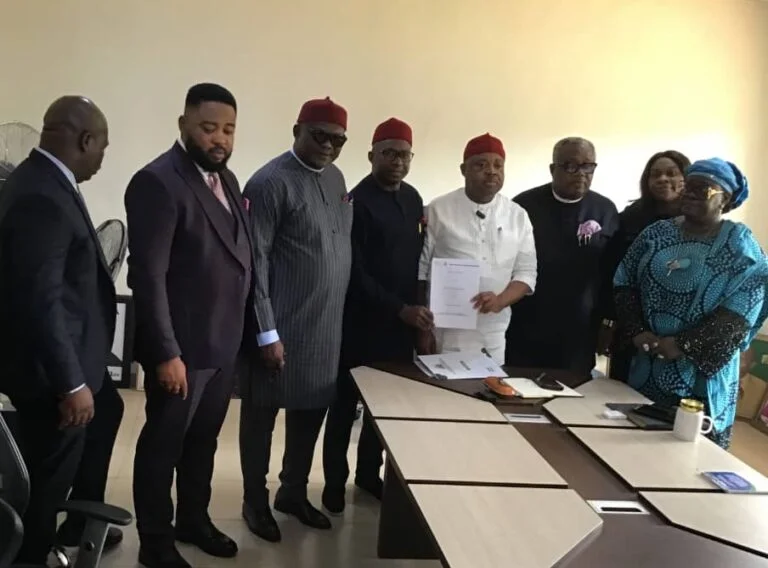
The South East Development Commission (SEDC) signed a partnership agreement with Abia State on Wednesday. This agreement focuses on the commission’s agricultural development program. The event took place in the office of the Abia Commissioner for Agriculture, Cliff Agbaeze, in Umuahia.
Agbaeze said this journey started in 2025. He explained that the vision is part of the strategic plans of the Abia Ministry of Agriculture. The aim is to move agriculture from subsistence farming to commercial farming. This will empower the economy and create a sustainable agricultural sector. It will also contribute significantly to the state’s GDP and generate jobs while boosting the Internally Generated Revenue (IGR).
“We want to move our people from hand-to-mouth farming to a system where we not only put food on their table but also put money in their pockets,” Agbaeze said. He mentioned that the commission had already looked at and chosen suitable farm locations for mechanised agriculture. This process led to the signing of the MoU.
He added that Abia would provide the land while the commission would encourage investment in agriculture on that land. “That’s why we are here; the agreements have been drawn up, and we have copies of those agreements, and they have sent a delegation. We look forward to rolling out this project as soon as possible after this agreement,” Agbaeze said.
The Managing Director of SEDC, Mark Okoye, highlighted the importance of the signing. He said it shows a shared understanding that the future of the South-east will be different. Okoye, who was represented by Stanley Ohajuruka, the Executive Director of Finance at SEDC, said that developing the region needs deliberate actions, strong partnerships, and a commitment to make a real impact.
He noted that the South-east is known for hard work, resilience, and farming, which are key parts of its identity. Okoye said the opportunities in the region are huge, with fertile land and resourceful young people full of energy and ideas.

He stressed that for this potential to be realised, the SEDC and local governments need to create the right environment. Progress will come when governments, communities, development partners, and the private sector work together toward a common goal, which is the essence of this partnership.
“Beyond the document we are signing today, this is a commitment to create opportunities, strengthen communities, and build a future that adds real value to our people,” Okoye said. He acknowledged that the commission's work does not stop here.
“The true measure of success will be how many investments come, how many jobs are created, how communities are empowered, and the impact felt by ordinary people,” he said.
Later, Okoye told the News Agency of Nigeria that they do not yet have a start date for the Abia project. This is because the steering committee to drive the project has not been formed. He did mention that unlike Enugu, where the project will start in three weeks, Abia's project will not have a date until the committee is in place.
The SEDC team included Cliff Ogbede, the executive director of natural resources, agriculture and rural development, Daniel Akwari, a board member for Abia, Nnanna Obeta, head of legal services, and Nnamdi Umunnabuike, the technical assistant to the executive director of natural resources, agriculture and rural development.


Drop your comment
No comments yet — be the first to drop the gist 👇