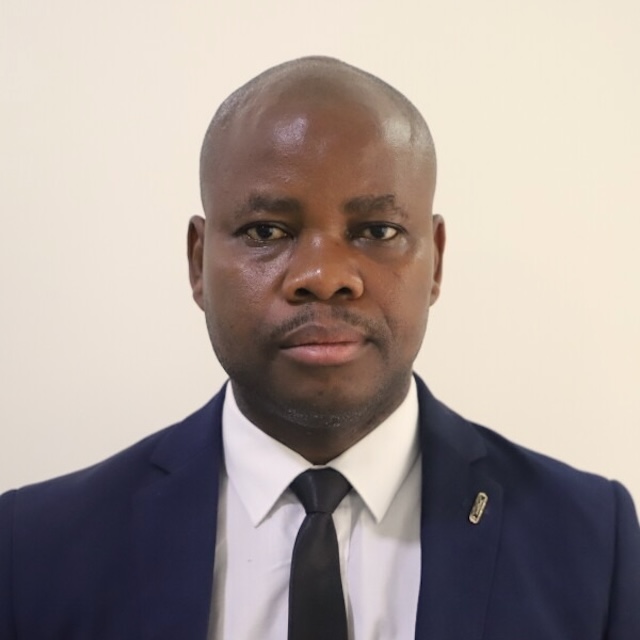
Mr Kila’s profile does not mention where he studied or worked.
A true Professor in Nigeria has to spend at least 10-15 years in lower academic positions before becoming a Professor. They publish their work, face external assessments, and defend their work before the university Senate. It is tough. Then someone prints a certificate from a place he registered himself and skips the line. That is wrong. It is stealing honour, space, and the future of young scholars.
On October 3rd, Premium Times did what our universities and regulatory bodies failed to do. It asked a simple question: Professor of where, sir?
The person in question is Anthony Kila. Before the investigation by PT, he was everywhere. Arise TV called him Professor. Channels TV also referred to him as Professor. Newspapers mentioned him as a Professor of Political Science in one edition and Jean Monnet Professor of Strategy and Development in another. In August 2025, he was named Pro-Chancellor and Chairman of the Governing Council of Michael and Cecilia Ibru University (MCIU) in Agbarha-Otor, Delta State. This position controls the finances, assets, policies, and future of a university.
The investigation revealed what many might have suspected: there is no proof that any recognized university in Nigeria or anywhere else ever promoted him as a Professor. When asked, Mr Kila claimed that the European Centre for Advanced and Professional Studies (ECAPS), based in Cambridge, UK, gave him his professorship in 2016.
PT looked into the UK Companies House. They found nothing. They checked the Corporate Affairs Commission in Nigeria. Nothing there too. They searched online for a website, a building, or even a single graduate. Nothing was found. ECAPS only appears in Mr Kila’s profile and on the websites of CIAPS and MCIU. Even the Jean Monnet title fell apart. The European Education and Culture Executive Agency (EACEA) in Brussels confirmed that Mr Kila has not been listed as a Jean Monnet coordinator since 2015.
What did MCIU say? A man who claimed to be the spokesperson but did not give his name said: “We don’t debate issues; we will respond when we see the article.”
That response is the real scandal.
I. The Nature of Impersonation
I have spent years working on issues of democracy and governance. I have learned that our democratic problems are not just about elections. They are also about the breakdown of gatekeeping. When gatekeepers fail, impersonators and manipulators take over.
Why would someone fake a professorial title? In Nigeria, that title is valuable.
The title helps you get on TV as an “expert” without peer review. It gets you appointed Pro-Chancellor without a solid academic background. It allows you to charge high fees as a consultant for the government and private sector. In a country that respects big men, “Professor” is like an ATM card.
Where was the NUC verification before MCIU appointed a Pro-Chancellor? The law says the Pro-Chancellor chairs the council that approves Vice-Chancellor appointments, budgets, and holds the university in trust. If that chair has questionable credentials, what does the council approve?
This is not new. In 2024, a viral list claimed that 100 professors in Nigerian universities were fake. The National Universities Commission (NUC) denied it, but we laughed for a week and moved on.
In December 2023, Umar Audu, an undercover investigative journalist, showed how a group helped him get a Bachelor of Science degree in Mass Communication from a university in Cotonou in just six weeks. He did this without attending classes or taking exams. He then used the fake degree to join Nigeria’s mandatory National Youth Service Corps (NYSC).
Why is there a demand for fake professorships?
Because we have a society that cares more about titles than real achievements.
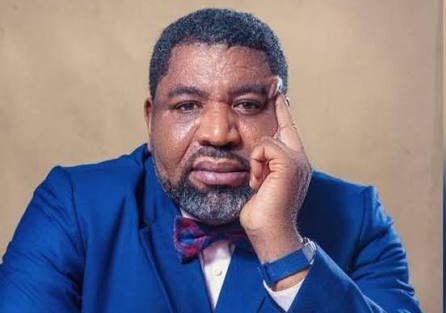
A true Professor in Nigeria must spend at least 10-15 years working their way up through lower academic ranks. They publish, go through external assessments, and defend their work before the Senate. It is tough. Then someone prints a certificate from a place he registered himself and skips the line.
That is stealing. Stealing honour, space, and the future of young scholars.
II. Institutional Failure Is the Main Issue
I have often argued that Nigeria’s problems stem from institutional failure. The Kila case proves this.
Where was the NUC verification before MCIU appointed a Pro-Chancellor? The law says the Pro-Chancellor chairs the council that approves Vice-Chancellor appointments, budgets, and holds the university in trust. If that chair has questionable credentials, what happens to the approvals?
Where was the media verification? Our television stations have become places where titles are simply accepted. A guest appears as Professor once, and no one checks their CV, and the title sticks. The danger is that this same person may advise the public on the economy, governance, and national strategies.
We have seen this before. In 2026, 37 miners died in NSCDC custody in Minna. I called for an independent probe because internal investigations cannot bring justice. The same principle applies here. MCIU cannot check itself. We need an independent investigation by NUC, with public access to Mr Kila’s appointment files, his CV, and the minutes of the council meeting that appointed him.
…citizens must come together to defend standards. Democracy dies not only when votes are rigged but also when titles are faked. Imagine fake professors serving as State Collation Officers in the 2027 elections. When we allow fake professors to lead real universities, we teach our young people that merit does not count, but appearance does.
III. What Needs to Happen Now
First, Mr Kila owes Nigerians a full, verifiable disclosure. Not a press statement. Publish your PhD work, where you defended it, your promotion letters, your Google Scholar page, and more.
Second, the MCIU Governing Council must suspend the Pro-Chancellor appointment until verification is complete and publish its due diligence process.
Third, NUC should set up a public, searchable register of all professors in Nigerian universities, like in other countries. If you claim to be a Professor or even have a PhD in Nigeria, any citizen should be able to verify you in 30 seconds.
Fourth, the Broadcasting Organisation of Nigeria must require stations to check academic titles before showing them on-screen. This is standard practice worldwide.
Finally, citizens must unite to uphold standards. Democracy suffers not only when votes are rigged but also when titles are faked. Imagine fake professors in charge during the 2027 elections. When we accept fake professors in real universities, we teach our young people that merit does not matter, but appearance does.
The Kila case is not just about one person. It is about a country that must choose: do we want real expertise or just appearances? In 2027, as we head to another election, we will face the same question.
The answer must be about substance over title.
Drop your comment
No comments yet — be the first to drop the gist 👇