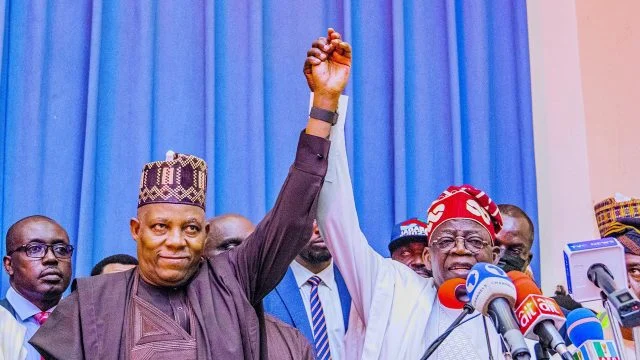
Four years after strong pushback from churches, civil groups, and even some members of his party, President Bola Tinubu's choice to keep Vice-President Kashim Shettima as his running mate for the 2027 election has drawn little criticism. In this piece, DARE AKOGUN looks at how political dynamics and changing public concerns have changed one of Nigeria's most heated political debates.
In July 2022, Nigeria faced one of the toughest political controversies since returning to democracy. The presidential candidate of the All Progressives Congress, now President Bola Tinubu, announced former Borno State Governor Kashim Shettima as his running mate for the 2023 presidential election. The backlash came quickly and was widespread.
Churches and Christian groups condemned the decision. Civil society organizations warned that it could worsen religious divides. Opposition parties also took advantage of the situation, saying it showed a lack of inclusion.
The Christian Association of Nigeria called the ticket insensitive to Nigeria's religious diversity. The Pentecostal Fellowship of Nigeria warned that it might deepen the country's fragile state.
Within the APC, the pushback was even more intense. Prominent party members openly protested against the Muslim-Muslim ticket.
Former Secretary to the Government of the Federation, Babachir Lawal, called the ticket "a disastrous error" and said it was "dead on arrival." The former Speaker of the House of Representatives, Yakubu Dogara, led a group of northern Christian APC leaders who refused to support the party's presidential candidate. Then-Senator Ishaku Abbo also left the APC Presidential Campaign Council, claiming he could not defend what he saw as an unfair political setup.
The Peoples Democratic Party and the Labour Party also used this issue to shape their campaigns, presenting the same-faith ticket as a threat to national unity.
For months, newspapers, TV stations, churches, and social media were hotbeds of debate over one question: Could Nigeria, with its fragile religious balance, survive under a Muslim-Muslim presidency?
Now, four years later, that question seems to have lost much of its political weight. On July 10, Tinubu officially kept Shettima as his running mate for the 2027 election, with little pushback from anywhere, especially from those who strongly criticized it in 2022. The political turmoil, protests, urgent meetings by major Christian groups, and resignations from the ruling party did not happen, even two weeks after Shettima was again named as Tinubu's running mate.
Besides a few reactions on social media and a few political comments, the announcement went by with surprising calm. The difference between 2022 and 2026 stands out in Nigeria's changing political landscape.
One major change from 2022 to now is that Tinubu and Shettima are no longer just candidates asking Nigerians for support; they are incumbents looking for another term.
Political scientist Femi Owolabi told Sunday PUNCH that incumbency changes political calculations. He said this shift has reduced public dissent among the ruling party. Unlike in 2022, when party members could oppose the ticket without fear of immediate consequences, many elected officials, governors, and party leaders now rely on the current administration for their political future.
"Open rebellion against an incumbent president carries greater risks than opposing a candidate seeking office," he said.
Former Minority Leader of the House of Representatives, Farouk Aliyu, also noted that the fears from 2022 have not come true three years into Tinubu's administration.
During an interview on ARISE TV, monitored by Sunday PUNCH, Aliyu said Christians have become "much more comfortable" with the arrangement because the expected religious marginalization never happened.
Aliyu stated that President Tinubu has governed "as a Nigerian" instead of along religious lines. This reflects the main argument from the APC that governance over the past three years has eased the religious worries that dominated discussions before the 2023 election.
If religion took the spotlight in Nigeria's political debates in 2022, the economy now holds that position.
Since taking office, Tinubu's administration has rolled out major economic reforms, including removing fuel subsidies and changing the exchange rate system.
While the government insists these reforms are necessary for the economy, many Nigerians are still struggling with rising food prices, transport costs, and inflation. Analysts believe these economic issues have changed what voters care about.
Political analyst Dr Jide Aina told Sunday PUNCH that the initial shock from the Muslim-Muslim ticket has faded because Nigerians have lived with it for years. He said the national conversation has shifted from whether the ticket was right to whether the administration has performed well.
"This shift may explain why discussions now focus more on inflation, insecurity, unemployment, and electricity rather than religious balance," he said.
Another factor analysts noted is the administration's approach to political appointments. Critics in 2022 argued that a Muslim-Muslim presidency would leave Christians out of key government roles.
While some criticisms over appointments continue, the administration has put Christians in important positions, including the Secretary to the Government of the Federation, ministers, and heads of key agencies. The Senate President, Godswill Akpabio, is also a Christian. Some claim that Tinubu's administration is heavily influenced by Christians.
Analysts believe these appointments have weakened claims that Christians would be excluded from government. Whether this view is accepted is still debated, but observers agree that it has lessened the emotional intensity around the same-faith ticket.
Interestingly, even some politicians who opposed the Muslim-Muslim ticket now see things differently.
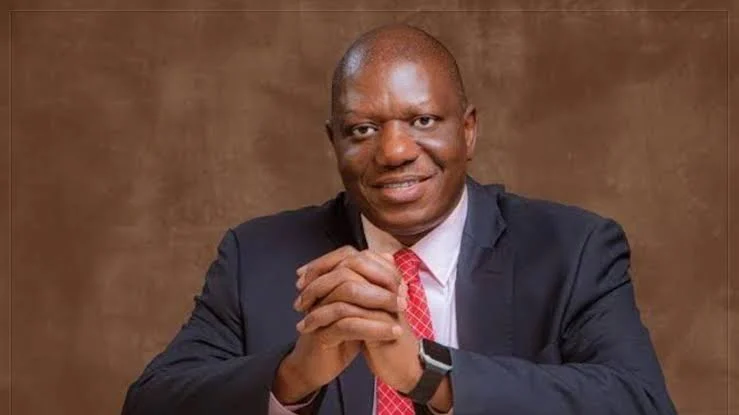
The presidential candidate of the Social Democratic Party in the 2023 election, Adewole Adebayo, recently dismissed renewed debates over the same-faith ticket. He said competence and justice matter more than religion.
Adebayo called the Tinubu-Shettima combo a "zero-zero ticket," arguing that leadership should be judged by fairness, not religious identity.
"There is nothing like the Muslim-Muslim ticket. In Islam, what is expected of a leader is not the religion of that leader but justice," he said.
One surprising voice came from cleric and politician Pastor Femi Emmanuel. During an interview on TVC, Emmanuel criticized how many church leaders reacted to the Muslim-Muslim ticket in 2022. He said many pastors misunderstood how political power works, explaining that just being Vice-President does not guarantee benefits for Christians.
"What Christians are asking for is that we want a vice-president; what would that bring to the church? Nothing. We are Nigerians," he said.
The cleric urged Christians to get more involved in politics rather than rely only on religious mobilization.
Similarly, the Northern Christian Youth Forum praised Tinubu for keeping Shettima as his running mate, calling it a sign of confidence in the Vice-President's leadership and commitment to national unity.
Forum President Rev. Pinot Atuluku said they were happy the President ignored calls to replace the Vice-President.
"Shettima has been one of the top northern political leaders promoting inclusiveness, regardless of religion," Atuluku said.
He added that the Vice-President has consistently involved Christians through what he called strategic actions to promote harmony and ensure no group feels left out.
Atuluku said the group believes Tinubu's choice to keep Shettima will strengthen national unity and political stability as the 2027 elections approach.
The opposition landscape has also changed a lot since 2023.
Four years ago, both the PDP and the Labour Party strongly challenged the APC's Muslim-Muslim ticket. Today, both parties face internal conflicts, leadership issues, and coalition talks ahead of the next election. They have mostly kept quiet about the President's choice.
Political analyst Abifarin Sunday said discussions about religion in 2023 have shifted to finding candidates who can effectively challenge the ruling party.
Without a coordinated opposition campaign focused on the same-faith issue, analysts believe the controversy has lost steam, according to Sunday.
"While whether this silence means acceptance is debatable, I think Nigerians care more about governance results than identity politics," he said.
However, Awodele Emmanuel told Sunday PUNCH that he disagrees that Nigerians are more focused on governance results. He believes the country's economic struggles have pushed religious concerns to the back without resolving the core issues.
"Silence should not be seen as approval; voter interests often change with national realities. The main concerns today are food security, inflation, insecurity, youth unemployment, and electricity, which differ from the issues that shaped political discussions in 2022," he said.
Whether the quietness around Tinubu's decision shows political maturity, resignation, or fatigue is up for debate. What is clear is that Nigeria's political conversation has changed greatly in four years.
The issue that once filled headlines, split churches, fractured political parties, and threatened to define an election has been overshadowed by concerns over economic survival and governance.
The Muslim-Muslim ticket has not vanished from Nigeria's politics; it has been overshadowed by a more pressing national question.
Drop your comment
No comments yet — be the first to drop the gist 👇