Mini LED has become a popular term in television advertising. Let’s explore what this technology really means, how it works, and three important things to check before believing the label.
In Lagos, Nigeria, few terms have spread in TV marketing as quickly, or become as confusing, as Mini LED. It appears on both high-end and budget TVs, even when their prices can differ by up to three times while having the same label. So what does it mean, and why should you care about the picture quality?
At its heart, Mini LED is just a smaller LED chip, about one-fifth the size of the LED used in regular LCD TV backlights. Because the chips are smaller, manufacturers can fit many more of them behind the same screen, packed closer together than regular LCD TVs allow.
This density makes the technology important. More LEDs mean the backlight can be split into many more zones. These zones can brighten or dim separately, instead of the whole screen changing at once. When done correctly, this leads to deeper blacks, brighter highlights, and much more detail in light and shadow scenes. This kind of contrast used to be found mainly in much more expensive display technologies.
That’s the idea. But in reality, the term “Mini LED” only talks about the size of the LED chip. It does not say how many are used, how they are arranged, or how well their brightness is controlled. Two TVs can both be labeled Mini LED but show very different pictures when you turn them on next to each other. What makes one better than the other comes down to three simple factors that any buyer can check.
1. Hardware dimming, not a software guess
True Mini LED quality relies on hardware local dimming. This means controlling the brightness of individual LED clusters behind the screen, zone by zone. Software or “virtual” dimming mainly uses image processing instead of controlling each backlight zone separately. This can lead to less accurate bright and dark area control compared to hardware local dimming. This often results in more light bleeding and lower contrast.



2. Enough dimming zones to do the job
The number of independently controlled dimming zones is key to how well a TV can separate light from shadow. Even just a few hundred zones can significantly improve contrast and brightness compared to a standard LCD backlight. More zones allow for better separation of bright and dark areas. TVs with thousands of zones can provide much better backlight control than those with fewer zones.
3. Full array, not edge-lit or direct-lit
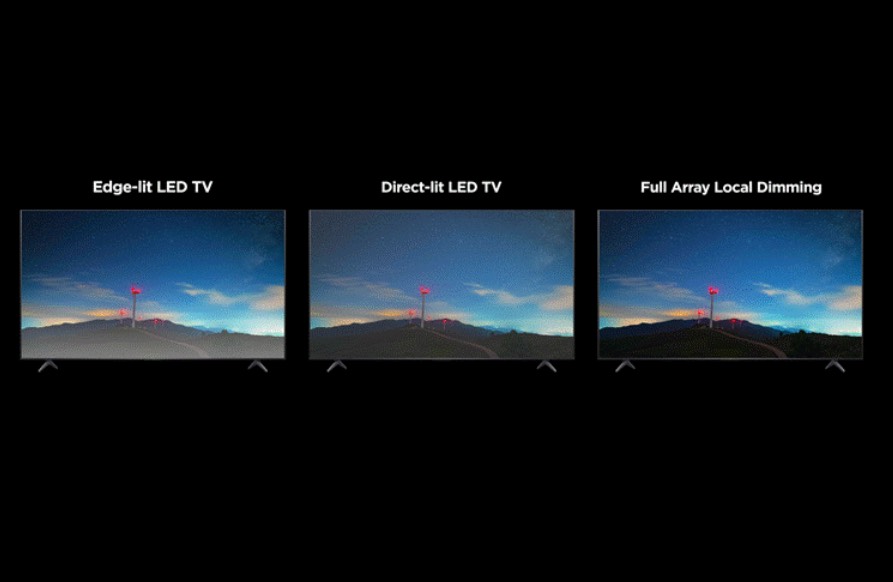
Backlight design is the most important factor. Edge-lit TVs have LEDs around the edges and usually offer less control over the backlight than a full-array local-dimming setup. Direct-lit TVs have LEDs behind the screen but often turn the backlight on or off as a whole instead of controlling it by zones. Full Array Local Dimming (FALD), with LEDs spread across the whole back of the panel and each zone controlled separately, is what gives real Mini LED performance. This is what supports TCL’s Mini LED range, from entry-level models to top-of-the-line options.
“Mini LED is often seen as one single technology, but it’s actually a group of approaches with different results,” said Mr. Daniel Ray, Director of Sales / General Manager of West Africa, TCL Middle East, Africa & Beyond. “The three key factors that determine quality are hardware versus software dimming, zone count, and backlight design. These are questions any buyer can ask about any brand before they make a purchase.”
According to Omdia global brand Mini LED TV shipment data for the first half of 2026, TCL was the top company in the world for Mini LED TV shipments. TCL reported 2.43 million Mini LED TV shipments globally during this time, a rise of 77.1% compared to the previous year.




Drop your comment
No comments yet — be the first to drop the gist 👇