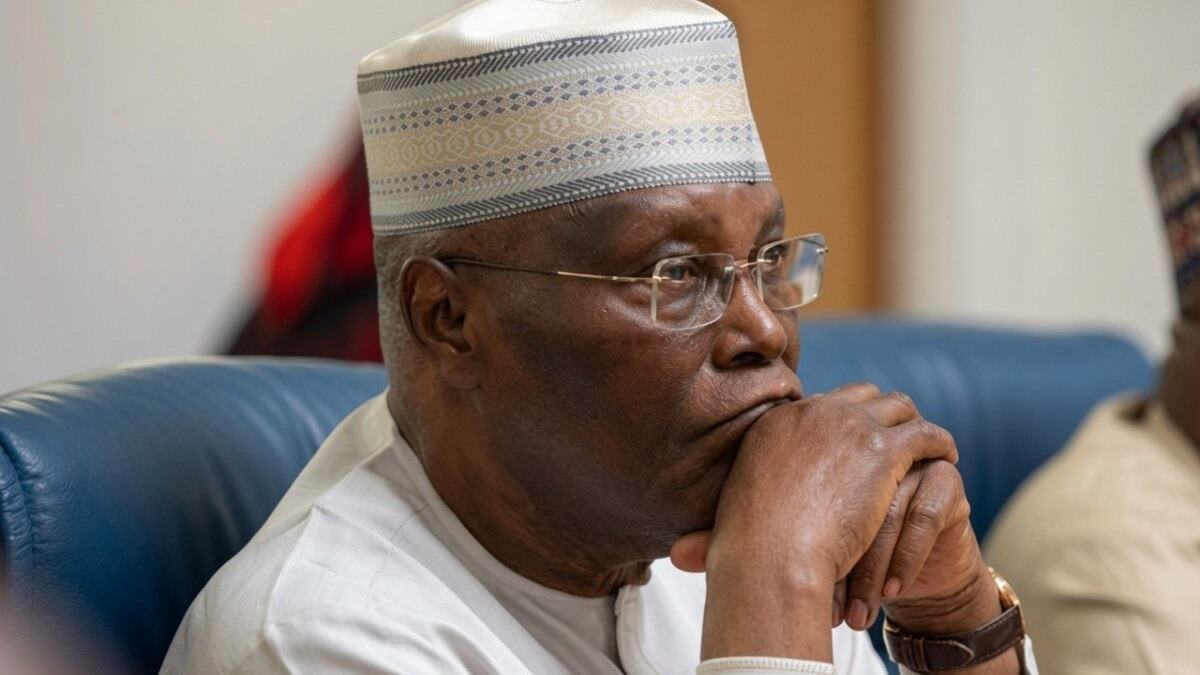
Atiku Abubakar denied on Sunday that he had pulled out of the presidential race after a group that once supported him endorsed Peter Obi. The former vice-president stated that the coalition could speak for its members but did not have the power to announce his withdrawal.
In Lagos, President Bola Tinubu called on his supporters to mobilise voters in the state he once led but lost to Mr Obi in 2023. He also directed his political adviser to mend fences with the governor of Katsina State before reaching out to Jigawa.
The Socio-Economic Rights and Accountability Project (SERAP) revealed that it had sued the electoral commission and Nigeria’s data protection authorities over questionable photographs in the preliminary voters’ register. SERAP wants an independent review of the records while the commission continues its own checks.
An Endorsement and a Withdrawal Deadline
At a press conference in Abuja on Saturday, the Coalition of Atiku Support Groups Initiative endorsed Mr Obi and his running mate, Rabiu Kwankwaso, from the Nigeria Democratic Congress (NDC). The group stated that the presidency should stay in the South and urged opposition parties to work together. This was not a new stance; its national coordinator, Obinna Okorie, had called for Atiku to back Mr Obi in May, noting that the group had supported the former vice-president since 2019.
But in a statement sent through Phrank Shaibu, director of strategic communication of the African Democratic Congress (ADC) Presidential Campaign Council, Atiku told his supporters to keep campaigning.
“I do not need anyone to step down for me, and I am stepping down for no one,” he said. He accused those spreading the withdrawal claim of pushing Mr Tinubu’s interests but did not provide proof linking them to the ruling All Progressives Congress (APC).
Section 31 of the Electoral Act 2026 states that candidates wishing to withdraw must submit a signed notice and affidavit personally to their party. The party must send these documents to the Independent National Electoral Commission (INEC) at least 90 days before the election. For the presidential election set for 16 January 2027, that deadline was 18 October.
INEC’s October presidential candidate list includes Atiku and former Rivers State governor Rotimi Amaechi as the ADC’s presidential and vice-presidential candidates. The legality of that nomination is under a separate legal challenge.
The ADC leadership, led by David Mark, has appealed the 5 November Federal High Court decision that invalidated decisions affecting its presidential ticket and has requested a stay of execution.
A rival faction linked with Nafiu Bala Gombe claimed on 19 November that the judgment was still valid. Reports did not confirm whether a stay had been established by Sunday.
In Kogi State, the ADC was getting ready for an Atiku, Amaechi rally on Tuesday, 24 November. A statement from the party’s state chairman, Tom Zakari, was reported by Treasure Times, stating he had checked Muhammadu Buhari Square in Lokoja and assessed preparations for the event.
Opposition parties aiming for a cooperation agreement have moved their proposed summit from 23 to 30 November. They have talked about political coordination and electoral reforms but have not named a joint presidential candidate.
On Sunday, Mr Obi endorsed SmartBallot. He urged NDC candidates and supporters to use the platform for grassroots organisation, polling-unit coordination, and election monitoring. The terms of use specify that independent monitoring and submitted observations are separate from official electoral processes, which remain INEC’s job.
The NDC also faced a funding issue. Vanguard reported that some members of its National Campaign Council claimed that over ₦6 billion raised through nomination forms and donations had been kept in a fixed-deposit account while campaign activities struggled for cash.
The party’s National Publicity Secretary, Osa Director, dismissed the claim as misleading, stating that party management and presidential campaign financing are different responsibilities.
At an executive meeting on 24 October, treasurer Peter Onigah stated revenue of about ₦8.53 billion, expenditure of ₦2.40 billion, and a balance of ₦6.13 billion. These figures are from the party and not independently audited accounts, and the allegation does not show any misappropriation or breach of campaign finance laws.
SERAP Seeks an Independent Inquiry into Voter Records
SERAP named INEC and the Nigeria Data Protection Commission in a lawsuit filed last week at the Federal High Court in Abuja.
In its statement on suit FHC/ABJ/CS/2863/2026, the group said it had asked the court to force the regulator to independently investigate claims about possible AI-generated photos and questionable registration records.
SERAP also wants the regulator to obtain and check relevant INEC records to see if Nigeria’s data protection law was broken. If violations are found, SERAP seeks corrective actions, penalties, and compensation for affected voters. The filing does not prove that INEC intentionally altered the register or that any particular official committed a crime.
On 9 November, INEC Chairman Joash Amupitan reported that the commission had removed 1,608,660 invalid registrations from the 2025, 26 exercise. This number includes several types of irregularities and is not a confirmed count of AI-generated photographs.
Mr Amupitan also mentioned that 54 individuals across 10 states had been identified for disciplinary action and potential prosecution.
On Friday, Mr Amupitan stated that INEC would keep reviewing flagged entries but could not finish a full revalidation of the register before the January election.
SERAP wants the data regulator to find out the nature and extent of the suspected irregularities and whether the reported handling of voters’ personal data broke the law.
Another concern is whether voters can safely reach polling units. PUNCH and THISDAY reported on Sunday, citing SARI Global’s October 2026 security assessment, that a leader of an armed group warned community leaders in parts of Anka Local Government Area, Zamfara State, against holding elections.
The assessment also highlighted roadblocks, attacks on travelers, and restrictions on movement. This warning followed an incident in October, and the reports did not confirm if security agencies or INEC had looked into it.
INEC’s nationwide mock accreditation set for 28 November will test accreditation and electronic result-transmission procedures. SERAP said that no hearing date has been set for its case.
Tinubu Takes His Turnout Argument Home
At a family prayer meeting at the Yoruba Tennis Club in Onikan, Lagos, Mr Tinubu questioned how a state with about seven million registered voters could yield only 100,000 or 200,000 votes.
He urged supporters to visit their neighbors and encourage them to collect their permanent voter cards.
“To me, Lagos is the big deal,” he said, according to PUNCH’s report. The report did not clarify if the smaller numbers referred to votes for a specific candidate or overall participation.
The 2023 presidential election provides a broader picture. Lagos had 1,335,729 votes cast from 7,060,195 registered voters, about 18.9 percent of the register. The state collation figures reported then showed Mr Obi, of the Labour Party, with 582,454 votes against Mr Tinubu’s 572,606, a margin of 9,848.
INEC’s report on the 2023 general election confirms that Lagos had 7,060,195 registered voters and that 6,214,970 permanent voter cards had been collected.
These figures show the gap between registration, card collection, and actual participation, but they do not predict how voters will act in 2027.
Mr Tinubu also told Ibrahim Masari, his special adviser on political matters, to return to Katsina and reconcile with Governor Dikko Radda and other upset APC members before expanding the effort to Jigawa and other areas.
According to the State House statement, the president tasked former Jigawa Governor and former Defence Minister Abubakar Badaru with a reconciliation mission of his own. The statement did not confirm if the disagreements had been resolved.
In Benue, an APC reconciliation committee brought together Governor Hyacinth Alia and Secretary to the Government of the Federation George Akume in Abuja. Their disagreement is about who controls the party’s state structure, with rival congresses in March supporting different chairmen. In an account published by PREMIUM TIMES, Mr Alia expressed readiness to keep talking but did not indicate that either side had agreed to recognise the other’s executive.

Drop your comment
No comments yet — be the first to drop the gist 👇