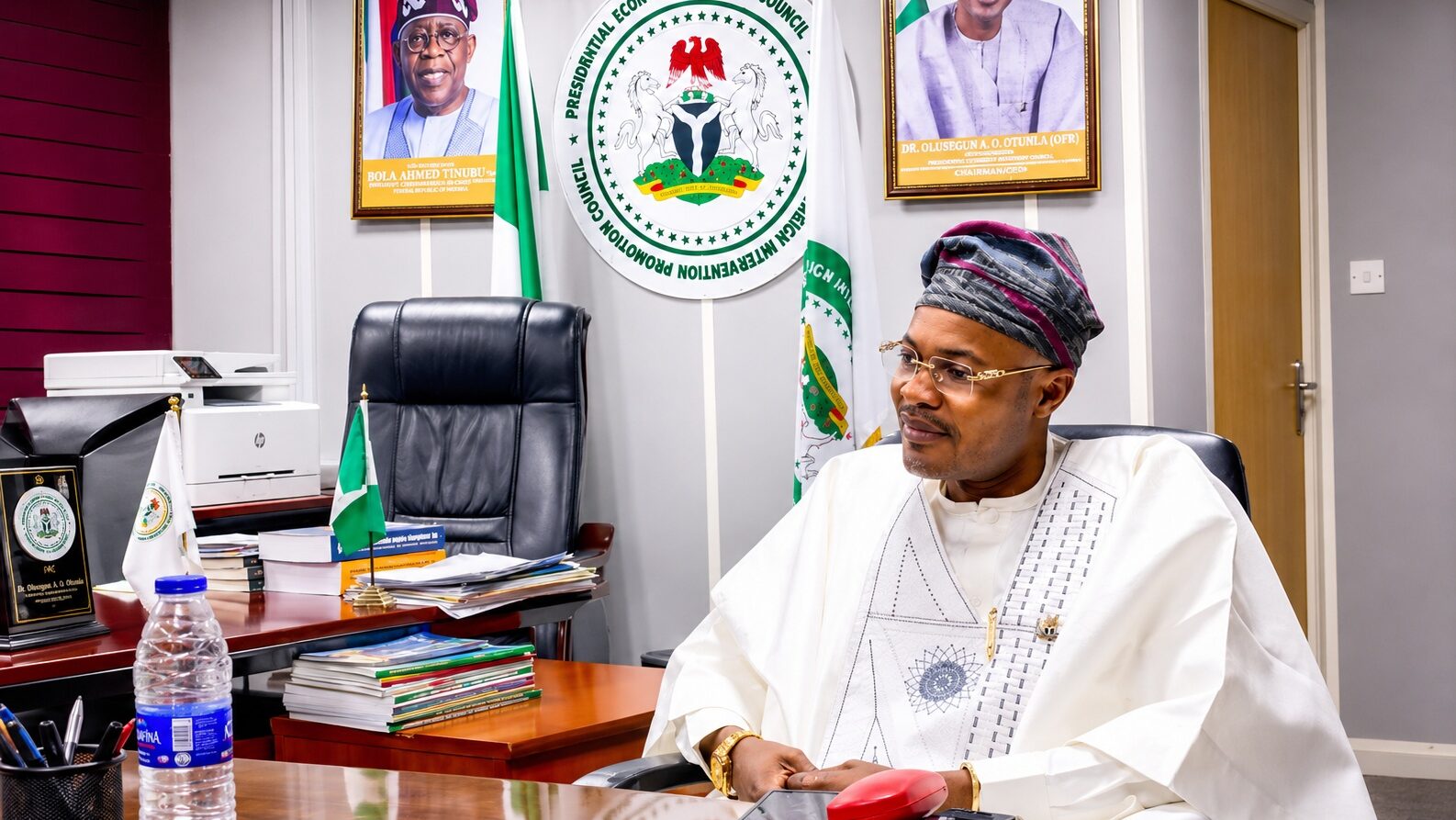
Lawyers for Adeniyi Adeyemi, who is accused of setting up a fake Presidential Foreign Investment Promotion Council (PFIPC), have said that many federal agencies helped the council operate.
In a statement from his legal team on Sunday, the lawyers asked why investigators are only going after their client.
“If the SGF, the Accountant-General, the Central Bank of Nigeria, the Head of Service, the Budget Office, the EFCC, the National Assembly and the heads of Nigeria’s main security agencies all verified, processed, funded and officially interacted with this agency over time, how can a single person, Prince Adeniyi Adeyemi Matthew, be held responsible for failing to detect what the whole state validated?” the lawyers said.
“It is impossible for one person to mislead every part of the federal government at the same time without high-level official support,” they added.
They argued that justice cannot be served by “prosecuting the mouthpiece while ignoring the state machinery that built, budgeted and created the entity.”
The issue started in October 2025 when the President’s Chief of Staff, Femi Gbajabiamila, reported to the State Security Service (SSS) and the Nigeria Police Force about the alleged creation and operation of the Presidential PFIPC, which the Federal Government claims was not legally made.
After the report, the police charged Mr Adeyemi and two others with forgery, impersonation, and obtaining by false pretence.
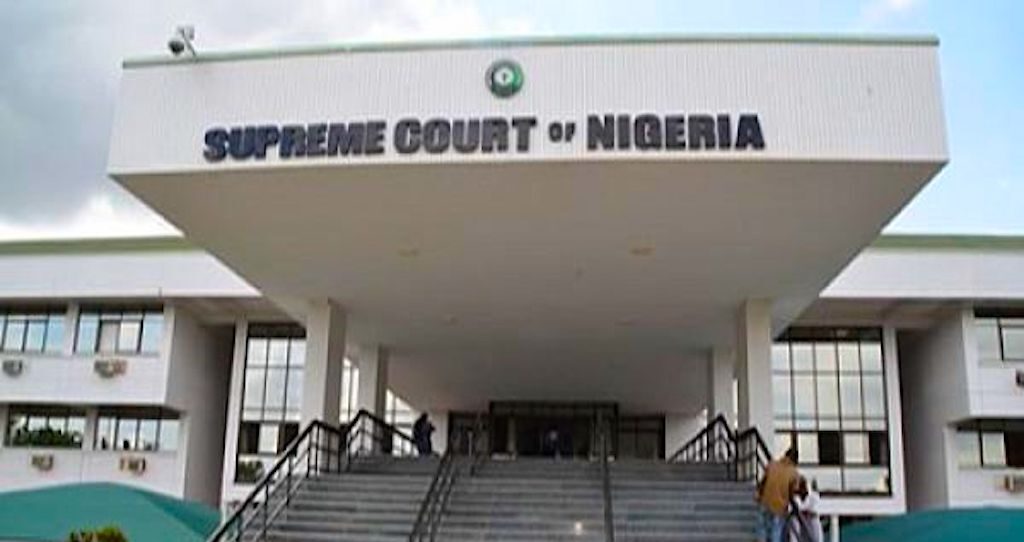
The case faced many delays at the Federal High Court in Abuja.
Last month, after Mr Adeyemi did not show up for his arraignment, the judge, Mohammed Umar, ordered his arrest based on the prosecution's request. His lawyer, Genesis Francis, opposed this, saying his client feared for his life. The lawyer noted that Mr Adeyemi had written an open letter to President Bola Tinubu and wanted to stay alive for the trial.
The judge said, “the court will help him to be alive” before he issued a bench warrant for Mr Adeyemi’s arrest.
He was arrested by the police less than 12 hours after this order and is now in police custody waiting for further proceedings on 30 September.
Meanwhile, the House of Representatives has begun a separate investigation into how the council got official recognition, office space, and budget allocations despite doubts about its legal status.
In its latest hearing, the ad hoc committee, led by Yusuf Gagdi, told the Inspector-General of Police, Olatunji Disu, to bring Mr Adeyemi before lawmakers, which led to the lawyers' statement on Monday.
In the Sunday statement, Mr Adeyemi’s legal team argued that while the prosecution and ongoing public inquiries have painted Mr Adeyemi as a lone fraudster who created a federal agency on his own, the “verifiable administrative footprint” of the PFIPC “tells a different story.”
They said investigators should look at the actions of the institutions that created and supported the council, not just Mr Adeyemi.
They pointed out that the Office of the Secretary to the Government of the Federation (SGF) “formally acknowledged documentation and facilitated office allocations within the Federal Secretariat Complex.”
The lawyers asked how the federal government’s main administrative body would act on documents if they were fake.
They also claimed that the Office of the Accountant-General of the Federation (OAGF) and the Central Bank of Nigeria (CBN) “used official documents to issue budget codes, grant self-accounting status, post federal civil service staff to the council and officially open operational accounts.”
According to the statement, the Office of the Head of the Civil Service of the Federation (OHCSF) “formally approved the establishment structure and granted recruitment waivers” that allowed the hiring of 314 staff members.
The lawyers also said that the Budget Office of the Federation and the National Assembly “processed and vetted documentation” that led to a N1.302 billion allocation for PFIPC in the 2026 Appropriation Act.
They noted that both chambers of the National Assembly passed the allocation, and the President signed it into law.
The defense team also said that “heads of major security agencies attended events organized by the council.”
They claimed that the Economic and Financial Crimes Commission (EFCC) “allocated a property to the council, requested N300 million for processing, and presented a plaque of recognition to its leaders.”
The Federal Government insists that the PFIPC was never a lawful federal agency, even though it operated from the Federal Secretariat, had official bank accounts, and got government approvals.
Police say that forged documents helped the council gain official recognition and that Mr Adeyemi posed as its director-general. He denies these claims.
A thorough review by PREMIUM TIMES in early July found that about 12 agencies have questions to answer in this matter. The report suggests that some people within the system may have helped or allowed Mr Adeyemi to commit the fraud. But police investigations did not link any government or civil service individuals to Mr Adeyemi or his alleged fraud.
The review identified several agencies needing further investigation, including the Office of the SGF, the Office of the Accountant General of the Federation, the CBN, the Office of the Head of the Civil Service of the Federation, and the Budget Office.
It also looked at the roles of officials who approved or acted on documents submitted for the council and questioned how those approvals passed through several government agencies without raising red flags.
Two days after the review, on 8 July, the House of Representatives decided to investigate how the PFIPC received a N1.302 billion allocation in the 2026 Appropriation Act without legal backing.
Lawmakers also formed an ad hoc committee to trace how the allocation made it into the budget and to identify those responsible.
In its latest hearing on 27 July, the committee revealed it had found 29 documents it believed were forged in connection with the council’s operations, leading to the IGP being instructed to produce Mr Adeyemi before lawmakers within 48 hours.
The committee said his testimony was necessary before it could finish its investigation.
This directive led to the Sunday statement from Mr Adeyemi’s lawyers, who insisted that the controversy should not be seen as the action of just one person, because focusing on Mr Adeyemi without looking at the role of the institutions involved would leave important questions unanswered.
Drop your comment
No comments yet — be the first to drop the gist 👇