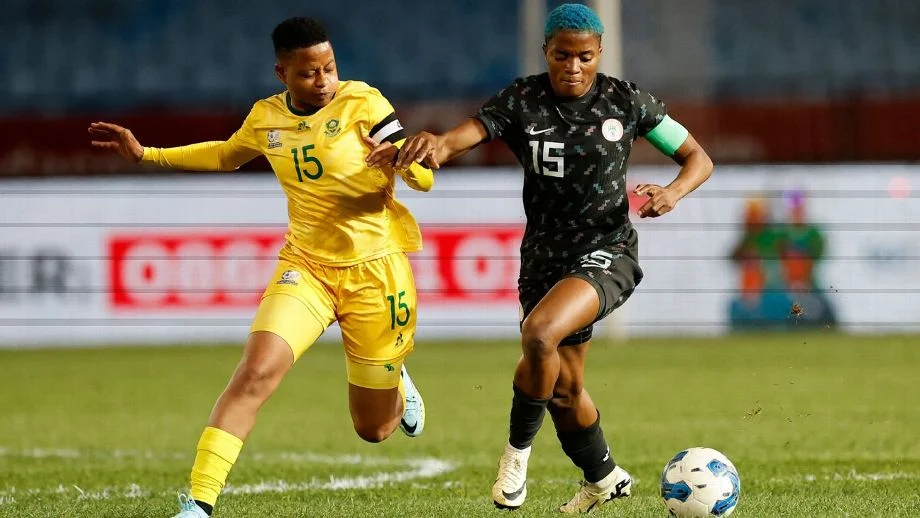
Super Falcons captain Rasheedat Ajibade has been picked for the second batch of FIFA’s Player Impact Programme. She joins 12 other top football stars in a project aimed at helping players use their influence to make positive changes in society outside of football.
This nine-month programme brings together players from 13 countries. They will create social impact projects to tackle issues in their communities.
Ajibade has been focusing on hygiene, mental health, and health education for grassroots female footballers in Nigeria. She runs the Rash Hygiene Hub, which is part of the Rasheedat Ajibade Foundation.
The initiative has finished three phases in Lagos, helping over 600 grassroots female footballers from different clubs. They received hygiene kits and health education to improve their well-being on and off the pitch.
Joining the FIFA programme gives her a chance to grow these projects with expert advice, shared experiences, and resources from a global platform.
The second cohort has already had its first major meeting. Eleven out of the 13 participants met in Boston in June for a three-day Impact Accelerator Workshop.
After this workshop, participants will meet again in London and online in December to share their projects and continue their impact journeys.
This programme builds on the success of the female-only pilot in 2025. This year’s group includes its first male participant, former India captain Sunil Chhetri.


Other members of this cohort are Spain’s Alexia Putellas, South Korea’s Casey Phair, Brazil’s Gabi Nunes, Japan’s Hina Sugita, Canada’s Jessie Fleming, France’s Kenza Dali, Mexico’s Maria Sanchez, England’s Michelle Agyemang, United States goalkeeper Phallon Tullis-Joyce, Zambia’s Racheal Kundananji, and New Zealand’s Rebekah Stott.
FIFA Chief Football Officer Jill Ellis met the participants in Boston. She said football stars have a chance to use their influence to make real changes beyond their accomplishments on the pitch.
“As players and coaches, we spend our careers building a legacy through what we do on the pitch: the big save, the match-winning goal, the last-ditch tackle,” Ellis said.
“But one of the questions we should all ask ourselves is: what legacy are we leaving beyond the game?
“Today we have a reach that extends far beyond 90 minutes. Through social media and the platforms available to us, we have a great opportunity not only to connect with fans, but to influence communities, create opportunities for others, and drive meaningful change. That’s the kind of impact that lasts well beyond the final whistle.”
During the three-day workshop, participants shared their stories and project goals through group talks, practical exercises, and sessions led by experts.
The programme aims to give them the skills, resources, and professional advice needed to turn their ideas into lasting projects that help their communities.


Drop your comment
No comments yet — be the first to drop the gist 👇