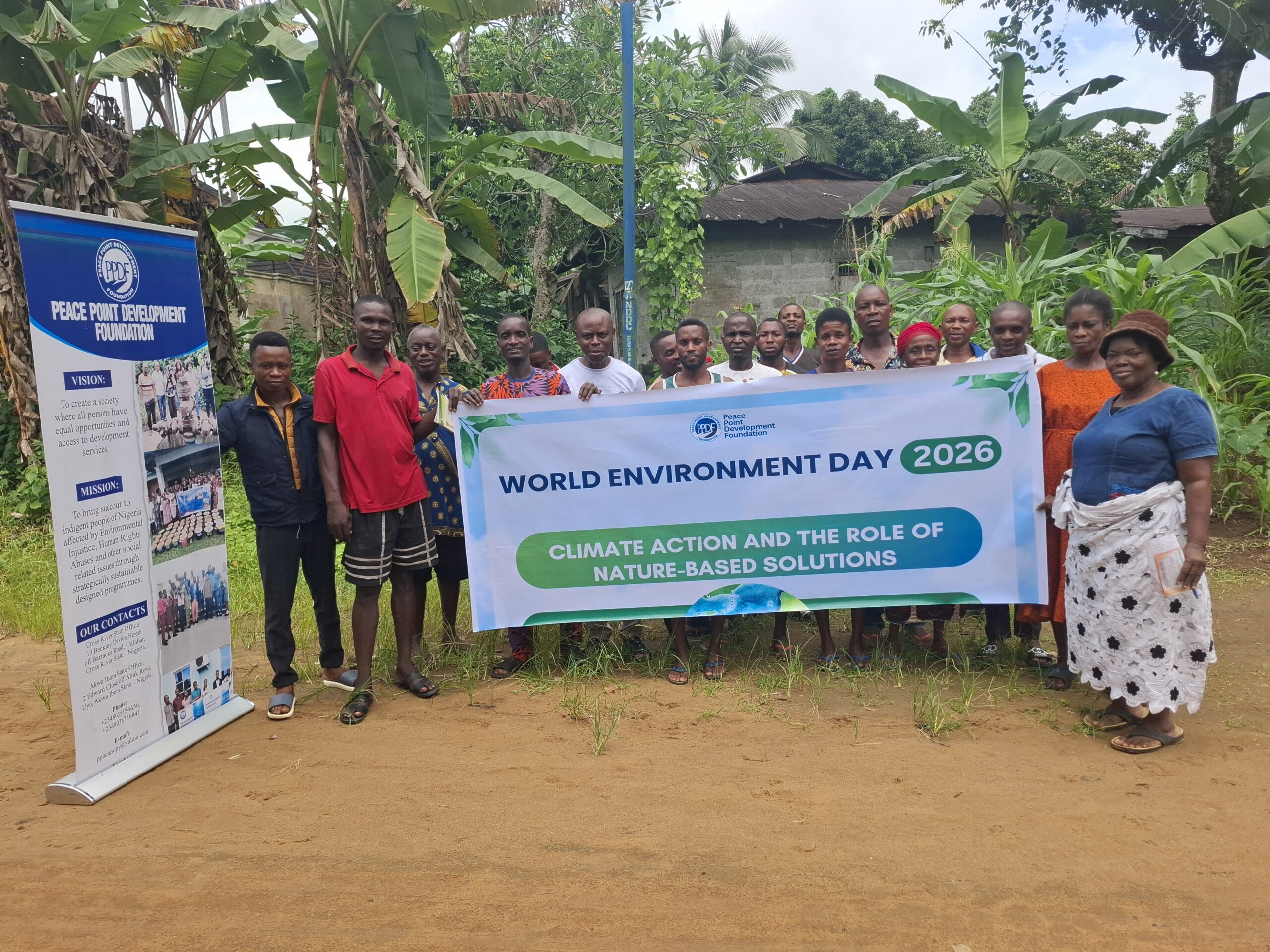
Farmers in Akwa Ibom have been urged to use nature-based solutions like tree planting, sustainable farming, and stopping bush burning. These actions can help reduce the effects of climate change on their livelihoods and food production.
At a World Environment Day 2026 event in Nkana, Etinan Local Government Area of Akwa Ibom State, on 5 June, the Peace Point Development Foundation (PPDF) organized the event. This civil society group focuses on ecological justice in the Niger Delta. Participants said communities need to take real steps to protect the environment and build resilience against climate challenges.
The theme of the event was “Climate Action and the Role of Nature-Based Solutions.” It brought together farmers from different agrarian communities in the Etinan Local Government Area of Akwa Ibom.
PREMIUM TIMES reported earlier that the Nigerian government plans to look into more nature-based solutions to fight climate change.
Umo Isua-ikoh, the coordinator of PPDF, spoke at the event. He said climate change is now a daily issue for rural communities that depend heavily on agriculture. He explained that farmers are already feeling the effects through unpredictable rainfall, long dry periods, flooding, poor soil, hotter temperatures, and lower crop yields.
“For our farmers, climate change is no longer a distant concept discussed only by scientists and policymakers. It is becoming a daily reality,” Mr Isua-ikoh said.
He pointed out that nature-based solutions can be some of the cheapest and most effective ways to handle the climate crisis. He listed actions like planting trees, restoring damaged lands, preserving wetlands, stopping bush burning, protecting water bodies, and using sustainable farming methods.
“These actions help communities adapt to climate change while improving agricultural productivity and strengthening local economies,” he said.
Mr Isua-ikoh encouraged farmers to keep tree cover on their lands, use organic manure, and plant economic trees that provide both environmental and financial benefits. He emphasized that tackling climate change is everyone's duty, not just the government's or development organizations.
“Every tree planted matters. Every bushfire prevented matters. Every effort to preserve our natural resources matters,” he said.
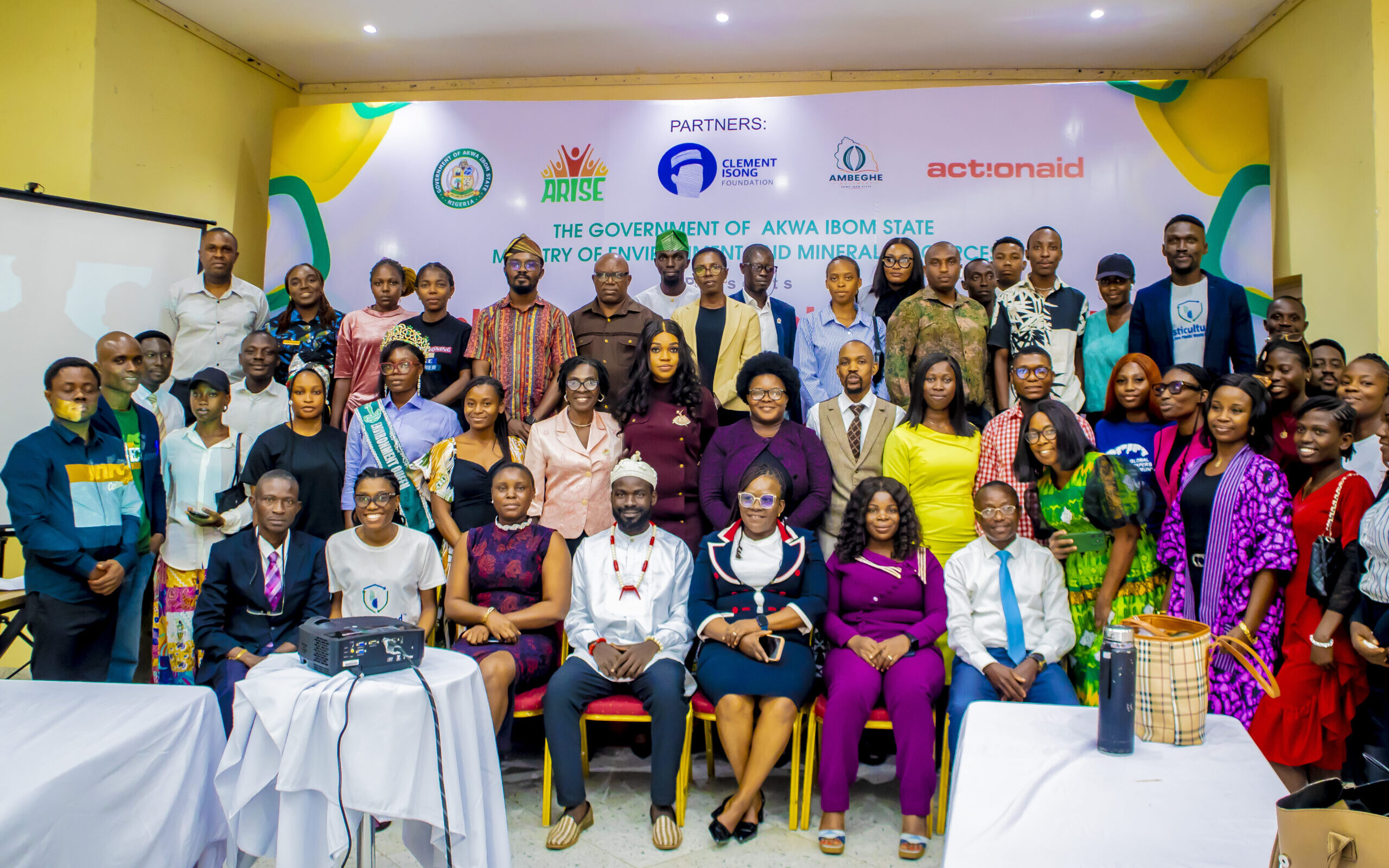

In a talk on climate action and nature-based solutions, Idongesit Essien, an environmental associate with PPDF, explained how changing weather is affecting farmers. He said that high temperatures, the loss of the usual harmattan season, and unpredictable rainfall are making farming harder.
Mr Essien noted that many farmers used to depend on clear seasonal patterns for planting and harvesting, but now they struggle to predict rainfall accurately. “Recently, there has been no harmattan as we used to know it. Farmers relied on that season for some agricultural activities, including harvesting crops such as cocoyam,” he said.
He also mentioned that high heat and changing weather have led to lower harvests in many areas. Mr Essien blamed much of the climate crisis on human actions, pointing to deforestation, loss of biodiversity, bush burning, and the heavy use of chemicals like herbicides as main causes.
He expressed concern over the loss of family forest reserves that once helped keep biodiversity and ecological balance. “Our forebears planted trees. Today, we cut them down without replacing them. The trees that should trap greenhouse gases are no longer there,” he said.
He called on communities to return to eco-friendly farming practices and to adopt nature-based solutions that improve ecosystem health and food production. “When nature is healthy, it provides food through improved yields,” he said.
Some participants promised to use what they learned during the program. A farmer, Eno Pius, said the training helped her see the connection between protecting the environment and farming success. She vowed to stop bush burning and plant more trees in her area.
Community leader Ebong Ituen urged oil companies in Akwa Ibom to take climate action seriously and asked government agencies to tighten environmental regulations. Mr Ituen assured the organizers that participants would share their knowledge with others in their communities.
“We will cascade these lessons to others in our communities so that everyone can contribute their quota to climate action,” he said.


Drop your comment
No comments yet — be the first to drop the gist 👇