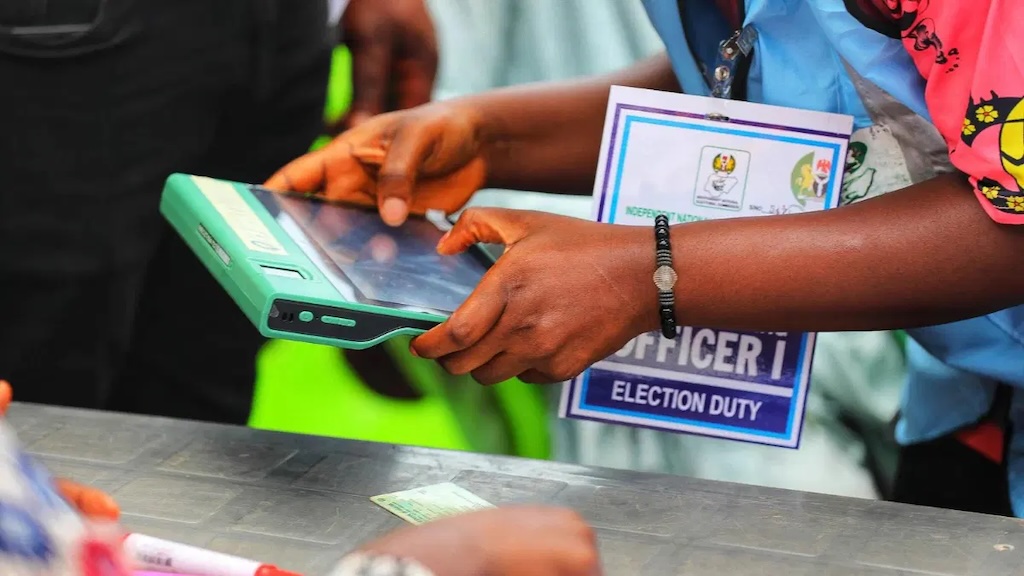
The performance of the Independent National Electoral Commission's Result Viewing Portal (IReV) in the 2026 Osun governorship election gives us a chance to look at how ready the platform is for the next general elections.
IReV was set up to make it easy for the public to see electronic copies of polling unit result sheets. This helps citizens, political parties, journalists, and election observers track results and compare them with the official figures presented during collation.
The platform's usefulness depends on more than just whether results are posted. It also matters how fast the results show up, how often they get transmitted, and how transparently INEC handles polling units that do not have their results displayed.
The Osun State governorship election had 3,763 polling units spread across 30 Local Government Areas and 332 Registration Areas/Wards. CJID monitored IReV during election day and into the next morning, along with observing voting, counting, and collation across the state. The pattern showed quick uploads in the first hours after voting, followed by slower activity later, and then a surge in uploads overnight.
How IReV performed in Osun
Results started showing up on IReV while voting and counting were still happening in some areas. Around 4:12 p.m. on Saturday, 437 of the expected 3,763 polling unit results were uploaded, which was about 11.6 percent. This number later grew to 849, or 22.56 percent, and then to 2,463 results, which was 65.45 percent.
By about 9:30 p.m., 3,292 polling unit results were available, giving a statewide coverage of 87.5 percent and leaving 471 results still outstanding. Since the official close of polls was 2:30 p.m., and voting continued beyond that in places where people were still in line, most of the state’s polling unit results were available within hours of voting and counting.
But the transmission did not go at the same speed throughout the night. CJID noticed a time when the number of uploaded results stayed at 3,292, with the last upload recorded around 8:48 p.m. After that, uploads resumed, and CJID saw 3,482 results at about 11:42 p.m., 3,537 shortly after, and 3,557 right after midnight. By 6:55 a.m. on Sunday, 16 August, the figure reached 3,681, which was 97.82 percent, and at around 7:42 a.m., 3,690 of the expected 3,763 polling unit results were available, making statewide coverage 98.06 percent.
The jump from 87.5 percent at 9:30 p.m. to 98.06 percent the next morning shows that transmission kept going overnight, even after the earlier slowdown. This means that most polling unit results were public while collation was still happening, which is key for a platform that lets the public check polling unit records as results move through collation.
The statewide numbers hide the differences in transmission across LGAs. At one point, when uploads across the state were nearing 95 percent, Irepodun and Ila were already at about 99.2 percent, Ede South and Obokun at around 99 percent, and Boluwaduro at 98.6 percent. In contrast, Ilesa East was about 90.9 percent, Atakumosa West and Ejigbo around 89.5 percent, Orolu at 89.4 percent, and Ola-Oluwa at approximately 80.6 percent.
The gaps narrowed as transmission continued, but their presence shows that statewide upload percentages alone do not tell the whole story of IReV's performance. Differences between LGAs could come from when polls closed, counting issues, network problems, geography, security conditions, or how election officials acted. To understand what caused slower transmission, INEC would need to provide more detailed data, but knowing where delays happen can help improve future elections.
What happens to the final few percent?
By 7:42 a.m., 73 of Osun’s 3,763 polling units had no results on IReV. The final governorship result was announced while the portal still showed 98.06 percent.
IReV is a public result-viewing platform, not the official collation system for declaring election winners. So, the 73 missing polling units mainly affect the completeness of the public record. After an election, citizens checking IReV should ideally see what happened at every polling unit, even those without results.
CJID’s reports from Osun show why more information is needed than just a percentage. In Ife Central, observers said voting did not happen in one polling unit due to a dispute over ballot papers, while the result from another polling unit was cancelled after over-voting and ballot paper destruction. In such cases, not having a result on IReV may be due to events at the polling unit, not transmission issues.
The current way IReV presents data does not help make these distinctions. A polling unit with cancelled voting looks similar to one with a valid result that hasn't been transmitted yet. Showing a status for polling units without results, whether voting did not happen, the poll was cancelled, or transmission is pending, would make the portal more useful.
This becomes even more critical as IReV gets closer to full coverage. At 60 or 70 percent, the main question is how fast the rest are being uploaded. But at 98 or 99 percent, the focus shifts to the few polling units without results, where they are, and why their results are missing.
How Osun compares with Anambra, Ekiti
Looking at recent off-cycle governorship elections gives context for assessing Osun’s figures, even though the records differ in what they show. CJID watched the Osun portal during election night, tracking uploads over several hours. The current IReV records for Anambra and Ekiti show where those elections ended up but not how they performed during election night.
For the 20 June 2026 Ekiti governorship election, IReV shows 2,390 results from 2,445 polling units, or 97.75 percent of what was expected. The portal's last upload was at 9:19 a.m. on 21 June, the day after the election. Almost two months later, 55 polling units still do not have results displayed.
The Ekiti LGA figures reveal that gaps are more pronounced in some areas. Some LGAs are complete, while Ado Ekiti has 339 results from 344 polling units, Ikole has 183 from 189, Ijero has 138 from 145, and Ekiti East has 95 from 112. So, the statewide figure of 97.75 percent hides more significant gaps in specific areas, with Ekiti East alone accounting for 17 polling units without results.
The 8 November 2025 Anambra governorship election shows a near-complete coverage. IReV currently shows 5,711 results from 5,720 polling units, or 99.84 percent, with nine polling units missing results. Most LGAs have complete records, while the remaining gaps are in a few LGAs. The portal also notes the last upload on 23 November 2025, more than two weeks after the election, showing the public record changed even after the election had ended.
These records highlight different parts of IReV's performance. Osun gives a clearer view of how fast results were transmitted, while Anambra shows how close the portal can get to full coverage. Ekiti shows that a small statewide gap can stick around in specific LGAs.
They also point out the need to separate speed from overall coverage when looking at IReV. Anambra’s current 99.84 percent is higher than Osun’s 98.06 percent recorded the morning after the election, but we don't know what percentage of Anambra’s results were available at the same times on election night. The date of Anambra’s latest upload shows the record kept changing after the election, but we can't tell how many of those later results were added. A solid comparison requires more systematic reporting of upload times and performance data across elections.
The unresolved results across the three elections reinforce the need for better polling-unit status information.
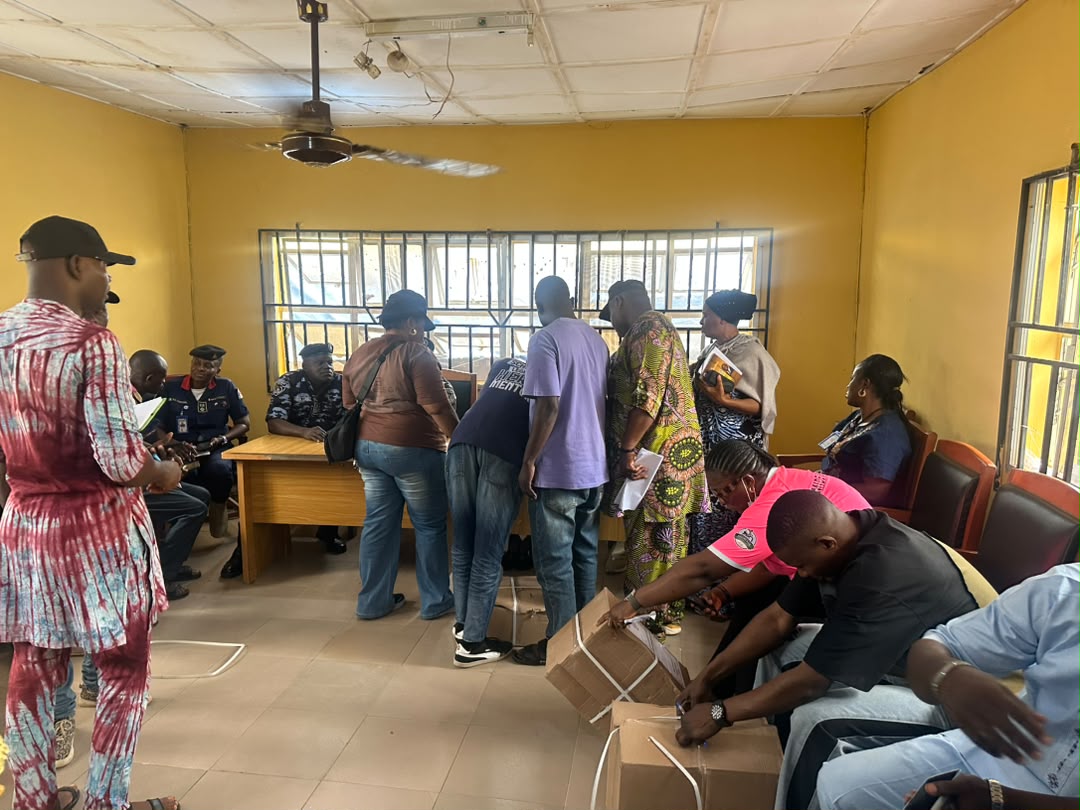

Anambra currently has nine polling units without results, Ekiti has 55, and Osun had 73 when CJID recorded the portal on Sunday morning. The numbers alone don’t explain if the gaps came from transmission issues, cancellations, or other reasons. As IReV moves toward high coverage, understanding these remaining entries is part of assessing how transparent the system is.
The 2023 experience and what has changed
The public's interest in these issues ties back to the 2023 presidential election when IReV became one of the most debated parts of the results process. INEC admitted that its failure to upload presidential polling unit results as expected led to widespread criticism and hurt public trust in the election. The Supreme Court noted that the issues contributed to reduced public confidence.
INEC's explanation showed that the problem was more about specific issues than a total failure of IReV. They said National Assembly results were uploading fine, while presidential results faced a configuration problem tied to how different elections were set up in the application.
National Assembly elections were linked to states and constituencies, but the presidential election was set up as one nationwide constituency, causing issues when the system tried to sort presidential result images by polling unit locations.
After technical fixes, INEC faced another problem with a backlog of uploads, while some BVAS devices had been switched off and needed to be reconnected for pending transmissions to happen. The Commission later said they were working on making IReV more reliable and added more quality checks.
The recent elections suggest a more stable setup. In Anambra, Ekiti, and Osun, IReV has published most expected polling unit results. The detailed monitoring in Osun shows that over 98 percent were available by the next morning. The widespread issues with presidential result uploads seen in 2023 did not happen in Osun.
However, general elections are much bigger. Osun had 3,763 polling units, while INEC’s 2023 post-election review shows 176,846 polling units nationwide. A general election also needs the electoral system to work at the same time in 36 states and the Federal Capital Territory. This happens under different telecom, security, and logistics conditions, while managing several elections and many more devices and personnel.
The experience from 2023 is relevant because it showed that good performance in one election setup doesn't guarantee the same for another. The fact that uploads for National Assembly elections were fine while presidential uploads had issues shows why performance in state governorship elections alone can't predict how IReV will work in a nationwide election.
What INEC should address before 2027
The recent elections give INEC much more operational information to prepare for 2027 than they had before the last general election. The main focus now should be to understand what slows down transmission, improve the information available about outstanding polling units, and test if the performance seen in state elections can hold up under national demands.
One issue highlighted by the Osun monitoring is the lack of public performance data from IReV itself. Much of CJID’s assessment relied on tracking the number of uploaded results over time. INEC’s backend should have more detailed data, like timestamps for transmissions, failed uploads, processing times, and patterns in delays. Sharing this information after elections would help separate problems with the technology from delays caused by late voting, counting, or other polling unit issues.
INEC should also set clearer performance targets before 2027. This includes expectations for how much of the polling unit results should be made public within certain times after counting. Having these benchmarks would help evaluate IReV better across elections and identify when transmissions stray from expected performance.
Communication during major interruptions also needs to be improved. When the Osun upload figure stayed at 3,292 for a while in the evening, the public portal did not explain what was happening. In a presidential election, a similar pause would draw much more attention.
If INEC spots a major technical or operational issue, giving timely information about what is wrong would lessen uncertainty and help the public tell if there is a system-wide problem or just local delays.
The way outstanding polling units are displayed should also be better. Giving each polling unit a clear status would help IReV show whether results were successfully uploaded, if transmissions are pending, if voting was cancelled, or if voting did not take place. This would fix one of the biggest gaps seen in Osun, Ekiti, and Anambra: the portal can show how many results are missing but does not explain why.
The more challenging preparation will be testing IReV under conditions close to the 2027 general elections. Stress tests should mimic simultaneous transmission from many devices, especially during high traffic times and from places with weak connectivity.
The assessment should check server availability, processing speed, queued uploads, failed transmissions, and if the public portal remains accessible while handling a large number of results. A solid independent technical review before the election would provide a better way to evaluate readiness beyond INEC’s own claims.
Looking towards 2027
The Osun governorship election showed a strong IReV performance at critical times during the results process. About 87.5 percent of polling unit results were available by 9:30 p.m., reaching 98.06 percent by the next morning, while the portal kept receiving results after the temporary slowdown in the evening.
Recent experiences in Anambra and Ekiti show that IReV usually achieves high polling unit coverage in off-cycle governorship elections. But the presence of outstanding entries shows that near-complete coverage does not always lead to a fully clear public record.
The big question as we approach 2027 is whether these improvements can be maintained during the scale and complexity of a general election. The next test of IReV involves much more than just keeping the portal up. It requires fast transmission from many more polling units, consistency across different areas, clear information when transmission slows, and a way to account for polling units without results.
Nigeria now has years of real experience with BVAS and IReV through various elections, including the issues faced in 2023 and the better performance seen in recent governorship elections. Preparing for 2027 should build on that experience to move beyond just promises that the technology will work, aiming for measurable proof of its performance under pressure, its weaknesses, and how those weaknesses will be addressed before the next general election.

Drop your comment
No comments yet — be the first to drop the gist 👇