On the morning of 21 November, I saw reports on social media about an attack on Lumma Ba’are in Borgu Local Government Area of Niger State. Later, traditional media gave more details about the incident. The village head, Malam Bawa Muhammad, was killed along with his relatives and other residents. Houses, shops, and other properties were looted and burned down.
Media reports blamed this terrible act on Fulani bandits in an area known for kidnapping for ransom, cattle rustling, and attacks on communities that resisted them. According to media, Fulani people became targets for revenge by some angry security volunteers of Kambari descent, known as Yansakai, in Wawa and Gada Oli. There is no confirmed proof that either group acted for their ethnic community. Both groups are non-state actors, but their roles and reasons differ. Regardless of these differences, the reports of violence against innocent people, especially children, are very disturbing.
In its report on Monday, 23 November, Daily Trust quoted a community leader in Wawa who said the revenge killings were based on information from a captured bandit about Gada Oli. He claimed he could account for 38 people killed in Wawa, as he took part in their mass burial. He could not confirm how many died in Gada Oli, as he did not attend that burial. He mentioned that a badly injured girl was receiving treatment at the General Hospital in New Bussa.
These communities have faced violence before. The Clingendael Institute’s October 2025 policy brief titled Trouble at the Border: A Nigerian Extremist Group Has Also Entered Benin noted an incident in Gada Oli on 7 April 2025, where suspected members of the Mahmuda terrorist group kidnapped someone and stopped mining activities. On 22 July 2025, Daily Trust reported attacks on security personnel in Lumma Sanke and Lumma Ba’are, attributed to suspected terrorists.
On 2 December 2025, Daily Trust reported the abduction of travelers along the Wawa and Luma route, including Mallam Umaru from Lumma Sanke. Other incidents included an attack on Nigeria Security and Civil Defence Corps (NSCDC) personnel in Wawa in December 2025 and an attack involving Wawa residents in Damala village in January 2026. Gada Oli, which saw reprisals, had also suffered from attacks by suspected terrorists. So, how can information from a bandit about Gada Oli make innocent people from that community guilty for the killings in Lumma Ba’are?
In my January 2026 piece titled “Reframing Nigeria’s Banditry Crisis: From Emotional Narratives to Strategic Clarity,” I looked at the rise of modern banditry in Zamfara State and how it took on an ethnic angle. Legitimate Fulani cattle owners were among the first victims of banditry in Zamfara. As the violence spread to Hausa farming areas, security volunteers arose. The actions of some volunteers and the unfair targeting of the Fulani made things worse. I also mentioned Dr Murtala Rufa’i’s account of the killing of Alhaji Isshe, a Fulani leader in Chilin village, Maru Local Government Area of Zamfara State, on 16 August 2012, by Yansakai members over claims of hiding criminals. This killing worsened the cycle of violence. Borgu can learn from this.
When dealing with banditry linked to herding communities, especially where suspected bandits are Fulani, angry communities must understand that labeling all Fulani as criminals is not justice. Similarly, some herders, after attacks on them or their cattle, have wrongly blamed specific communities without proof and retaliated against innocent people. In both cases, whole communities suffer for the actions of a few, with angry individuals taking the law into their own hands.
Herders and farmers trying to earn a living must not be unfairly targeted because of criminals involved in kidnapping, cattle rustling, and extortion. Any claims of involvement in crimes need thorough investigation. Individual guilt should be proven through legal processes, not based on ethnic ties, feelings, or biases.
In Northern Nigeria, innocent herders, who have themselves been victims of banditry, sometimes face reprisals due to their perceived connection to bandits. While the criminals escape punishment, innocent people suffer, leading to more anger and ethnic division. Many community leaders have rejected such attacks.
I’ve noticed that where victims and attackers share the same religion, ethnic tensions often rise, as seen in Zamfara, Katsina, and Sokoto states. When religions and ethnic identities differ, both aspects are often highlighted. It is fine to identify a suspect's ethnic or religious background when it helps investigations. The problem arises when that identity is used to wrongly profile innocent people.
Getting the local population involved is key to gathering intelligence and ensuring security operations succeed. Targeting innocent people based on their ethnicity or religion makes it hard to get their help. Criminals might take advantage of this to portray themselves as protectors of their ethnic groups while continuing their illegal activities. We have seen this with the notorious bandit Halilu Sububu. I worry that bandits and terrorist groups in and around Borgu could use the anger from the reprisal killings in Wawa and Gada Oli for recruitment.
Besides the attacks and revenge killings, we should not ignore the business of banditry. The National Bureau of Statistics (NBS) reported in its Crime Experience and Security Perception Survey 2024, published on 17 December 2024, that Nigerian households paid around ₦2.23 trillion in ransom between May 2023 and April 2024. This does not include money from cattle rustling, illegal mining, arms trafficking, and fees imposed on rural communities.
As innocent Kambari and Fulani die in Borgu, bandits keep making money. Farmers, herders, fishermen, and traders are suffering regardless of their ethnicity. Even though the government spends a lot on security, criminals still get resources from the same communities that need protection. Communities spend on their own security and suffer losses from being displaced, leaving their farms, and stopping trade and education. How much have people in Borgu paid in ransom and fees? How many cattle have been stolen, how many farms left untended, and how many children out of school because of insecurity? These should concern the law-abiding Kambari, Fulani, Laru, Bussa, Boko, Baatonum, Dukawa, and others in the area.
Nearly eleven months after my January article, I stress the need to differentiate armed non-state actors. Their motives, history, actions, and crimes should guide how the state responds. Where talking, disarming, and reintegrating are suitable, there must be clear rules, careful checks, and accountability. Dialogue should not allow criminals to escape justice or strengthen their illegal activities.
Some who support dialogue may not have access to intelligence that security agencies possess, especially intercepted communications that could show bandits' true intentions. What bandits say to their emissaries might differ from their private discussions. Security agencies cannot share all intelligence publicly. Decisions on dialogue should be based on solid intelligence, not emotional stories from meetings with bandits.
Some views from those who support dialogue are hard for many people to accept. I think this is due to the lack of clear strategies and effective communication. Some of their positions seem to suggest support for bandits. Their frequent comparisons between bandits in Northern Nigeria and militants in the Niger Delta, without understanding their different histories and reasons, have not been helpful.
There is a common claim that bandits turned to violence due to injustices against them. While real grievances must be addressed, supporters must see how hard it is to reconcile such claims with the suffering of rural communities. What have poor farmers, herders, fishermen, petty traders, women, and children done to deserve the injustices the bandits mention? Understanding why someone became a criminal is different from accepting their reasons for staying in crime.
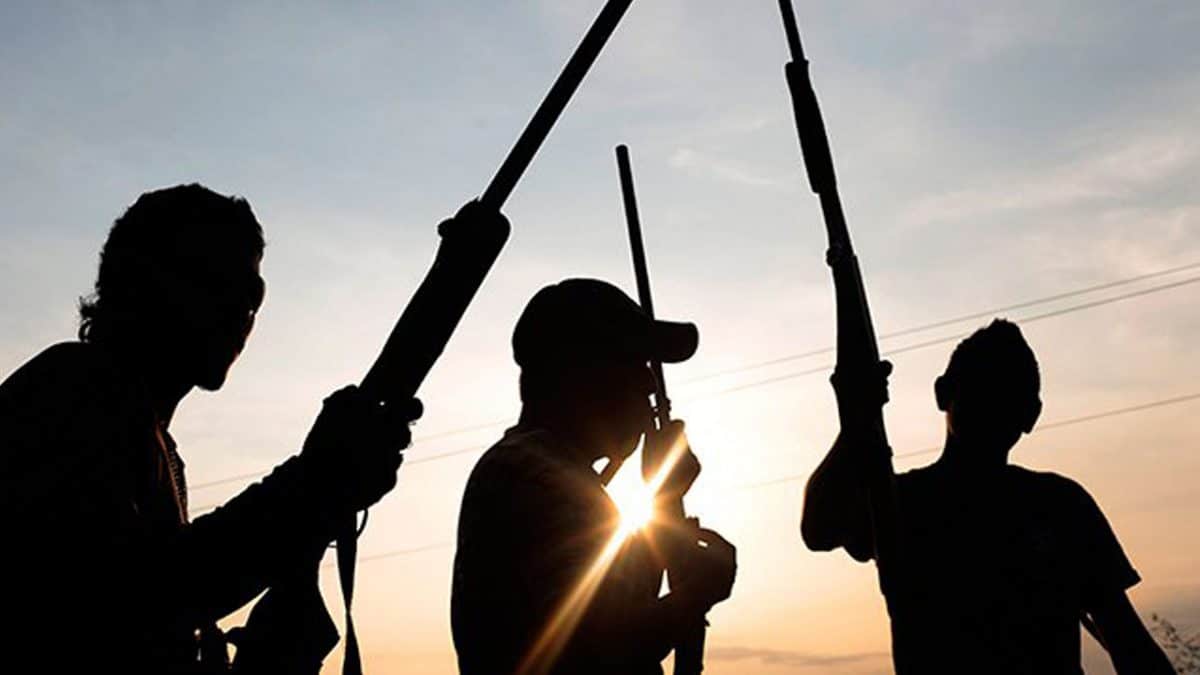
I remember an incident in 2021 when an advocate during talks with bandits said military actions against them were influenced by troops of a different religion. The Nigerian Army clarified on 8 March 2021 that troops were not deployed based on ethnic or religious lines. Although the advocate later said the media misunderstood him, part of the media continued to spread the narrative strongly. Introducing such religious aspects into talks with armed non-state actors or reporting military actions is counterproductive.
Some advocates have made the banditry crisis worse. Their calls for community protection and strong security actions against bandits are understandable. However, some continue to frame banditry as a deliberate ethnic and political agenda without appreciating its complexities. While condemning acts against communities they support, they often ignore crimes committed by individuals from those same ethnic groups. One person even made up a report of an attack and falsely attributed a dangerous statement to someone. I know about both incidents, which are also in the public domain.
It is hard to understand the inconsistency of some politicians who used banditry narratives for political gain while in opposition, only to abandon them after changing sides. Some now find themselves at odds with former political allies who still push those narratives. Some previously outspoken religious and community leaders have become quieter or shifted to softer advocacy.
Emotional and biased narratives about Nigeria’s banditry crisis have complicated efforts to understand and tackle it. Drawing international attention to the sufferings of victims is fine, but selectively presenting events and assigning ethnic, religious, and political motives to crimes without evidence is concerning. Misrepresenting banditry harms the victims who have become pawns in the hands of criminals and false advocates.
Some media have used harmful and unfair ethnic and religious labels in reporting banditry and terrorism. As a Mass Communication student, I often think about these issues. My lecturer, Professor Shamsuddeen Mohammed, Dean of Social Sciences, gave me a book titled Nigerian Media Narratives on Security and Human Rights in Parts of the North, published in 2021. The book has shown me the need to be careful in choosing media frames, labels, and narratives, especially in our diverse society.
I am not completely against dialogue, nor do I object to calls for strong military actions against bandits. I have always pushed for clear strategies in assessing threats and appropriate actions based on good intelligence. Ongoing, intelligence-driven security operations against criminal networks must go hand in hand with efforts to break the economy of banditry. The connection between banditry and ideological terrorism in and around Borgu should be taken seriously.
We appreciate the efforts and sacrifices of security volunteers in areas affected by terrorism and banditry. Some have even died supporting security agencies and protecting their communities. Their roles can be improved with clear laws, proper oversight, training, and accountability. These steps are needed to reduce the excesses of some volunteers whose actions could worsen the security challenges they are trying to help address.
The experience of the Civilian Joint Task Force (CJTF) in Borno State is a useful example. Elizabeth Pearson and Chitra Nagarajan, in their 2020 study titled Gendered Security Harms: State Policy and the Counterinsurgency Against Boko Haram, discussed the unfair targeting of Kanuri individuals as sympathetic to armed groups. This profiling is wrong, given the great contributions and sacrifices made by Kanuri people, along with Shuwa Arab, Babur, Margi, Hausa, and other ethnic groups, in supporting conventional security efforts against Boko Haram and the Islamic State West Africa Province (ISWAP).
Eric G. Berman, in his 2024 study titled Exploring the Acquisition and Management of Arms among Volunteer Security Outfits in Nigeria’s Borno State, mentioned on pages 24 and 33 the contributions of the CJTF to intelligence gathering and its ethnic and religious diversity. The successes achieved in Maiduguri led to similar initiatives in other parts of Borno State.
There are valuable lessons for Borgu and other regions in Nigeria. Sharing ethnic or religious backgrounds with a terrorist or bandit should not stop someone from supporting security forces in fighting criminals, nor should it make them a suspect without solid grounds. The media, traditional leaders, religious figures, and political leaders must work hard to prevent such profiling.
The Federal Government and state governments in conflict areas should create a platform for local leaders from various ethnic, religious, and occupational groups to actively join in strategic communication and share counter-narratives. This should include strong media campaigns and direct outreach in frontline communities to encourage citizens to avoid self-help, jungle justice, stereotyping, and ethnic profiling. Citizens should also be advised against blaming individuals for attacks on communities or herders without credible proof.
Systems for early warnings and quick responses should be put in place and strengthened, with local governments, traditional institutions, and community leaders given the tools and resources needed to perform their duties. I have observed that many conflicts that end up bloody start as small incidents that, without timely intervention, grow into major crises. Information from captured suspects must be checked and verified before it leads to legal action.
Ongoing campaigns against the destruction of farmland, theft of produce, cattle rustling, and other crimes that cause grievances and worsen the crisis are essential. Beyond security measures, the state must be present in rural areas through education, healthcare, and support for legitimate livelihoods. There must also be fair and quick justice for victims of the killings in Lumma Ba’are, Wawa, and Gada Oli. Legal actions must be taken against anyone found to have stirred up ethnic or religious violence.
Dealing with banditry must be a top priority for the country’s security efforts, and these must be effective and seen as effective. This will help to dispel conspiracy theories and counter narratives that interpret banditry in divisive terms. The growing ethnic profiling, threats to expel herders from communities, and agitations along ethnic and religious lines due to bandit attacks should raise serious alarms. The needs of all displaced persons, including farming communities and settled herders who have fled, must be handled with care and urgency, ensuring they can return and resettle safely. Expulsions and threats based on ethnicity must be stopped before they lead to a larger crisis with far-reaching effects on national unity and security.
I struggle to understand how someone can be upset about the killing of innocent people from their ethnic group while also justifying the killing of innocent people from another ethnic group in revenge. The life of an innocent Kambari in Lumma Ba’are is just as valuable as that of an innocent Fulani in Wawa or Gada Oli. Let us work together to find those responsible for these crimes and ensure they are punished, regardless of their ethnic or religious backgrounds. No innocent person should lose their life because of someone else's crime just because they share an ethnic or religious identity.


Drop your comment
No comments yet — be the first to drop the gist 👇