The Central Bank of Nigeria (CBN) says it has started work on the National Financial Inclusion Strategy (NFIS) 4.0. The aim is to do more than just increase access to financial services. The CBN wants to ensure that these services are used effectively, are affordable, safe, and contribute to better financial health for Nigerians.
This information came from CBN Governor Olayemi Cardoso during the launch of the 2026 Access to Financial Services (A2F) Survey Report in Abuja on Wednesday. The event was organized by the Enhancing Financial Inclusion and Advancement (EFInA). The theme was "Access, Opportunity, Growth: Advancing Financial and Economic Inclusion for all Nigerians."
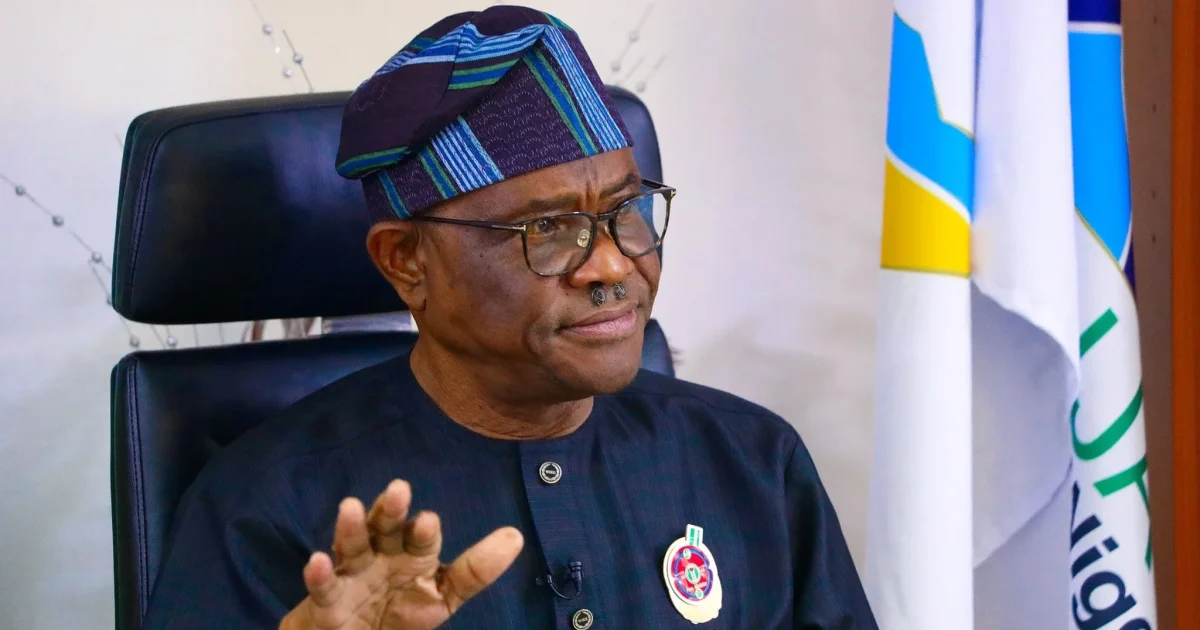
Mr Cardoso, represented by Aisha Isa-Olatinwo, the CBN’s Director of Consumer Protection and Financial Inclusion, explained that the review of the country’s NFIS 3.0 is complete. Now, they are moving on to the next phase.
"Within this stability and resilience framework, the CBN is advancing a new generation of inclusion reforms. The review of the National Financial Inclusion Strategy (NFIS) 3.0 has been completed. Work has begun on NFIS 4.0, which will raise the way we take financial inclusion to another level," the CBN said.
The bank stated that the new strategy will use a data-driven approach. It will focus on addressing gaps in Nigeria’s financial system.
According to the CBN, this approach will shift the focus from broad access targets to responsible inclusion. There will be more emphasis on consumer protection, trust, and digital financial safety.
The CBN also plans to improve information sharing and strengthen local delivery of financial inclusion programs. The 2023 A2F Survey showed progress in financial inclusion. Total financial inclusion rose to 74 percent from 64 percent in 2020.
Formal financial inclusion increased to 64 percent from 56 percent. Financial exclusion dropped to 26 percent. The bank credited these gains to the rise of digital payments and agent banking. They also noted improvements in identity infrastructure, financial education, and collaboration among different groups.
But the bank acknowledged that there are still major gaps. "Rural communities remain more excluded than urban communities. Regional gaps persist, and women continue to face a significant inclusion gap," the bank said.
It also pointed out that credit, insurance, pensions, and other financial products are not being used enough.
"The policy challenge before us is therefore no longer simply to open accounts or expand access points. It is to ensure meaningful usage, affordability, reliability, safety, trust, and measurable improvements in financial health," the CBN said.
The CBN plans to do geospatial mapping of financial access points. This will create a national repository showing where financial services exist, where gaps are, and how payment channels perform.
This initiative will combine location, institutional, operational, and transaction information. It will support better supervision, evidence-based policymaking, and targeted investment in underserved areas.
The CBN is also working to improve women’s access to finance through the Women’s Entrepreneurship Finance Code. This is done in partnership with the Bank of Industry and the Development Bank of Nigeria.
The initiative promotes accountability at senior levels, collects gender-disaggregated data, and includes measures to expand financing for women-owned small businesses.
By the end of 2025, Bank Verification Number enrollment reached 67.8 million. The agent network supported by the Shared Agent Network Expansion Facility has surpassed 2 million agents.
The CBN also mentioned the SabiMoni financial literacy program. This program engages communities and teaches Nigerians how to make smart financial choices, avoid fraud, and use financial services wisely.



The CBN emphasized that as access increases, there must also be effective ways to resolve consumer complaints. They have set up a redesigned complaints-management system. This will be upgraded into a unified complaints-tracking system for real-time visibility of complaints in the banking sector.
The regulator linked its financial inclusion goals to broader monetary and financial-sector reforms. They noted that financial inclusion cannot succeed amid ongoing economic instability.
High inflation reduces household purchasing power, weakens savings, and raises credit costs. These issues hit low-income and underserved Nigerians the hardest.
The CBN said that exchange-rate fluctuations also make business planning hard. This discourages investment and raises the cost of essential goods.
"Restoring price stability and confidence is therefore not separate from financial inclusion. It is fundamental to it," the bank said.
The CBN governor added that since 2024, they have focused on monetary and price stability. They are also improving monetary-fiscal coordination and liquidity management.
The bank is moving towards an inflation-targeting framework. This aims to put price stability at the heart of monetary policy while increasing transparency and accountability.
The CBN believes that new technologies and regulatory reforms can help lower costs and expand access to financial services. These include open banking, digital identification, and improved credit infrastructure.
But they warned that innovation must come with safeguards. "But innovation must serve people. It must be secure, transparent, and supported by appropriate safeguards, especially for those who are new to formal finance or vulnerable to fraud, data misuse, and unfair practices," they said.
The regulator called on financial institutions, fintechs, payment service providers, and others to work together on financial inclusion.
They stated that the ultimate goal is to build a financial system where Nigerians can save securely, make payments easily, get responsible credit, protect themselves from risks, build assets, and actively participate in the economy.
The CBN said the findings from the 2026 A2F Survey should help guide product design, regulation, supervision, investment, financial education, and targeted efforts.
"We must use disaggregated data by gender, age, income, location, disability status, and enterprise profile to identify gaps, allocate resources, and measure outcomes," they said.
"What gets measured must be acted upon."
The bank urged everyone involved to use the launch of the 2026 A2F Survey as a chance to move "from access to impact, from promises to measurable outcomes, and from financial inclusion to genuine financial well-being and shared prosperity."



Drop your comment
No comments yet — be the first to drop the gist 👇