
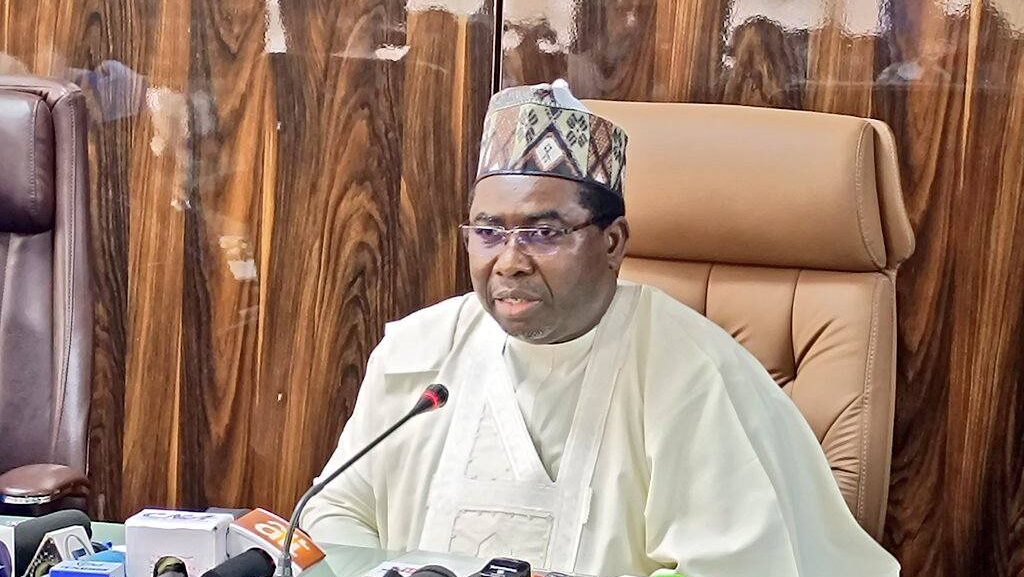
As the 2027 elections come closer, Joash Amupitan, the chairman of the Independent National Electoral Commission (INEC), held a press conference on Tuesday to update Nigerians on their readiness for the polls. He revealed that the commission will use artificial intelligence (AI) tools to verify results and improve cybersecurity ahead of the elections. Amupitan announced that they have set up a special AI division within their information and communication technology (ICT) department to create automated AI auditing tools that will be part of the result verification process. He mentioned that the use of AI will have human oversight and that they are partnering with international tech leaders to integrate AI tools to detect anomalies in their systems. He said these tools will help monitor database traffic and protect against cyber attacks and unauthorized changes. Given the widespread concerns about AI misuse, many Nigerians might not feel reassured by his statements, especially with the trust issues they have with INEC. Most of his remarks focused on their supposed readiness for the elections.
There are many worries about Professor Amupitan's political neutrality, and he needs to show he can be trusted. As elections approach, Nigerians are more concerned about the weakening of the electoral system, which should allow citizens to freely choose their leaders. Since taking over, Amupitan has promised to change Nigeria’s electoral history by ensuring the integrity of the 2027 elections is better than before. I sincerely hope he means it.
Elections rely on fair competition and a level playing field. If competition is blocked or limited, elections lose their democratic essence. One major threat to the 2027 elections is the ongoing decline of political competition due to forced defections from political parties and the gradual weakening of opposition parties. This change in the political scene could discourage voters from participating in the 2027 elections because they will have fewer choices. Limiting political options and moving towards a single-party system could harm Nigeria’s democracy before the elections. If political diversity is removed from elections, it opens the door to authoritarianism, which undermines the legitimacy of election results. My biggest worry for the 2027 elections is that many Nigerians believe their votes may not count. There is a fear that three key institutions: security agencies, INEC, and the judiciary could compromise the electoral process.
The rising insecurity and tensions in the country are not new, but they raise serious questions about whether issues like insurgency, banditry, communal violence, separatist movements, and organized crime could stretch Nigeria’s security forces too thin and lead to state involvement in corrupting the elections. This situation creates a dangerous environment for conducting elections. INEC might struggle to hold elections in unstable areas, and voters in conflict regions might be unable to vote. When insecurity affects the deployment of election staff, materials, and security, it seriously undermines the credibility and inclusiveness of the electoral process.

Another issue is the growing role of the judiciary in deciding election results. If INEC decides to act improperly, it could cause serious harm. It is important to remember that in 2023, Justice Inyang Okoro, leading a Supreme Court panel, stated that INEC can choose how to collect results during an election and that IReV is not a collation center, which should not invalidate election results. Recently, the Supreme Court also upheld INEC's rights to set rules that affect party primaries and membership. Back in June 2002, INEC rejected the registration applications of over 24 political groups, but the Supreme Court declared that decision void and ordered INEC to register those groups. That ruling established that as long as a group meets all requirements, INEC must register them as stated in INEC v. Balarabe Musa (2003) 3 NWLR (Pt. 806). In 2007, INEC wrongly disqualified Atiku Abubakar from running for election based on a tribunal indictment, despite no conviction. Again, the Supreme Court limited INEC's power and ruled that it could not disqualify candidates from elections.
Since then, most court rulings seem to support INEC's administrative actions, even when they hinder democracy. The current worry is about attempts to block significant opposition candidates. In the press conference on Tuesday, INEC Chairman confirmed they received the Certified True Copy (CTC) of the Supreme Court ruling on key parts of the Electoral Act 2026 after a legal challenge from the Zenith Labour Party (ZLP), which affirmed the legality of certain sections of the Electoral Act 2026. The Supreme Court's ruling, delivered unanimously on 24 September 2026, restored four provisions that the Court of Appeal had previously voided. The court ruled that section 77(5) states that only members listed on a political party’s membership register submitted to INEC 21 days before an election can participate. Section 77(6) requires parties to use the membership register submitted to INEC for their primaries, while section 77(7) states that a party that fails to submit its register on time cannot field candidates. Section 84(2) mandates that parties nominate candidates through direct primaries or consensus. The Supreme Court concluded that these provisions align with the Nigerian Constitution and restored the earlier judgment of the Federal High Court that had dismissed the legal challenge. INEC now has the means to disrupt opposition candidates if it chooses.



Drop your comment
No comments yet — be the first to drop the gist 👇