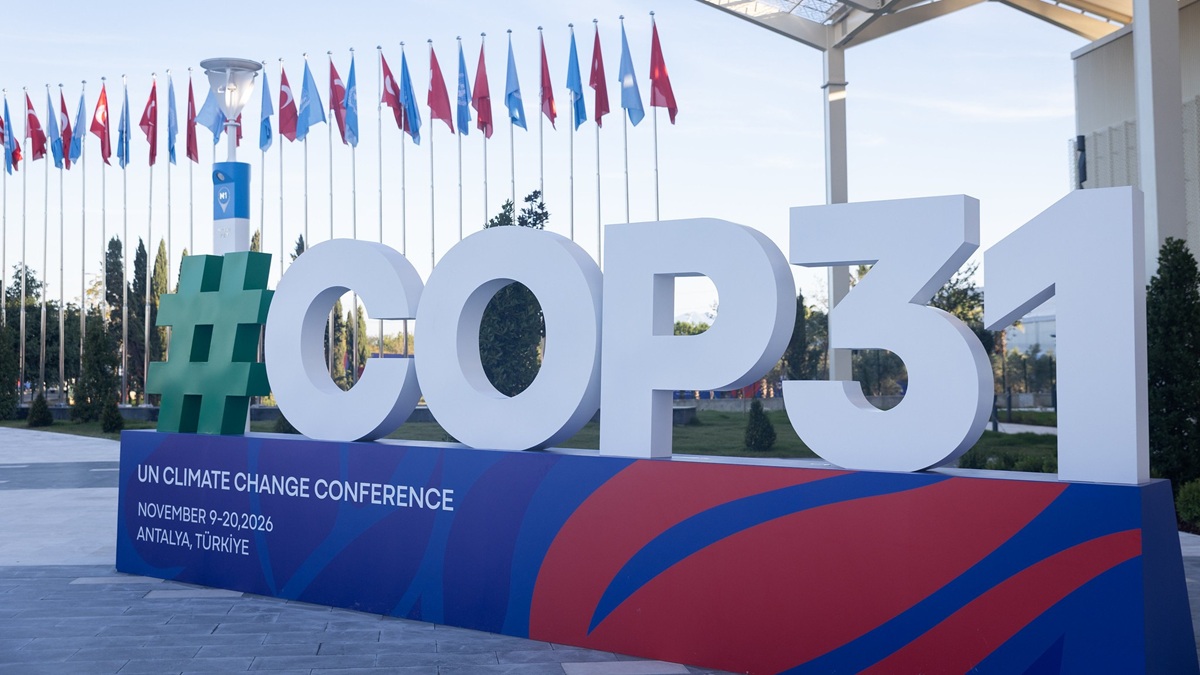
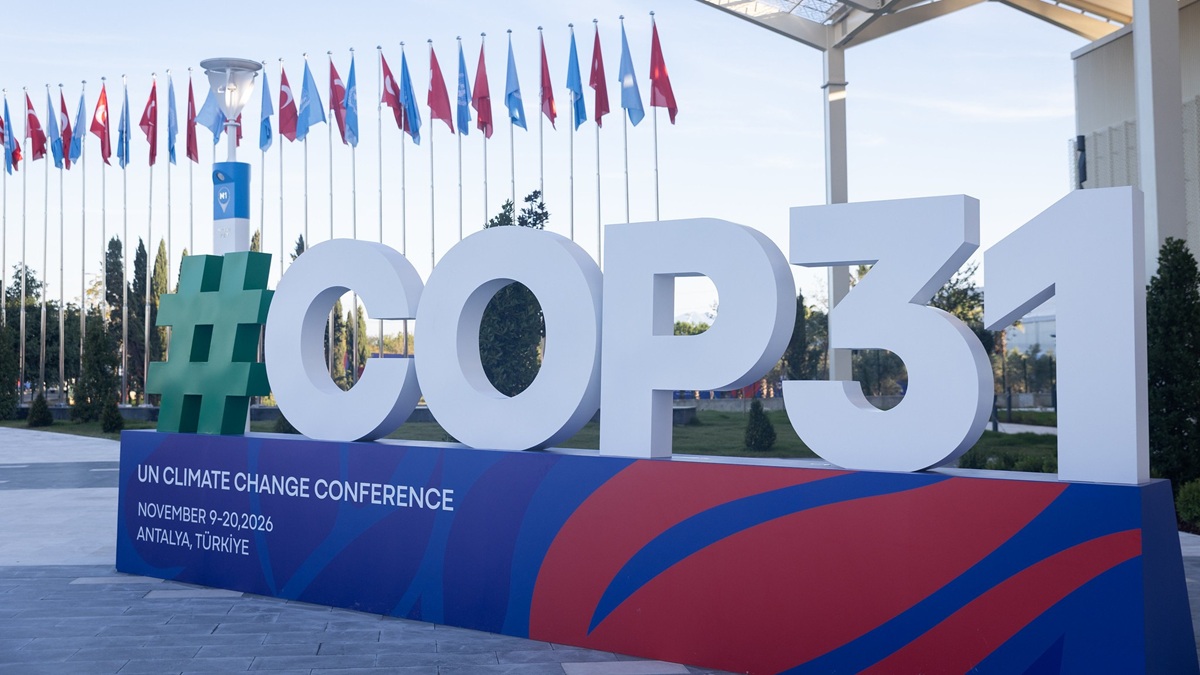
Nearly 11 years after the Paris Agreement was adopted, world leaders are gearing up for another climate meeting. There are worries that global promises are not turning into action fast enough to tackle the climate crisis.
The 31st Conference of the Parties (COP31) to the United Nations Framework Convention on Climate Change (UNFCCC) is set for November 9 to 20 in Antalya, Türkiye. This meeting will bring together governments, climate scientists, development agencies, businesses, and civil society groups to discuss the next steps in fighting climate change.
This summit is coming at a crucial time. Countries are under pressure to cut greenhouse gas emissions, invest more in clean energy, and protect communities facing the effects of rising temperatures.
Still, some tough questions in international climate talks remain unanswered.
Who will pay for climate action? How fast should countries move away from fossil fuels? How can developing economies grow while cutting emissions and protecting vulnerable people?
These questions matter a lot for Nigeria and other African nations. Climate change impacts are already visible through flooding, drought, extreme heat, and challenges to farming.
Besides environmental issues, these talks will affect electricity access, public health, food security, jobs, and the ability of developing nations to attract investment in cleaner technologies.
COP31 is not likely to produce an agreement like the Paris Agreement. Much of the focus will be on carrying out existing commitments, solving disputes from past conferences, and creating clearer paths for funding climate action.
The main test will be if countries can move beyond repeated statements and agree on real actions that show measurable results.
A Unique Leadership Setup
One interesting aspect of COP31 is the joint leadership between Türkiye and Australia, who will share the responsibilities for organizing and leading the conference.
Türkiye will host the summit. Its Minister of Environment, Urbanisation and Climate Change, Murat Kurum, will be the COP president. Australia’s Minister for Climate Change and Energy, Chris Bowen, will lead the negotiations.
This setup came after both countries wanted to host the conference. Under the deal, Türkiye will manage the presidency and the action agenda, while Australia will handle the formal negotiations.
This partnership is key because the two countries have different economic perspectives on climate policy.
Türkiye is an emerging economy looking to grow its industries and ensure energy security. Meanwhile, Australia is a developed economy with significant fossil fuel production and exports.
Their leadership will face the same disagreements that have complicated past climate summits, especially regarding fossil fuels, climate finance, and the roles of developed and developing nations.
The Turkish presidency has listed implementation, electrification, green industrial development, and strong infrastructure as key priorities.
One of its main initiatives is the 35-by-35 Global Electrification Pledge. This aims to increase electricity's share of global energy consumption to 35 percent by 2035, up from just over 20 percent.
This initiative is meant to boost electricity use in transportation, buildings, and industries, supported by cleaner energy generation, modern electricity grids, and energy storage.
But this pledge is part of the presidency’s voluntary action agenda, not a binding agreement that all countries negotiate.
This matters because announcements by summit organizers do not automatically become obligations under the UN climate process.
The World Leaders Climate Action Summit is set for November 11 and 12. It will show how much political support there is for these priorities.
The Ongoing Finance Debate
Climate finance will likely be one of the most heated topics in Antalya.
Developing countries often argue they cannot cut emissions and adapt to climate impacts without significant financial help from richer nations. These nations are seen as having greater historical responsibility for greenhouse gas emissions. This idea is reflected in Article 9 of the Paris Agreement, which says developed countries must provide financial resources to help developing nations with their mitigation and adaptation efforts.
At COP29 in Baku, Azerbaijan, in 2024, countries agreed that developed nations should lead efforts to raise at least $300 billion each year in climate finance for developing countries by 2035. They also called for scaling up finance from all sources to about $1.3 trillion annually by that year.
These two amounts are not the same. The $300 billion goal is a new collective finance target led by developed countries. The wider $1.3 trillion ambition aims to tap into a broader mix of funding sources, including private investments.
For developing nations, the worry is whether the funds will be available at affordable rates and reach the communities most affected by climate risks.
A major disagreement is about the responsibility of developed nations to provide financial resources under the Paris Agreement.
Developing countries want discussions to focus on these obligations, especially regarding public finance. Some wealthier nations prefer a broader approach that includes improving finance access and expanding contributors.
For Nigeria, the funding needs are significant.
The country needs investment in renewable energy, electricity infrastructure, climate-resilient agriculture, flood management, and early-warning systems. Many of these efforts will rely on concessional finance and public funding, not just private capital.
The key question at COP31 will be whether nations can make headway on the scale, quality, and accessibility of climate finance, rather than just repeating funding goals.
Fossil Fuels and the Transition
The future of fossil fuels will also be a tricky topic.
At COP28 in Dubai in 2023, countries agreed for the first time in a final climate decision to move away from fossil fuels in energy systems in a fair, orderly way. They also called for tripling global renewable energy capacity and doubling energy efficiency improvements by 2030.
This decision was a major shift in climate talks. But countries still disagree on how to implement it, and the commitment has not yet led to a global plan for moving away from coal, oil, and gas.
At COP30 in Belém, Brazil, in 2025, countries failed to secure a formal roadmap for the transition away from fossil fuels. This showed the ongoing divide between nations wanting faster action and those dependent on fossil fuel production.
This issue is especially sensitive for Nigeria, where oil and gas are key sources of government income and foreign exchange. Meanwhile, millions lack steady electricity, and gas flaring, pollution, and energy poverty affect communities.
A transition that overlooks these realities could worsen existing inequalities. But sticking with fossil fuels without a credible plan for cleaner energy also puts the country at economic and environmental risk as the global energy landscape changes.
This is where the just transition mechanism agreed at COP30 comes into play. Countries are expected to discuss its structure and implementation at COP31.
The mechanism aims to enhance international cooperation, technical support, and capacity-building to help nations and workers adjust to lower-carbon economies.
For Nigeria, a real just transition must go beyond just switching from one energy source to another. It should tackle the affordability and reliability of electricity, the future of workers in fossil fuel-dependent jobs, the growth of local clean-energy businesses, and the needs of communities affected by environmental damage.
Adaptation is Urgent
While cutting emissions gets a lot of attention at climate summits, adaptation is just as urgent for countries already dealing with climate change effects.
Floods, long dry spells, and rising temperatures are impacting jobs and infrastructure across Africa. In Nigeria, recurring floods have displaced people, damaged homes and farms, disrupted transport, and increased strain on public services.
The effects go beyond physical damage.
Extreme heat can harm workers’ productivity and health, while disruptions in farming can worsen food insecurity. Poor households often have fewer resources to bounce back from these shocks.
At COP30, countries agreed on 59 indicators to help track progress toward the Global Goal on Adaptation. These indicators aim to assess how nations are boosting resilience in areas like water, food systems, health, and infrastructure.
But agreeing on indicators does not mean that the funding needed to carry out adaptation plans will be available. Developing countries continue to ask for more reliable funding, especially for projects that might not attract private investment.
COP30 also called for efforts to triple adaptation finance by 2035. Questions remain on how this commitment will be measured and delivered.
Nigeria's Climate Goals
Nigeria will arrive in Antalya with an updated climate pledge that outlines a clearer emissions-reduction path.
Under its third Nationally Determined Contribution (NDC 3.0), submitted in 2025, Nigeria targets reducing emissions by 168.2 million tonnes of carbon dioxide equivalent by 2030 and 184.9 million tonnes by 2035, using 2018 as the base year. These goals mean reductions of about 29 and 32 percent, respectively, against the country’s 2018 emissions. Nigeria also aims for net-zero emissions by 2060.
The plan includes commitments for the energy, industrial, agriculture, land-use, and waste sectors. For the oil and gas industry, it aims to end routine gas flaring by 2030 and cut emissions from leaks and venting.
But the challenge is making these commitments into workable projects and measurable outcomes.
To meet these targets, Nigeria needs ongoing investment in renewable energy, better electricity infrastructure, effective regulation, and improved collaboration among government agencies and private investors.
This is especially important for COP31’s proposed 35-by-35 electrification target.
A Shrinking Window for Action
COP31 is also happening as the international community prepares for the second Global Stocktake under the Paris Agreement. This process lets countries review collective progress towards the treaty’s goals.
The first stocktake, completed in 2023, found that global efforts were not enough to keep the world on track to limit warming to 1.5 degrees Celsius above pre-industrial levels. Its results called for quicker action on renewable energy, energy efficiency, deforestation, and moving away from fossil fuels.
The latest United Nations Environment Programme Emissions Gap Report highlights the urgency. It warns that global temperatures might exceed the 1.5-degree threshold, even while arguing that faster emissions cuts could limit the scale and length of that overshoot.
The report estimates that current national climate pledges, if fully followed, would cut emissions by only 11 to 15 percent by 2035 compared to 2025 levels. A path to return global temperatures to 1.5 degrees by the century’s end would need emissions to fall by 45 percent by 2035.
The absence of the United States from the official government delegation will also stand out.
The country formally withdrew from the Paris Agreement in January 2026, complicating international cooperation when stronger actions from major emitters are needed.
In the end, the importance of COP31 will not be measured by the number of speeches, announcements, or pledges made in Antalya. It will depend on whether countries can settle lingering disagreements, boost support for vulnerable nations, and create practical plans for delivering existing commitments.
For Nigeria, the summit should be more than just a chance to repeat its climate ambitions. It is an opportunity to seek accessible funding, strengthen the case for clean energy investment, and ensure that the transition supports jobs, electricity access, and livelihoods.


Drop your comment
No comments yet — be the first to drop the gist 👇