
The United Nations climate chief, Simon Stiell, on Monday urged artificial intelligence (AI) companies to set climate targets and use renewable energy for their data centres.
Mr Stiell spoke at the High-level Green Digital Action Roundtable on AI during COP31 in Antalya, Turkey.
"AI and other new technologies are a double-edged sword," Mr Stiell said. He added that the benefits of AI should be greater than its rising costs and should reach every country.
Mr Stiell pointed out that the demand from data centres is putting pressure on electricity systems, and pollution increases where fossil fuels supply that demand.
Data centres used about 415 terawatt-hours of electricity in 2024, which is around 1.5 percent of global consumption, according to the International Energy Agency (IEA). The agency expects this number to more than double to about 945 terawatt-hours by 2030.
Mr Stiell mentioned that some developers build gas plants on their sites to avoid issues with the grid. But he noted that removing fossil fuels from the grid does not mean their emissions are kept out of the atmosphere.
In Nigeria, about 87 million people do not have access to electricity, and the grid often fails. A data centre project is following a similar model.
Tetracore Energy Group announced in March that it will build a $400 million, 20-megawatt data centre in Ogun State with Huawei and Inspirive Technologies. This data centre will be powered by a 100-megawatt gas plant on the same site, which allows it to operate independently of national grid issues.
The planned capacity of the plant is about 2.5 percent of the 4,047 megawatts that the national grid produced on average in October, according to the Nigerian Electricity Regulatory Commission.
Nigeria’s National AI Strategy says that AI clusters should operate on clean energy and use less than 50 percent of their power from the national grid.
Tracy Keshi, who leads Tech Justice and Digital Governance at the Centre for Journalism Innovation and Development (CJID), a West African think-tank, said the strategy does not set a deadline for private data centres or rules for their water use.
She said this creates a gap between making sustainable infrastructure a priority and ensuring there are rules for companies building that infrastructure.
Mr Stiell pointed out that communities are already pushing back against data centres due to issues with water, energy bills, and the environment.
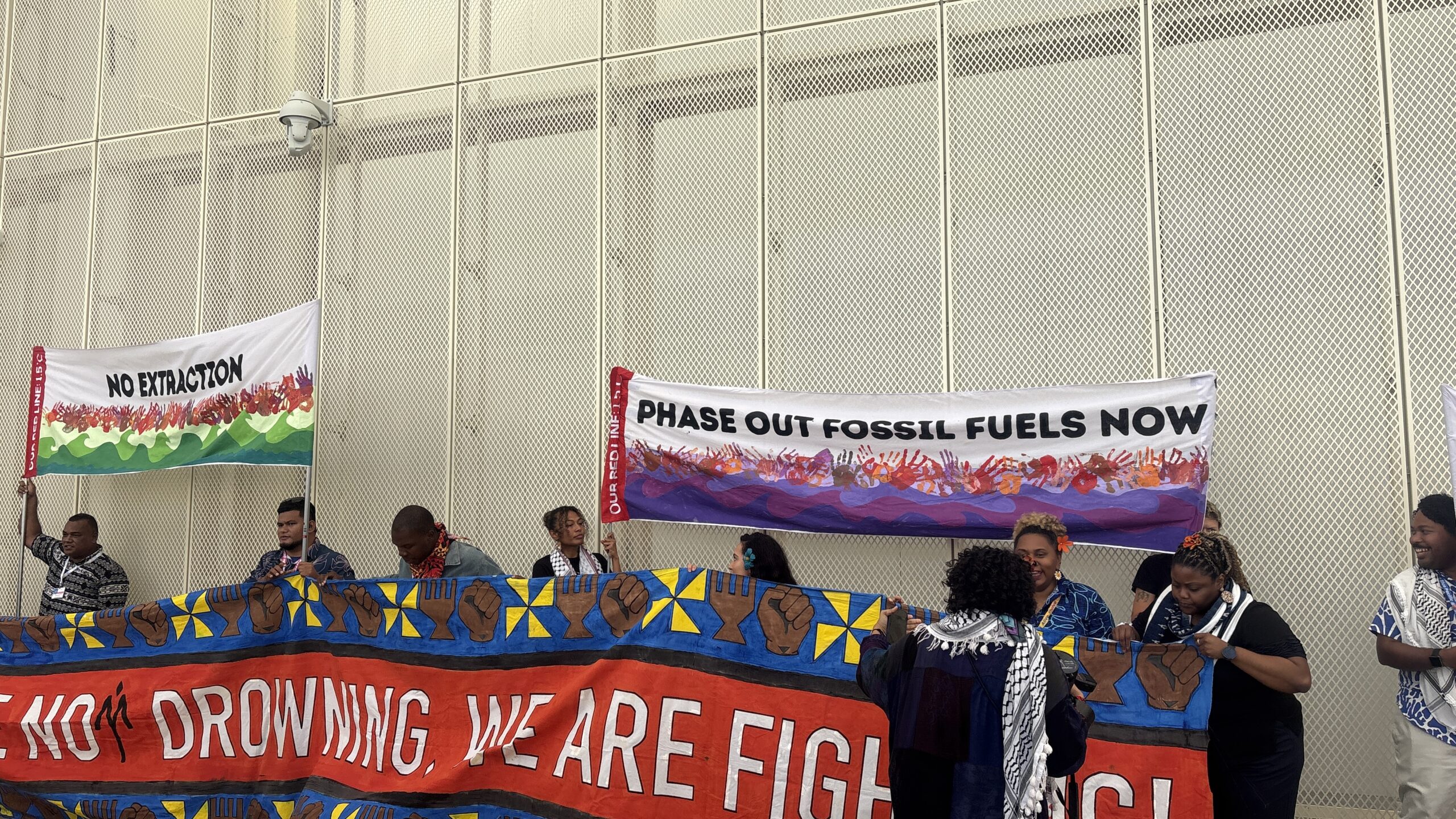

In South Africa, the Housing Assembly and the non-profit Foxglove took legal action in August to stop two Equinix data centres in Cape Town, citing concerns over water and electricity use, according to Rest of World.
Mr Stiell called on chief executives and boards to align their plans with the Paris Agreement. He stated that this is the only way to avoid an economic and human disaster that would affect every company, including big tech firms.
"All firms should set credible climate targets and deliver on them," he said.
Mr Stiell encouraged AI companies to run their data centres on renewable energy and to publish their energy and water usage. He stressed that clean energy should be added as demand increases, without passing the costs onto the public.
Mrs Keshi noted that no Nigerian law specifically requires data centre operators to publish their electricity and water usage. However, the Climate Change Act 2021 requires private entities with 50 or more employees to report annually to the National Council on Climate Change. She urged regulators to make data centres publish their energy sources, emissions, and water use each year.
Mr Stiell warned that the energy transition is already moving at two different speeds. He wants AI to help close the gap for developing countries that lack funds, computing power, and reliable data.
He mentioned CLIMAID, a platform that uses AI, satellite information, and local data to assess climate risks. Its developer, Upendo Ernest Lyimo from Tanzania, won this year's UN Climate Change AI for Climate Action Award for the platform and was recognized at a ceremony on Monday.
Turkey, which is hosting COP31, and the International Telecommunication Union (ITU), a UN agency, introduced the voluntary Antalya AI Pledge at the roundtable. This pledge asks governments and companies to reduce the environmental impact of AI and use it for climate action.
The pledge has received 80 endorsements and 271 commitments by Monday, according to Turkey’s industry and technology minister, Mehmet Fatih Kacır. Nine of the endorsements are from countries, while the rest are from companies and civil society groups.
Mrs Keshi mentioned that Nigeria wants data centres and a role in the global AI economy. But the development should not put more pressure on communities already struggling for basic resources.
"Nigeria should not focus only on attracting AI investments without considering the environmental costs," she said. She urged the country to ask who benefits from the infrastructure, who pays the costs, what protections exist, and who holds the companies responsible.




Drop your comment
No comments yet — be the first to drop the gist 👇