A N50 million court construction project in Erho-Abraka, Ethiope East Local Government Area of Delta State, has shown a troubling gap between the state government's budget records and the state judiciary's information.
The Delta State Government's approved budget set aside N50 million for building a magistrate court at Erho-Abraka under the High Court of Justice. The project code is 13100123031100.
The state’s 2024 fourth-quarter Budget Implementation Report later listed the project as fully completed, according to a review by PREMIUM TIMES.
But the office of the Chief Judge of Delta State responded to a Freedom of Information request from Tracka, a project-tracking platform, saying the funds were never accessed.
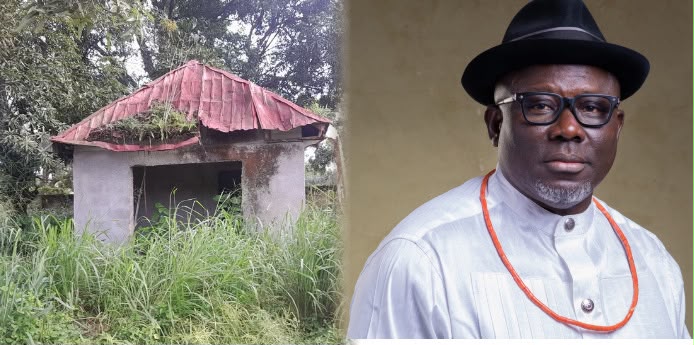
Tracka visited the court site in Erho-Abraka and found no signs of construction or renovation for the N50 million project.
Court officials interviewed by Tracka also said they knew nothing about the project. The magistrate at the court mentioned that the community provided the existing benches in the courtroom.
The state of the court raises further doubts about the reported completion. Parts of the roof are coming off, and weeds have taken over large areas of the compound.
In a letter dated 8 June 2026 and signed by Chief Registrar Eloho Okodiya-Onoriose on behalf of Chief Judge Tessy Diai, the judiciary confirmed that N50 million was included in the 2024 Delta State Appropriation Law for the court's construction.
However, the judiciary stated that the project was never awarded. They said no payment voucher, fund requisition, or withdrawal request was made against the allocation.
“The entire N50,000,000.00 … as appropriated remains unaccessed throughout the 2024 fiscal year or thereafter,” the letter stated.
The chief registrar dismissed Tracka’s claim that the N50 million had been spent on the project, calling it “totally incorrect and misleading.”
The letter explained that the project allocation expired because it was not awarded during the 2024 financial year or afterward.
This response contradicts the expenditure details in Delta State’s budget implementation records.
PREMIUM TIMES looked closely at Delta State’s 2024 financial documents.
The approved 2024 budget shows N50 million allocated for the magistrate court at Erho-Abraka, under the High Court of Justice.
The project was also mentioned in the state’s first-quarter 2024 Budget Performance Report, showing a N50 million allocation but zero implementation at that time.
The second-quarter report also showed N50 million for the project and 0 per cent performance.
By the third quarter, the project was still recorded at zero per cent implementation, with the N50 million allocation unchanged.
But the fourth-quarter report claimed the project had achieved 100 per cent implementation, according to PREMIUM TIMES’ review.
This means that the state’s quarterly records show the project going from zero implementation in the third quarter to full completion by the year’s end, even though the chief judge’s office says the project was never awarded and no money was accessed.
This discrepancy is important because the 2024 audited accounts published by the Delta State Auditor-General include the consolidated budget report for the year ending 31 December 2024 as part of the audited financial documents.
PREMIUM TIMES reviewed the 2024 audited financial statements but did not find a corresponding capital expenditure line item that explained the N50 million spending.
The Erho-Abraka court project is not new. PREMIUM TIMES found that it was included in earlier Delta State budgets before the 2024 allocation.
In the 2019 budget, for example, Delta allocated N25 million for the court's construction at Erho-Abraka.
According to PREMIUM TIMES’ review of later budget documents, the project received N50 million in 2021 but no funding was released for it between 2021 and 2023.

It was not included in the 2022 budget, while N20 million was budgeted in the 2023 revised budget.
The 2024 allocation was another attempt to fund a project that has been on the state’s agenda for years. Yet, according to the chief judge’s office, the 2024 allocation was never accessed.
PREMIUM TIMES also checked the Delta State Government’s procurement portal for information about the project.
The project was not listed among the 132 completed projects, 171 ongoing projects, or 127 new projects shown on the portal, according to the newspaper’s review.
The absence of the project from the procurement records raises more questions about the state’s reported 100 per cent implementation of the N50 million allocation.
If the project was fully implemented as the fourth-quarter budget report suggests, there are questions about the procurement process, contractor, payment records, certification, and actual delivery of the project.
On the other hand, if the chief judge’s office is right that the allocation was never accessed, then the state’s budget implementation record needs clarification.
Tracka raised the issue publicly on X after receiving the response from the chief judge’s office.
The organization said the response brings up an important accountability question because the budget report and the judiciary’s records seem to tell different stories.
“If the funds were not accessed, how did the expenditure appear as fully implemented in the Budget Implementation Report?” Tracka asked.
They called for the relevant authorities to reconcile the figures and explain what happened to the allocation.
The organization also urged the office of Governor Sheriff Oborevwori, the Economic and Financial Crimes Commission, and the Independent Corrupt Practices and Other Related Offences Commission to look into the discrepancy.
But the issue goes beyond whether a court was built. What is at stake now is the trustworthiness of public financial records and the whereabouts of the funds reported as spent in the fiscal documents.
A budget implementation report should show citizens how public resources were used. When an expenditure is recorded as 100 per cent implemented but the responsible agency says the allocation was never accessed, there needs to be a clear explanation.
PREMIUM TIMES asked the Delta State Government for clarification on the contradiction.
The Commissioner for Information, Charles Aniagwu, did not answer calls from our reporter.
The newspaper also sent a media inquiry to Mr Aniagwu via WhatsApp on 18 September and followed it up on the morning of 19 September. He had not replied by the time of this report.
PREMIUM TIMES asked the government how N50 million could be marked as 100 per cent implemented if the chief judge’s office says the funds were never accessed.
The newspaper also inquired if the money was released, accessed, or spent by any government agency, department, or contractor, and requested details of the contractor, contract, and certificate of completion.
They also asked if the government had started any process to reconcile the apparent difference between its budget records and the chief judge’s office.
Delta State’s official 2024 financial records are publicly available as part of the state’s fiscal reporting framework, while its audited accounts were approved through the Auditor-General’s reporting process.
But the current reality seems different from the paperwork. The court remains in a poor state, while the N50 million set aside for its construction is surrounded by conflicting official records.
This conflict raises more questions: how did a project that the authority in charge says was never awarded or funded become 100 per cent implemented in Delta State’s 2024 budget performance records?

Drop your comment
No comments yet — be the first to drop the gist 👇