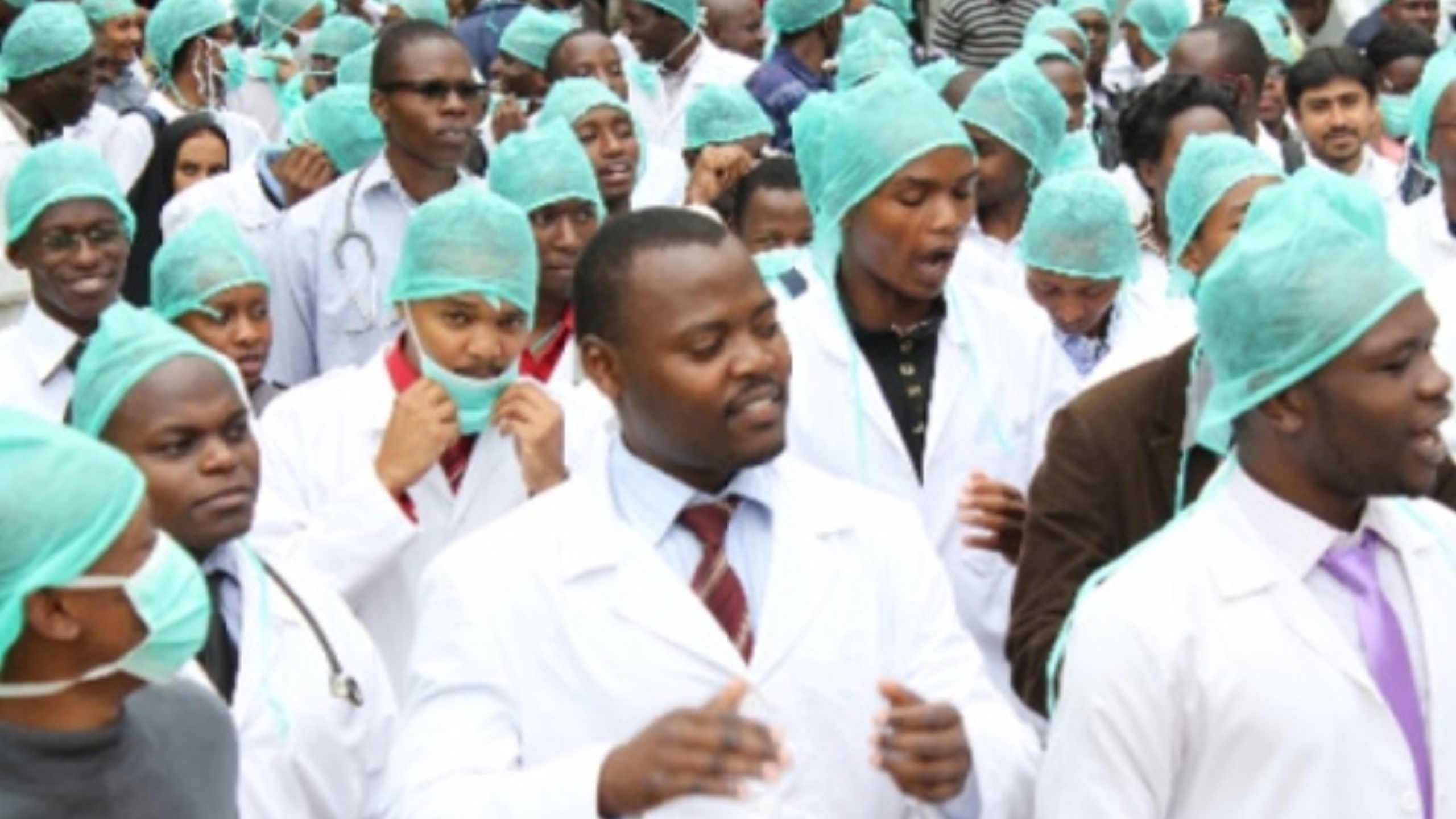
The Nigerian Association of Resident Doctors (NARD) has asked its members across the country to quickly check how ready hospitals are for Ebola and to make sure frontline health workers have protective gear.
This request came in a circular dated 26 October, sent to all center presidents. It follows the confirmation of an imported case of Ebola virus disease in Nigeria on 20 October.
NARD pointed out that resident doctors face high risks of exposure because they often handle patients with fever who may have Ebola.
The association encouraged its members to work with hospital management and infection control teams. They need to assess their hospitals’ abilities to identify, isolate, and safely refer suspected Ebola cases.
NARD also told center presidents to check if there is enough personal protective equipment (PPE) available, especially in emergency rooms, internal medicine, pediatrics, obstetrics, and other high-risk areas.
The doctors association asked its members to collaborate with hospital management to set up immediate training sessions. These sessions should focus on the Nigeria Centre for Disease Control and Prevention’s (NCDC) case definitions, infection control measures, proper use of protective gear, and procedures for dealing with occupational exposure.
NARD instructed hospitals to make sure resident doctors understand the reporting channels, designated Disease Surveillance and Notification Officers, and the approved procedures for isolating and referring suspected cases.
Each center is to appoint an Ebola preparedness focal person. This person will coordinate with the association’s national secretariat and relevant hospital authorities.
Center presidents must send preliminary reports to the national secretariat within 72 hours of receiving the circular. These reports should outline their hospitals’ readiness, available protective gear, gaps, and areas needing urgent action.
The association urged its members to quickly report any issues with insufficient protective gear, unsafe working conditions, and exposure risks. They should also push for corrective actions through established safety structures in hospitals.
NARD said its National Officers’ Committee would work with the NCDC, the Federal Ministry of Health and Social Welfare, and other key players. They aim to provide training, boost hospital readiness, and advocate for better protection for frontline health workers.


“The commitment of resident doctors to saving lives must be matched by a strong commitment from the government and hospital authorities to protect those who provide care,” the association said.
It also urged members to stay alert, avoid spreading panic, share only confirmed public health information, and work closely with relevant authorities.
This directive comes as Nigeria increases public health surveillance after confirming its first Ebola case in over ten years.
The patient, a 42-year-old woman, returned to Nigeria from Uganda via Addis Ababa on 3 October. She developed symptoms and sought care at private clinics in Abuja.
The NCDC was informed on 19 October, and tests confirmed the Ebola infection the next day.
On Monday, Coordinating Minister of Health and Social Welfare Muhammad Pate confirmed that the woman was evacuated from Abuja to Switzerland. Her husband, who showed no symptoms, was also evacuated.
Mr Pate said the patient was doing better, stable, conscious, and able to communicate before her evacuation. However, he warned that her improved state did not mean she was no longer contagious. Strict health protocols were followed during her transfer.
After the evacuation, the World Health Organisation’s Regional Director for Africa, Mohamed Janabi, stated that Nigeria had no active Ebola cases. Still, contact tracing and other public health actions are essential to prevent the spread of the virus.
NARD’s directive highlights the importance of protecting healthcare workers as hospitals prepare to identify and manage suspected Ebola cases.
The association stated it will continue to work with authorities to ensure that resident doctors receive necessary training, protective gear, and support to do their jobs safely.

Drop your comment
No comments yet — be the first to drop the gist 👇