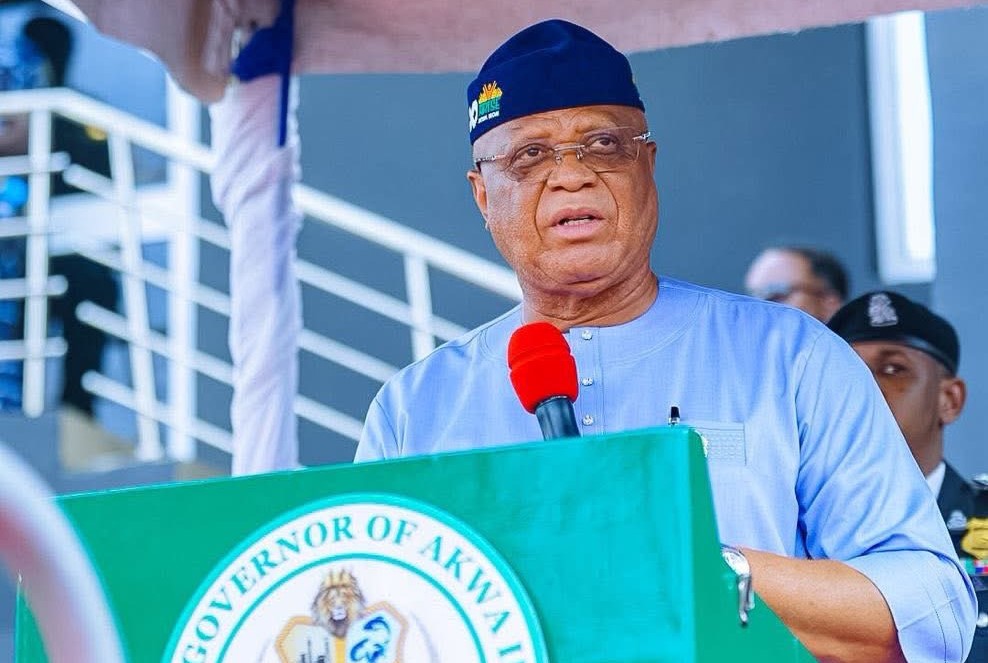
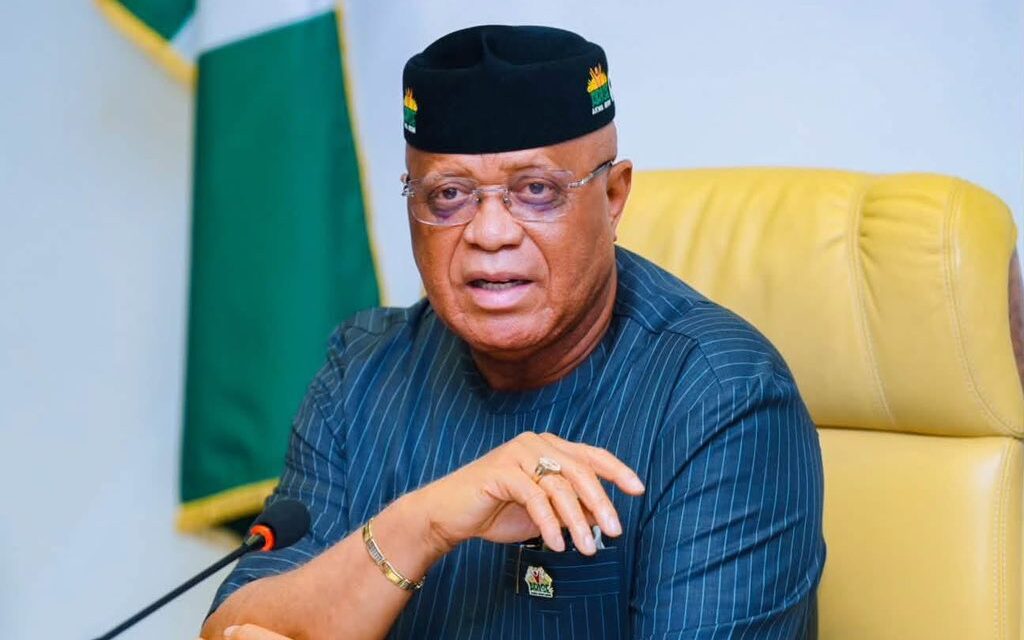
When Governor Umo Eno reshaped Akwa Ibom’s Direct Labour Committee in March 2024 and made himself the chairman, not many expected the number of projects it would handle. Now, the committee looks after some of the state's biggest public projects. It is set to gain new powers that might avoid accountability under a new procurement law.
The committee is in charge of building model primary healthcare centres across local government areas. It has also overseen the construction of model schools and the ARISE Compassionate Homes project. Currently, it is supervising the renovation of the Akwa Ibom State House of Assembly Complex.
Yet, a big question remains: under what law is the committee giving out or supervising contracts that usually belong to ministries and agencies governed by the state's procurement law?
Now, a bill in the Akwa Ibom State House of Assembly seems ready to answer this question.
A review by PREMIUM TIMES of the proposed Akwa Ibom State Public Procurement Regulatory Agency (Establishment) Bill shows that the law would create a framework for the Direct Labour Committee. It would allow the committee to buy goods, work, and services without going through what the bill calls "stringent procurement tendering process."
This provision is at the heart of a proposed law that has moved through the House very quickly. It was introduced with 11 other executive bills on 2 June and passed its first reading on the same day. By 9 June, it had passed its second reading and was sent to the House Committee on Appropriation and Finance. A public hearing took place on 15 June to gather feedback on the bill.
But behind this usual legislative process is a proposal that could change how billions of naira in public contracts are given out in Akwa Ibom.
Law that changes little except one thing
At first glance, the bill seems familiar as large parts are similar to the existing Akwa Ibom State Public Procurement Law, Cap 122, Laws of Akwa Ibom State, 2022, which this new law aims to replace.
The content, structure, and regulatory rules stay the same, except that the regulatory body is suggested to be called an agency instead of the bureau currently in charge. The main change is the formal inclusion of the Direct Labour Committee.
Under Section 31, the governor would lead the committee. Other members include the Secretary to the State Government, the Commissioner for Finance, the Accountant-General, a Senior Special Assistant to the Governor on Special Duties, or a representative from the Ministry of Special Duties, members from the state’s Project Monitoring and Evaluation Team, and the Committee Secretary.
The most important provision seems to be in Section 31(3). It allows the committee to hire resource persons and service providers for projects tagged as “special intervention” without having to follow the strict procurement rules required by other parts of the law.
This term appears only once in the bill, and its meaning is unclear. The law does not define what a special intervention project is. It does not set limits on the types of projects that can be called special intervention, nor does it set any spending cap.
Instead, the bill leaves the decision on spending limits to procurement circulars that would be issued later by a regulatory agency whose leaders would be chosen by the governor.
The questions raised by the proposed bill led PREMIUM TIMES to ask for clarification from the Akwa Ibom State Government.
In separate inquiries sent to the Commissioner for Information, Aniekan Umanah, and the Attorney-General and Commissioner for Justice, Uko Udom, PREMIUM TIMES asked why the government felt the need for a procurement path that is exempt from strict bidding rules when the state’s current procurement law already allows for emergency and limited procurement under certain conditions.
The newspaper also asked why the bill does not define what counts as a “special intervention” project, even though it allows such projects to be procured without the usual bidding process. Officials were also asked to explain the legal basis for the Direct Labour Committee's procurement activities on major projects before this proposed law.
PREMIUM TIMES also wanted to know why the bill leaves the committee’s spending limits to future circulars instead of stating them in the law, and what safeguards are in place to prevent misuse of the proposed exemptions.
The Attorney-General, a Senior Advocate of Nigeria, was specifically asked how the proposed law will ensure proper checks and balances, given that the governor would chair the Direct Labour Committee while also appointing the officials of the proposed regulatory agency responsible for creating procurement guidelines and limits.
No official had replied by the time this report was published.
Following the money
The seriousness of that omission becomes clearer when we look at the projects already managed by the Direct Labour Committee.
One of them is the N15.47 billion renovation of the Akwa Ibom State House of Assembly Complex.
PREMIUM TIMES had earlier reported that the contract was given to a company that was registered less than 10 months before winning the project and had no public history of handling large public infrastructure contracts.
Months after the work started, many parts of the project are still incomplete. Questions to the government about the procurement process have not been answered.
The state government has not revealed how the contractor was chosen.
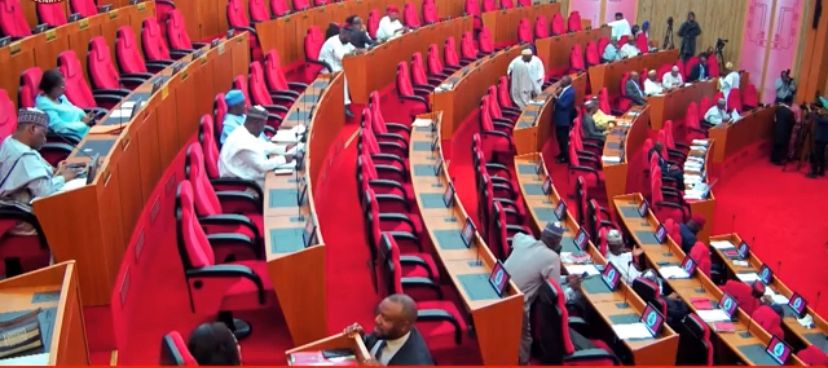
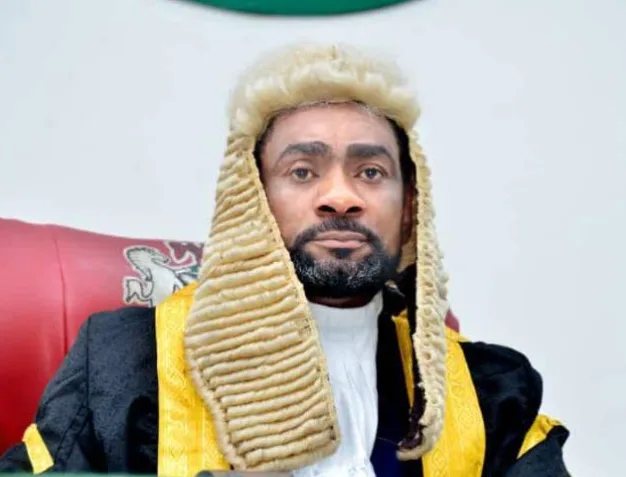
The proposed bill would, for the first time, offer a legal framework for such debated “interventions.”
Still, the renovation of the assembly complex is just one of many projects managed by the committee, with no public knowledge of how the procurement process was followed.
Budget documents reviewed by PREMIUM TIMES show that model healthcare centres across the state were built with budgets ranging from N340 million to N500 million each, not counting equipment costs.
A healthcare centre along Wellington Bassey Way was given N500 million. Another facility in Eyulor, Urue-Offong/Oruko Local Government Area, which investigations reveal was poorly constructed, got N340 million.
The state’s model schools have even bigger budgets. The revised 2024 budget document shows allocations between N350 million and N800 million per school.
Then there’s the ARISE Compassionate Homes programme. Mr Eno recently said 205 homes have been completed and his administration plans to build 500 before the end of its first term.
Budget records for 2024-2026 show that N12.5 billion has been set aside for these projects.
Simple math shows an average cost of about N25 million for each housing unit.
Under the proposed law, projects costing that much would be procured through a process that skips the competitive bidding rules that usually govern public spending.
Procurement expert warns against expanding direct labour
Lead Director of the Centre for Social Justice and a long-time procurement and legal reform advocate, Eze Onyekpere, said the idea of direct labour is accepted in procurement practice but only in limited situations.
“There is a default method of procurement which is open competitive bidding,” he told PREMIUM TIMES.
“The direct labour method is not strange. It is not wrong. But it depends on the conditions under which it is allowed.”
He explained that direct labour is usually reserved for smaller projects, especially where government agencies already have the technical skills and equipment to do the work themselves.
He gave examples like minor repairs or low-value contracts where the cost of a full procurement process might be higher than the contract’s value.
But he made a clear point when it comes to projects worth hundreds of millions or billions of naira.
“Doing a contract of multi-million naira or billions of naira is not acceptable,” he said. “Such contracts should go through open competitive bidding.”
The renovation of a state assembly complex, building model schools and healthcare centres, he said, are just the types of projects that should have open competition.
“Building model schools, health centres and renovating the assembly complex do not fall under direct labour,” he said. “They are not projects that people would shy away from bidding for.”
He insisted that the law must specify the thresholds and types of special interventions the committee can handle, instead of leaving it for the agency to decide.
Bill that raises more questions
The discussion about the proposed law goes beyond legal wording. The main issue is transparency and accountability.
For over a year, the Direct Labour Committee has been increasingly involved in projects worth billions of naira. The timing of this proposed law arrives after some of those projects have already been completed and others are ongoing. Whether this timing is a coincidence or planned will likely be a key topic at the public hearing and beyond.
What is clear is that if the legislation is passed, the way it is written would create a procurement gap unlike anything in Akwa Ibom’s current law: one that gives significant contracting power to a committee led by the governor himself, while leaving key protections to future regulations that have yet to be written and will be drafted by those he appoints.

Drop your comment
No comments yet — be the first to drop the gist 👇