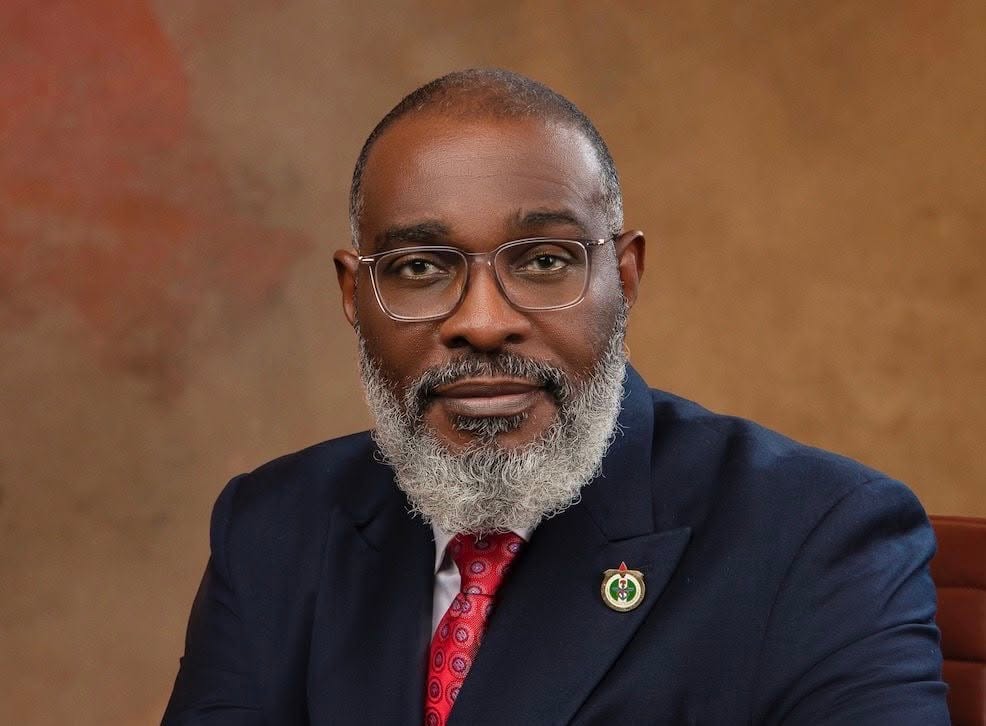
Adeyinka Famadewa, who advises the president on homeland security, has shared four key plans to boost Nigeria’s homeland security. These plans include a unified surveillance system, better identity management, stronger border security, and improved early warning and crisis response systems.
Mr Famadewa, a retired major general, made these announcements in a statement on Friday. This came after his first meeting with leaders from important Ministries, Departments, and Agencies (MDAs) and security bodies. The goal is to improve cooperation on national security issues.
The meeting took place at the Office of the Secretary to the Government of the Federation in Abuja. It aimed to create practical steps for implementing four main initiatives that will tackle Nigeria’s changing security challenges.
Attendees included the Permanent Secretary of the Special Services Office, the Comptroller-General of Customs, the Controller-General of the Nigerian Correctional Service, the CEO of the Nigerian Financial Intelligence Unit (NFIU), the Corps Marshal of the Federal Road Safety Corps (FRSC), the Director-General of the Office for Strategic Preparedness and Resilience (OSPRE), and representatives from the armed forces, intelligence agencies, ministries, and other security stakeholders.
The Security Plans
The first plan is to put in place a Unified Surveillance Programme. This will help improve awareness across the country by using better monitoring and technology.
The second plan focuses on strengthening identity management. This aims to tackle the issue of anonymity and reduce the use of anonymous platforms for crime.
The third plan is about enhancing border security. This will be done through better coordination between agencies, using technology, and intelligence-led operations to stop cross-border crimes.
The fourth plan is to create more effective Early Warning, Crisis Reporting and Response systems. This will help in quickly spotting threats, making coordinated decisions, and providing fast emergency responses.
During the meeting, Mr Famadewa said President Bola Tinubu is dedicated to building “a secure, resilient and technology-driven homeland security ecosystem” that can deal with both current and future threats.
He added that achieving this goal will need continuous teamwork, sharing of intelligence, and joint actions among relevant groups.



The presidential aide, who was appointed by Mr Tinubu in May, noted that his office is meant to support, not replace, the work of existing security agencies. He praised the armed forces and other security agencies for their efforts in restoring peace in the country. He also highlighted the need for non-violent measures to strengthen community resilience.
Participants in the meeting agreed to work together more effectively. They acknowledged that Nigeria’s complex security issues need a united approach from the government and society, driven by collaboration, sharing information, technology use, and coordinated actions.
The meeting concluded with a plan to set up coordination methods, hold regular meetings with stakeholders, and develop frameworks to turn the four security priorities into real results.
Background
The renewed focus on identity management and reducing anonymity comes as worries rise that terrorist and organized crime groups are taking advantage of weaknesses in Nigeria’s digital governance.
Reports show that these extremist groups are increasingly using encrypted messaging apps to plan attacks, recruit members, spread propaganda, and avoid capture by law enforcement.
Security experts have warned that poor identity management systems and disconnected digital governance have allowed criminals to create multiple identities. This makes it easier to get unregistered or fake SIM cards and use anonymous online accounts for terrorism, kidnapping, and financial crimes.
Authorities have often stated that improving digital identity systems, better integrating data across government agencies, and enhancing lawful intelligence capabilities are crucial for disrupting these criminal networks while respecting citizens' privacy rights.
Mr Famadewa’s proposed plans reflect ongoing concerns in recent reviews of Nigeria’s security setup. A recent analysis highlighted how weak early warning systems and poor information-sharing hurt counterterrorism efforts. It suggested that better digital platforms could help communities report threats before attacks happen.
Another analysis regarding intelligence-led policing found that disconnected government databases, weak digital identity systems, and poor cooperation between agencies limited the success of technology-driven security efforts. The report stated that stronger digital governance and integrated identity systems are key to improving intelligence collection and law enforcement.


Drop your comment
No comments yet — be the first to drop the gist 👇