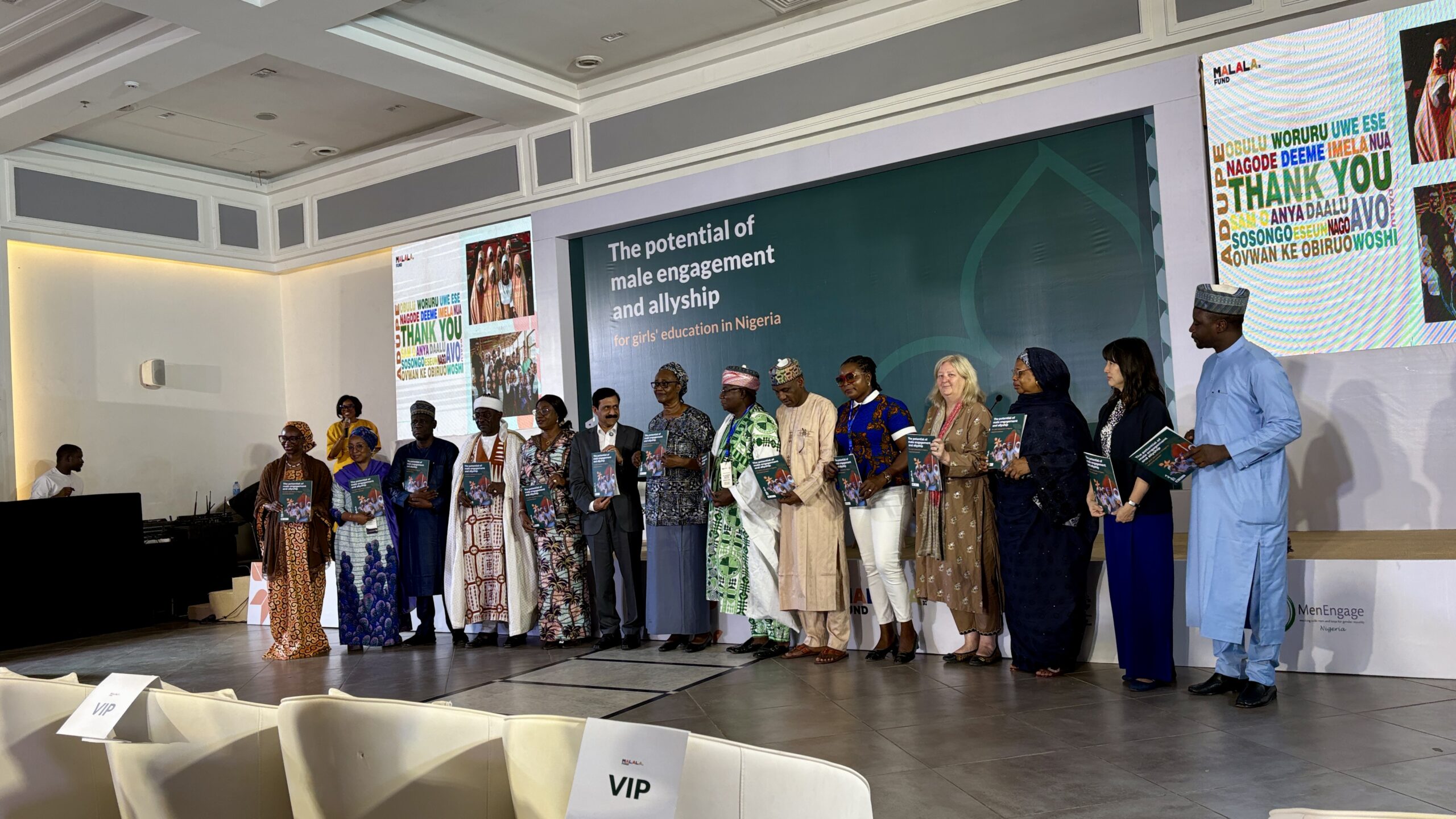
The Malala Fund has urged men and boys to get more involved in supporting girls' education in Nigeria. They said that efforts to help girls learn better will not be enough unless we tackle harmful gender norms.
This call was made on Wednesday in Abuja during the launch of a report called "The Potential of Male Engagement and Allyship for Girls’ Education in Nigeria."
The report looks at how men and boys can help break down restrictive social norms, support education policies, and create spaces for girls to enroll in school, stay in school, and finish their education.
At the event, the Chief Executive Officer of Malala Fund, Nabila Aguele, said the group is dedicated to making sure every girl has access to 12 years of free, safe, and quality education.
Ms Aguele explained that their work in Nigeria aims to remove barriers that stop girls from getting an education. They are doing this through advocacy, policy changes, and better funding for education.
"We are advocating for girls who have been pushed out of school by pregnancy or early marriage to have clear and protective pathways back into education," she said.
She added that they are supporting Nigeria’s national re-entry guidelines and pushing for education policies that prevent child marriage. She emphasized that education funding must reflect the challenges faced by millions of out-of-school girls.
"We want to see funds and budgets that are gender-responsive and accountability mechanisms that turn commitments into action," she said.
According to Ms Aguele, getting men involved in girls’ education should not just be for show.
"Male engagement cannot be an afterthought. It cannot be symbolic endorsement or simply a matter of having more men in the room. It must be intentional, strategic, and measured by the difference it makes to girls’ lives," she said.
She pointed out that while girls are at the center of discussions about education, many decisions affecting their futures are often made by men, including fathers, community leaders, and policymakers.
"The question is whether they will reinforce these barriers or work to dismantle them," she said.
Ms Aguele mentioned that the new report was commissioned by the Malala Fund and created by the development Research and Projects Centre (dRPC), with help from MenEngage and other contributors.
She called on policymakers, development partners, and civil society groups to use the report to drive accountability and improve outcomes for girls.
Also at the event, Malala Fund co-founder, Ziauddin Yousafzai, stated that deep-rooted gender norms still keep millions of girls from getting an education, especially in northern Nigeria.
He noted that fathers, husbands, and male relatives often control decisions about girls’ education.
"Men have the power to decide whether a girl should go to school, whether she can stay in school and complete her education, and whether she can return to school after marriage," he said.
Mr Yousafzai described girls’ education as a rights issue and a necessary step for development. He warned against mere symbolic support, saying real support for girls’ education must lead to clear improvements.
"We need to move from symbolic support to strategic action, accountability, and measurable results," he said.
He added that the goal is to ensure all Nigerian girls, especially those in the North-east and North-west, can access and finish safe, quality education.
A girls’ education advocate with Education as a Vaccine, Deborah Samuel, shared how education changed her life.
She called education a tool that gave her confidence, knowledge, and chances she might not have had otherwise.
Ms Samuel told the story of a childhood friend who left school because her family did not prioritize girls’ education.
She said education helped her understand her rights, develop her skills, and believe in her future.
"Education has changed my life. Without education, I would not have discovered my abilities or had the courage to stand before distinguished people and speak today," she said.
Ms Samuel also praised her father for supporting her education. She described him as one of her biggest supporters and an example of how men can positively impact girls' futures.
She urged governments, development partners, and communities to keep investing in girls’ education and encourage more men and boys to become allies.
"Education is truly a vaccine. It protects us from poverty, ignorance, and hopelessness," she said.
The report comes as Nigeria faces one of the largest out-of-school populations in the world.
UNICEF estimates that about 7.6 million girls in Nigeria are not in school.
Poverty, insecurity, child marriage, teenage pregnancy, gender discrimination, and harmful social norms continue to be major obstacles to girls enrolling in school, staying in class, and completing their education.
The situation is particularly serious in parts of northern Nigeria, where cultural expectations and restrictive gender norms often dictate decisions about girls’ schooling.
In many communities, girls are more likely than boys to leave school due to domestic responsibilities, financial pressures, or early marriage.
The Malala Fund stated that the report offers evidence-based recommendations for involving men and boys as allies in efforts to improve girls’ education outcomes and promote gender equality across Nigeria.


Drop your comment
No comments yet — be the first to drop the gist 👇