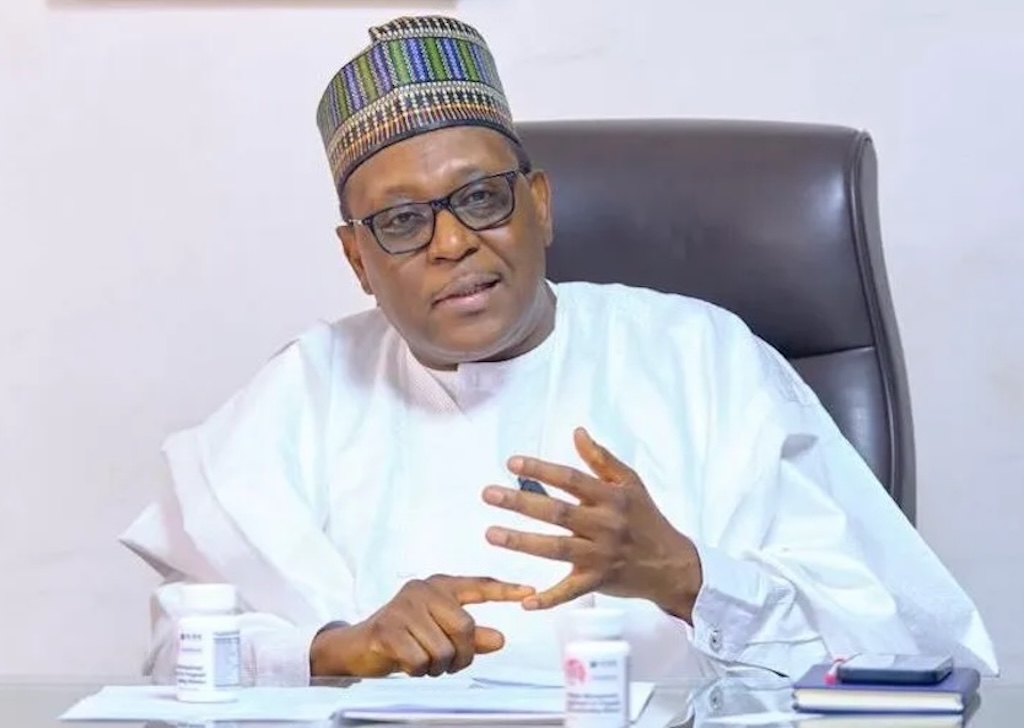
The Coordinating Minister of Health and Social Welfare, Muhammad Pate, praised state governments for raising their health budgets from N1.97 trillion in 2023 to over N3.3 trillion in 2026.
Mr Pate called this increase a boost for local health financing. He urged governments to keep investing and improve accountability in the health sector.
He made these remarks on Thursday at the start of the 67th Regular Session of the National Council on Health (NCH) in Lafia, Nasarawa State.
The theme for the meeting is: “From Commitments to Results: Delivering Quality and Equitable Healthcare for All Nigerians.”
Mr Pate mentioned that the rise in funding comes with efforts to boost local production of medicines and essential health supplies.
“Ten factories and production lines have been commissioned, six of them this year alone, producing medicines, rapid diagnostic test kits, mosquito nets and medical oxygen,” he said.
He added that Nigerian manufacturers have received over N24 billion in tax waivers from the Presidential Executive Order signed in June 2024.
Mr Pate said both the federal and state governments have made progress under the Nigeria Health Sector Renewal Investment Initiative. So far, 41 commitments have been met and 12 out of 13 health indicators have improved in the last three years.
He stated that skilled deliveries in facilities supported by the Basic Health Care Provision Fund (BHCPF) rose from 4.8 million in 2023 to almost 8 million by mid-2026. Also, fourth antenatal visits grew from 6 million to 8.7 million.
Health insurance coverage increased from 16 million to nearly 24 million Nigerians. Nearly 20,000 skilled birth attendants were also hired across 22 states.
But the minister pointed out that governments need to improve accountability in health sector resolutions. He noted that only 412 out of 740 expected reports on the 20 resolutions from the last council meeting were submitted.
“All 36 States and the FCT submitted returns, but only 412 of the 740 expected reports came in, or 56 per cent. No state reported on all 20 resolutions,” he said.
Mr Pate urged states to set responsibilities, timelines, and measurable targets for resolutions. He also wants them to submit quarterly reports for tracking and verification.
He called for increased health budgets, timely fund releases, expanded insurance coverage for vulnerable groups, and sustained investment in primary healthcare.



The minister noted that households still bear most health costs while government funding is below the Abuja Declaration benchmark of 15 per cent.
He urged states to focus on underserved communities, pointing out that skilled health workers attended to fewer than four in 10 rural births compared to nearly seven in 10 urban births.
While opening the council, Nasarawa State Governor, Abdullahi Sule, stated that the state is committed to expanding health insurance, boosting primary healthcare, and improving health infrastructure.
Deputy Governor Emmanuel Akabe represented Mr Sule. He mentioned that the state has enrolled poor and vulnerable residents in its health insurance scheme to help them get affordable healthcare.
The state has also set up the Nasarawa State Drugs and Supplies Management Agency to tackle supply challenges, price differences, and issues with substandard medicines.
Governor Sule said the agency was recognized by the Federal Ministry of Health and Social Welfare in 2024 as maturing quickly and ready to handle public health supplies.
He added that upgrading General Hospital, Wamba, to a specialist hospital is part of efforts to improve access to tertiary healthcare across the state.
The Emir of Shonga, Haliru Yahaya, praised the health sector reforms, especially the cooperation between federal and state governments under a shared plan, budget, and accountability framework.
He said past efforts suffered from poor coordination, making it hard for state officials to get approval for their plans and projects.
Mr Yahaya noted that this new approach has improved health sector performance. But he warned that decreasing development aid and weak discipline could threaten progress.
“Discipline is the issue here. If we get our act together, get more funding, better funding, use our funding, and then with discipline in our approach, things will begin to happen,” he said.
He also encouraged health authorities to work closely with traditional institutions and community leaders when carrying out programs. Poor communication, he said, could ruin projects.
Mr Yahaya stressed that community awareness and explaining the benefits of health insurance to residents are vital for keeping enrolment and participation high.




Drop your comment
No comments yet — be the first to drop the gist 👇