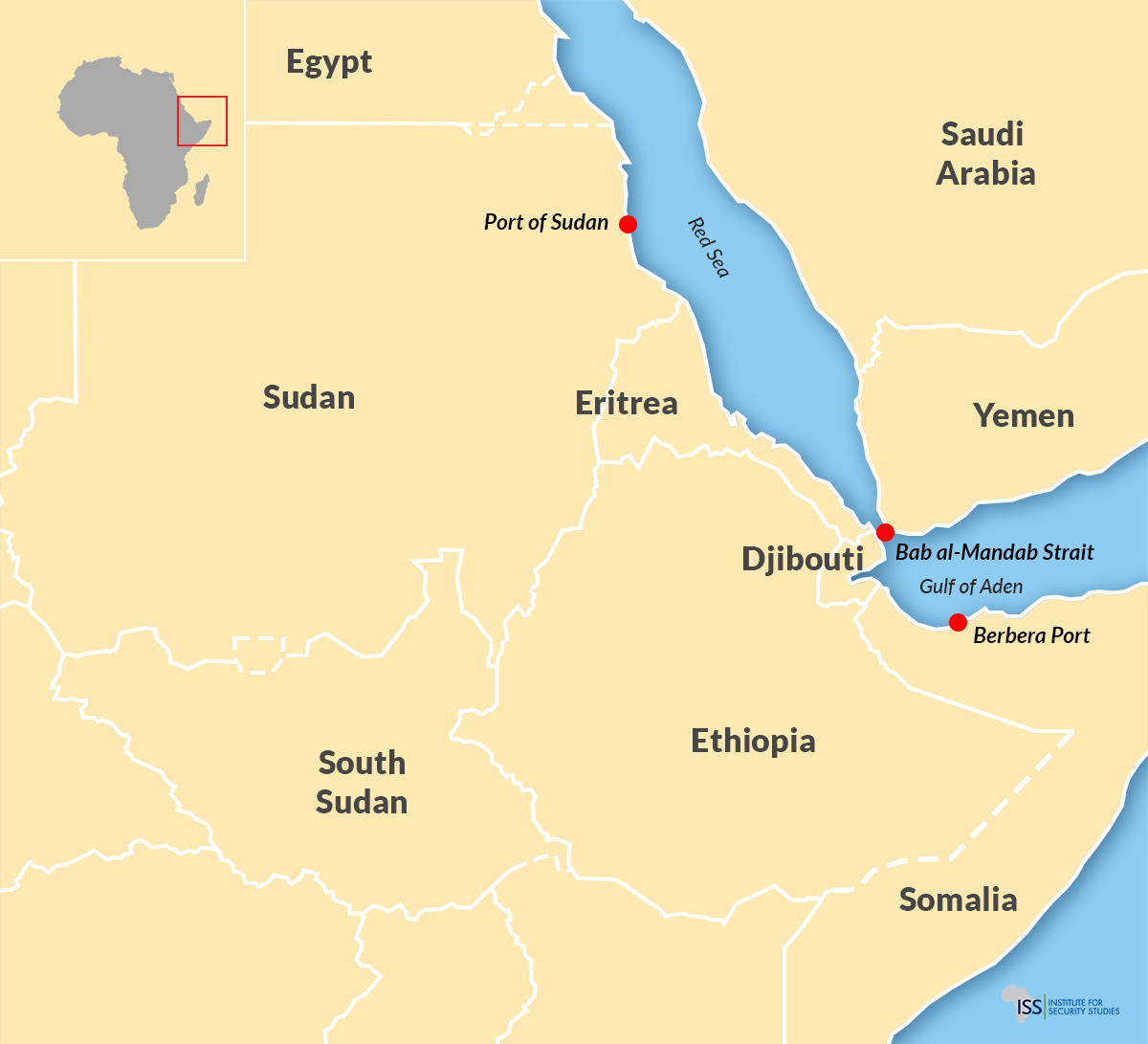
The attack by the United States and Israel on Iran in February led to the Iran-backed Houthi militia from Yemen taking control of land at the entrance to the Red Sea. This situation could have serious consequences for Africa and the rest of the world.
The Houthis have been increasing their attacks on ships in recent years, already affecting local economies. If they maintain control over shipping in the Red Sea, it could lead to disaster. Their partnership with al-Shabaab in Somalia adds to the threat.
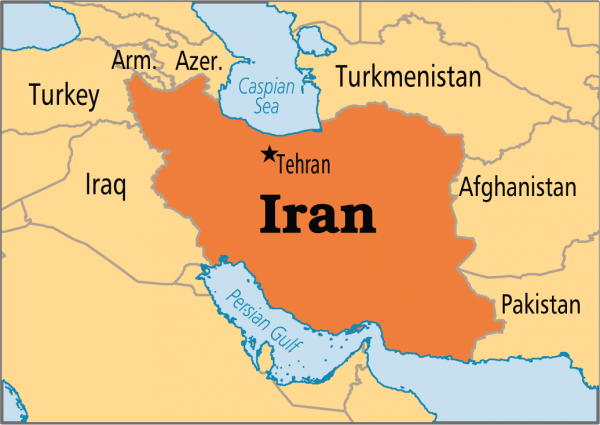
Last month, the Houthis captured land in the Red Sea, giving them power over shipping through the important Bab al-Mandab strait. This strait handles about 30 percent of global container traffic, 15 percent of global oil shipments, and 12 percent of global annual trade. Another critical point in the region, the Strait of Hormuz in the Persian Gulf, is already partially under the control of Iran and the US.
This week, Yemen's government, supported by a Saudi-led military coalition, regained some control over Bab al-Mandab. Following this, the Houthis launched more missile attacks on Saudi airports.
Some might think that Houthi control over Bab al-Mandab is unlikely due to foreign naval forces in nearby Djibouti. But if it happens, “Houthi interdiction of the Bab el-Mandab could involve anti-ship missiles, unmanned aerial vehicles, and maritime drones, which are hard to defend against,” says Matt Bryden, a strategic analyst and founding partner at Sahan Research Group.
The Houthis would only need to target a few ships to effectively block commercial shipping. This would scare international carriers and raise insurance costs.
The Houthis' connections with Somalia's al-Shabaab could also threaten navigation in the Gulf of Aden. Naval forces in Djibouti may be hesitant to act against the Houthis, fearing retaliation against their bases in Djibouti, as Iran has shown it can hit targets effectively.
For Saudi Arabia, a Houthi hold on the Red Sea is unacceptable. It recently finished building a pipeline from its eastern oil fields to its Red Sea port of Yanbu to avoid Iran's control over Hormuz.
Houthi attacks on ships have already harmed Egypt, Sudan, Eritrea, Djibouti, and Somaliland. This was before the Houthis took Bab al-Mandab, through decreased vessel traffic and increased freight costs and insurance premiums. Egypt has likely suffered the most. Even in 2024, with fewer Houthi attacks, Egypt lost about $3.76 billion in Suez Canal revenue.
Africa is also facing indirect economic problems from limited access to the Red Sea. The continent imports 98 percent of its refined oil products. Rising shipping prices in the Red Sea are making imports and exports more expensive.
The Houthi military actions also raise security issues. The return of attacks has caused more piracy in the Gulf of Aden, according to the Africa Center for Strategic Studies. The center notes growing ties between the Houthis and al-Shabaab since early 2025, mainly involving arms shipments and Houthi training for militants. “Al-Shabaab, in turn, supports the Houthis with funding and less traceable routes for arms trafficking.”
The center warns that the Houthis could send more powerful military drones and missiles to al-Shabaab, which would increase its ability to destabilize Somalia’s government. They could also set up communication and surveillance gear in Somalia, extending the range of their missiles and drones.


A spokesperson for the US military’s Africa Command called the connection between the two groups “highly concerning” and a “threat to regional stability.” Alan Boswell, the Director of the International Crisis Group's Horn of Africa Project, believes that Houthi military successes and their alliance with al-Shabaab show a larger shift in geopolitics.
“For much of the past century, policymakers have treated the Horn of Africa and the Arabian Peninsula as separate regions divided by the Red Sea. That distinction is now fading. Conflicts on one side of the sea increasingly change military calculations on the other,” he said.
Another sign of this change is the civil war in Sudan, which has set Gulf rivals Saudi Arabia and the UAE against each other. Riyadh is backing the Sudanese Armed Forces while Abu Dhabi supports the Rapid Support Forces.
This war has also drawn in other nations, threatening regional stability. Ethiopia backs the RSF, while Somalia, Eritrea, and the Tigray People’s Liberation Front support the SAF. Beyond the Horn, Egypt aligns with the SAF, along with Türkiye, Iran, and Russia, according to David Shinn, a lecturer at George Washington University and former US ambassador to Ethiopia and Burkina Faso.
Some members of these rival alliances are now fighting in northern Ethiopia. “The growing involvement of Middle Eastern countries in the Horn raises the risk that internal conflicts in Ethiopia and Sudan will merge into a bigger regional war,” warns Boswell.
Tim Walker, an African maritime expert, believes the Houthis are not just looking for money from targeting Red Sea shipping. They want legitimacy and recognition to influence the region. He is unsure if the Houthis are giving al-Shabaab advanced missiles or if al-Shabaab plans to adopt a maritime strategy that goes beyond smuggling.
“Al-Shabaab seems to want to deny air support to the African Union Support and Stabilisation Mission in Somalia and allies. They want what the Houthis have and use already, including technology and training for drones,” he said.
If al-Shabaab manages to get even smaller missiles, Walker warns, “those might be used to shoot down AUSSOM drones or helicopters, which would change the air situation in Somalia.”
The urgent task for African coastal states, along with the African Union and Intergovernmental Authority on Development, is to disrupt the weapons smuggling and transport networks between Yemen and Somalia. The UN has renewed the legal basis for maritime interdiction until November 2026 for weapons meant for al-Shabaab, and this urgency is increasing.
It is clear that if national interests in the region continue to blur the lines between the Middle East and Africa, the growing instability cannot be handled by Africa alone.




Drop your comment
No comments yet — be the first to drop the gist 👇