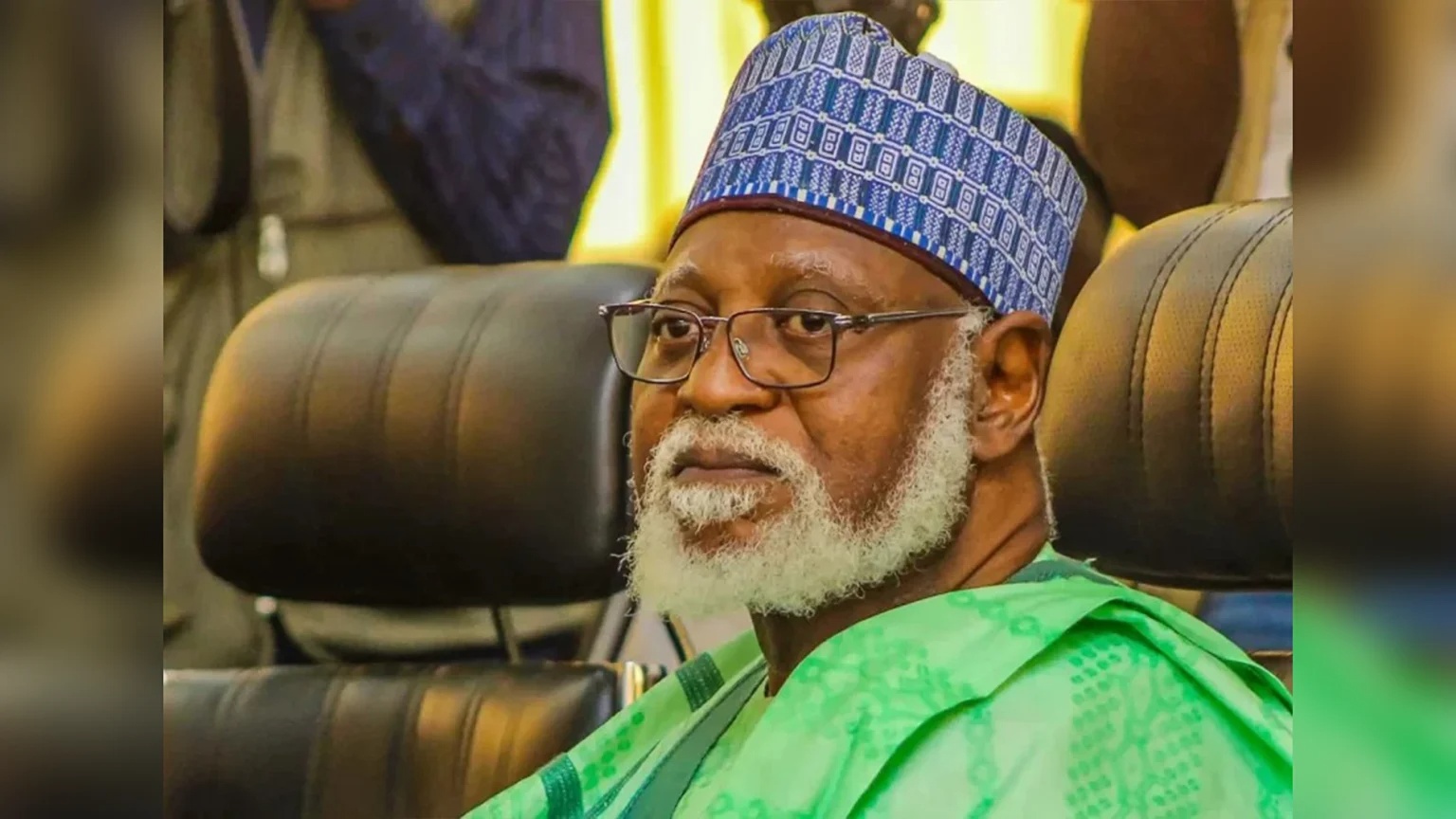
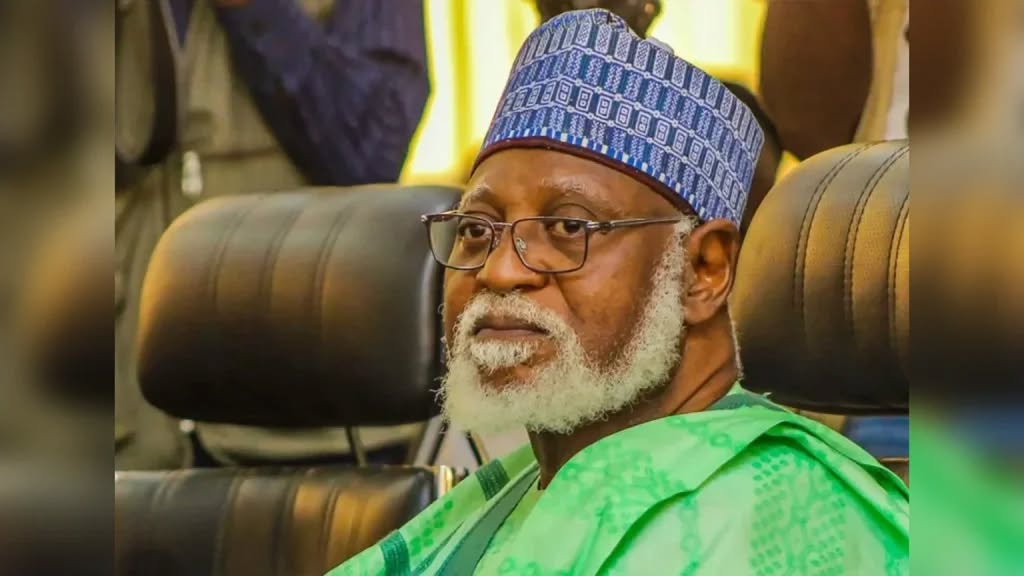
Abdulsalami Abubakar might never have become Nigeria’s head of state if he had not switched from the Nigerian Air Force to the Nigerian Army.
Ibrahim Babangida, a former military president and retired general, shared this in the foreword to Abdulsalami's autobiography, called Call of Duty, which was launched on Saturday in Abuja.
"We do not have to wonder too much because clearly, there were divine forces at work in his life and those were further confirmed with the role he went on to play in restoring peace to the polity after a serious political storm usually experienced in developing countries," Babangida wrote in the book’s foreword.
Abubakar, who is also a retired army general, became head of state in June 1998 after the sudden death of Sani Abacha. Abacha had been a serving general and ruled Nigeria from 1993 until 1998.
IBB remembered that Abubakar switched from the Air Force to the Army in 1966 after his flying training in West Germany was cut short. He became a second lieutenant in October 1967.
Since Nigeria gained independence, no officer from the Air Force has ever been a head of state or military president. Most military rulers came from the Nigerian Army, which has always been the biggest and most politically powerful branch of the armed forces.
The army played a major role in the coups and counter-coups that shaped Nigeria's politics from 1966 until the country returned to democracy in 1999. This is why army officers were often in power during military administrations.
Since independence in 1960, Nigeria has had eight military leaders, all from the army. They are Johnson Aguiyi-Ironsi (January 1966, July 1966), Yakubu Gowon (1966, 1975), Murtala Muhammed (1975, 1976), Olusegun Obasanjo (1976, 1979), Muhammadu Buhari (1983, 1985), Ibrahim Babangida (1985, 1993), Sani Abacha (1993, 1998), and Abdulsalami (1998, 1999).
On the other hand, the Air Force was set up in 1964 and has always been much smaller than the army.
During military rule, officers who commanded troops on the ground and controlled important military units had the most political power. This is why army officers were more likely to be involved in power struggles and leadership changes.
By moving from the Nigerian Air Force to the Nigerian Army in 1966, Abdulsalami unknowingly placed himself in the group that would control Nigeria’s political leadership for over thirty years. His rise to head of state in 1998 supports Babangida’s idea that Abubakar’s switch changed the direction of his life.
If he had stayed in the Air Force, he would have been in a branch that has never produced a head of state. His move to the army not only changed his military career but also set him on a path to become Nigeria’s military ruler and lead the country to democracy in 1999.
Drop your comment
No comments yet — be the first to drop the gist 👇