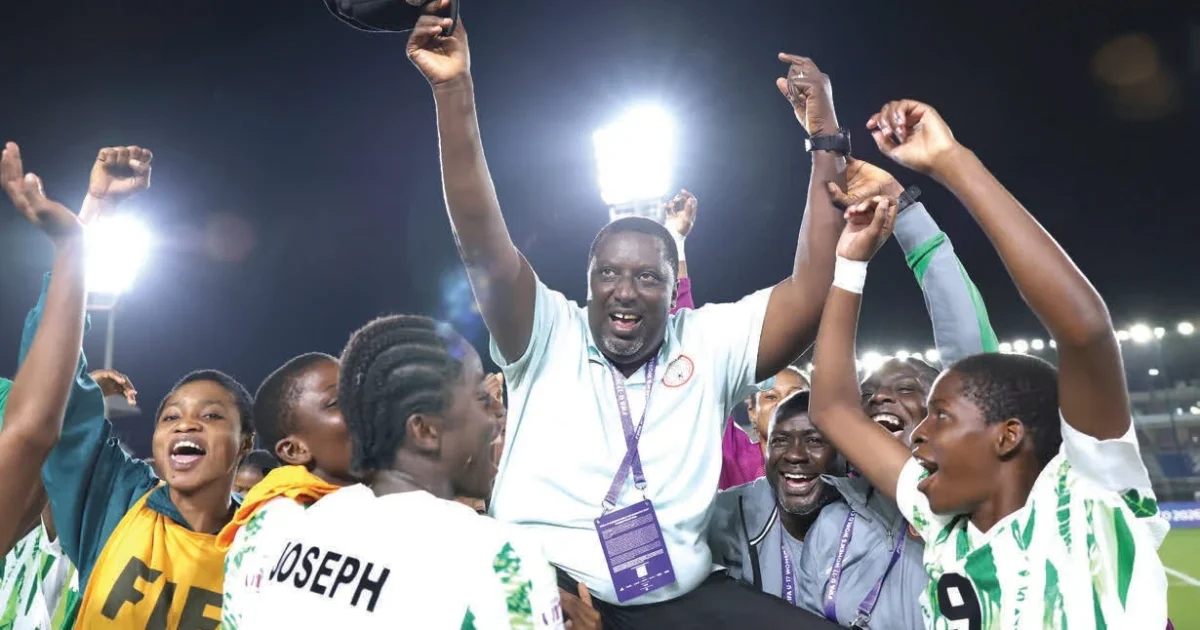
After leading Nigeria’s Flamingos to a historic FIFA U-17 Women’s World Cup win, head coach Akeem Busari talks about the journey to this success. He discusses his coaching lessons and how he created a top team in just seven months. He shares his thoughts with Abiodun Adewale.
Congratulations on bringing Nigeria the FIFA U-17 Women’s World Cup title and being the first African team to do so. How does this achievement feel, knowing how much Nigerians love football?
Football is full of emotions. Nigerians are very passionate about it. For us, representing over 200 million Nigerians at this level was a big deal. We had to show why we were given this responsibility. We feel happy and proud that God has used us to bring smiles to the faces of Nigerians and Africa as a whole. It means a lot to our names, families, and the integrity of our game.
Let’s go back to the time when few knew Akeem Busari. How did you work over the years to earn your coaching certificates, build connections, and find grassroots talents to shape your career?
Some people jump into coaching quickly after playing. Others find it by chance, while some get pushed into it by injuries. But the key is perseverance and determination. When opportunities don’t come, you keep developing your talent and improve through coaching education.
After my playing days, I got my Advanced Diploma, the highest at the National Institute for Sports, between 1999 and 2005. I also took part in various courses, both online and in person. I earned my CAF coaching license in 2016 and later upgraded to a CAF A Licence.
I have represented Nigerian teams in the CAF Champions League for both men and women. I was with Enyimba during the Confederation Cup in 2022 and helped Bayelsa Queens win the President Federation Cup. I moved from one club to another with passion. When I got the chance to lead the women’s U-17 team in April, I looked closely at players in the right age group who could fit the team. We qualified by winning all five matches in the WAFU B tournament, scoring many goals.
The World Cup was on another level. Some teams from Europe had players from big clubs and more experience than ours. Many of our girls were still in school. But Nigeria is full of talent. We applied basic methods that worked for us.
In the World Cup, we lost our first game, which was tough but understandable. Still, we believed in our team and thought we could bounce back. We analyzed our games and adjusted our strategy, focusing on individual and team cohesion. This helped us find the winning formula to reach the final.
Nigeria had won bronze with coach Bankole Olowokere at the 2022 tournament in India. How closely did you follow that campaign and what lessons did you take into your seven-month preparation?
Coach Bankole is a colleague, and it was great for Nigeria to be on the podium before. We watched their games last year when they lost in the second round. We learned why we lost to Italy, and it wasn’t because we were bad. We used this as a lesson. We also looked at the games we won and learned from them. We decided that no team should score before us, and if they did, we would have a plan to respond. Only Poland scored before us, and that was the only game we lost. It was about mindset. Once we focused on that, it helped us mentally. We even practiced with a numerical advantage against the opposition to prepare ourselves for real matches.
What was the biggest challenge you faced during the seven-month preparation for the World Cup?
One of the biggest challenges was selecting the right players. We had some injuries that affected the team. A few players who could have improved the team got hurt. When we found out they would be out after medical checks, we had to look for other options. Today, we are celebrating all of us.
We watched the matches on TV, but what about behind the scenes? What moments in the dressing room and camp helped turn the team into champions?

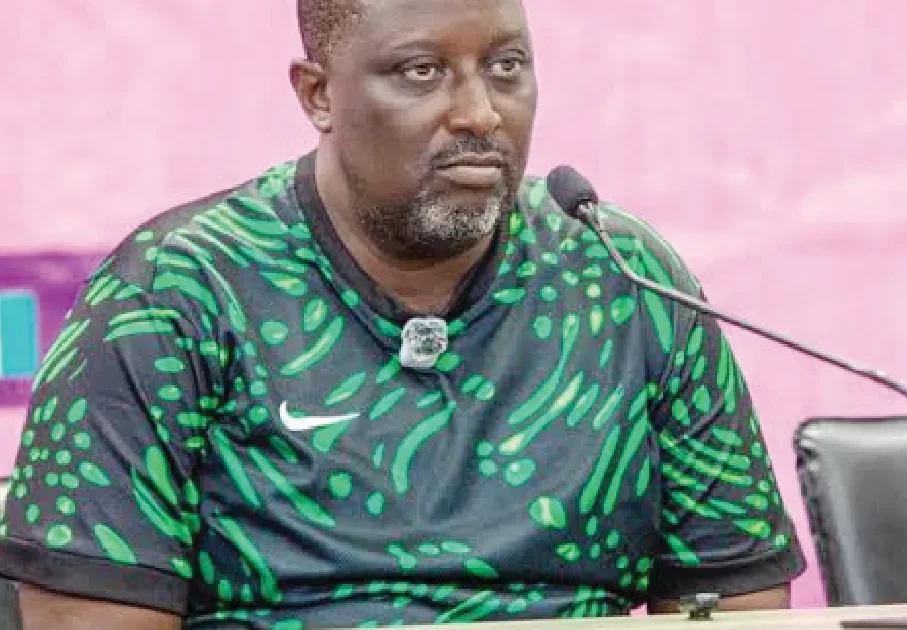
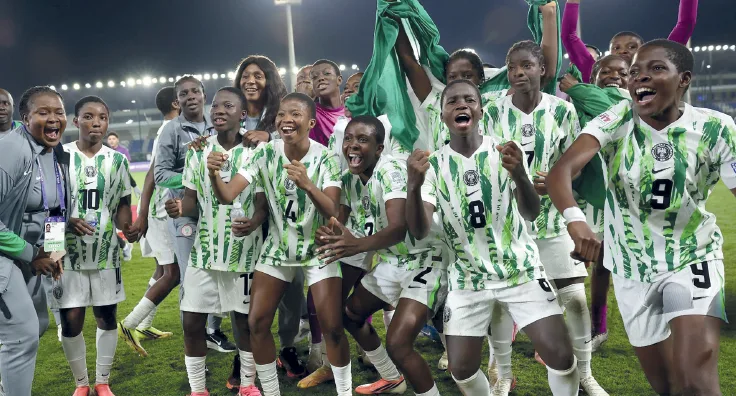
Discipline was key. If we scheduled anything for 4 PM, everyone was ready 10 minutes early. During match analysis, no one was late, and everyone was expected to bring their roommates. We were on a mission to return home with the trophy. Everyone was focused. If there were any issues among players, the captains would come to me and say, ‘Papa, this is what is happening, but don’t say I told you.’ I managed the situation carefully. They are young players, and we had to keep their confidence high. We supported them physically and mentally, and we were careful with our words.
How important was the support of your backroom staff to the team’s success?
I had two assistants, Coach Jegede and Coach Omoidiaghe, and Coach Kola Ige as the goalkeeper trainer. Dr Oyinye, the physiotherapist, Charity, Rhoda, the kit manager, the team secretary, and everyone else were fantastic. Whenever I sent a program, they set up everything. We made decisions together, and it felt like a big family.
You often talk about the importance of grassroots football in your career. How did you find and select the players who made up the World Cup-winning squad?
Grassroots football has always been my main area. I started there and spent 14 years in that setup. Even when I moved to bigger teams, I always had one or two grassroots players to work with. I usually help produce players and even write programs for those going on trials.
You were the technical director of Pacesetter Queens before taking the Flamingos job. Given the team’s state in the NWFL, some questioned your qualifications for the national team. How did you deal with those doubts, and what does this World Cup win say to those who underestimated you?*
I was the technical director of Pacesetter Queens, joining a week after the league started. We had a youth team with inexperienced players, but we competed well. People should understand that it’s about a coach's technical ability and who they are. Sometimes things work out, but when they don’t, you must ask if the coach can still achieve something.
Which coaches have influenced your career the most, and whose methods did you use to prepare the Flamingos for the World Cup?
My biggest mentor was the late coach Yemi Tella. I was with him before the 2007 FIFA Men’s U-17 World Cup. I learned a lot about managing an U-17 team. I had been with him since 1997, before I took any coaching courses. He helped me in 2004 and 2005 as a head coach in Lagos. When he was with his U-17 players in 2007, I provided technical help. The experience I gained then was beneficial when I got the women's U-17 job almost 19 years later. I believe what I planted is what I am now reaping, and I pray for God’s guidance moving forward.
Can you tell us about your journey as a footballer and how injuries led you to coaching?
When I was at CMS Grammar School in 1982, I played football and hockey for Lagos State. In 1983, I played both sports, and by 1985, I represented Lagos State in football. I was planning to further my studies after my O’Levels when I injured my left knee in 1986. I couldn’t play much football anymore, so I focused on hockey. I played some club hockey but didn’t return to football until I started coaching around 1993. I began with a youth team, and people often said my coaching was better than what some experienced coaches offered. It’s a gift, and when people see your potential, it pushes you to do more. That encouraged me to go to the NIS and become a CAF A-licensed coach and an instructor for CAF and the NFF.
Coaching at the grassroots level often comes from passion, with few resources and little financial reward. Now that you and your players are receiving millions of naira in rewards, how significant is this moment for your career and personal life?**
Sometimes, you don’t expect anything, but it comes in large amounts. I thank God for the players and everyone around us. I pray that bigger things will come. We cannot relax; we must work even harder. As I always tell them, once you achieve something, you want to achieve more. The goal is even higher than this, and with discipline, we will get there.
Drop your comment
No comments yet — be the first to drop the gist 👇