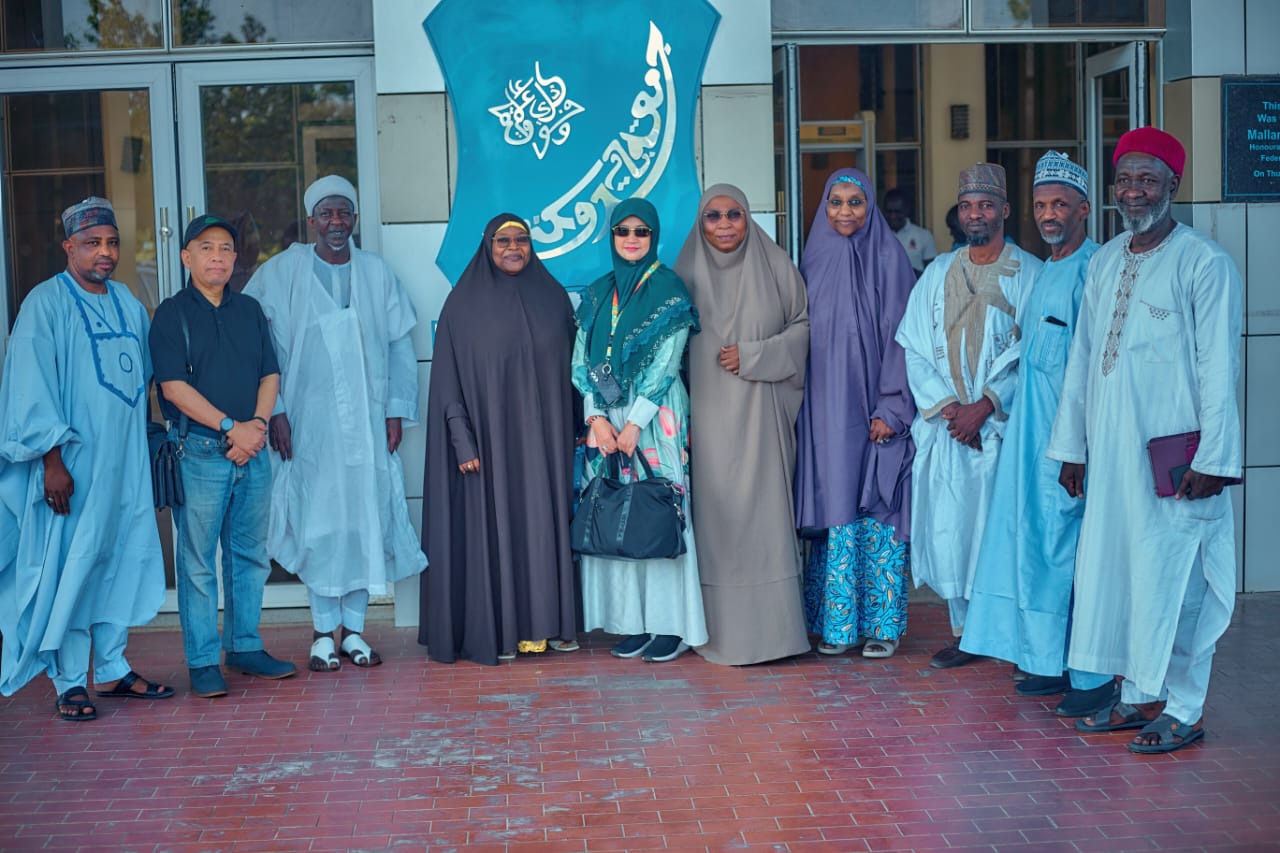
An Indonesian Islamic scholar and philanthropist, Umi Waheedah Bint Abdul Rahman, has called on Nigerian communities to adopt a Waqf-based model to fund Almajiri education. This approach aims to fight poverty and help children learn practical skills.
Ms Abdul Rahman explained that money from businesses set up through Islamic charitable endowments can provide long-term funding for schools. It can also create jobs and decrease reliance on donations and government help.
She made these remarks on Friday during a public lecture named “Sustainable Community Empowerment through Waqf: Experiences, Lessons, and Prospects” at Bayero University, Kano (BUK).
According to a statement from Lamara Garba, the university’s Director of Public Affairs, Waqf is an Islamic charitable endowment. If managed well, its assets can fund religious, educational, and other social services.
“Waqf should not be seen only as a way to give donations but as a sustainable economic system that can generate resources to fund social services in the long term,” she said.
She encouraged Nigerian communities to tailor the model to fit local needs instead of just waiting for government help.
Ms Abdul Rahman highlighted the free Islamic boarding schools established by her and her late husband in 1998. These schools provide education, food, accommodation, and healthcare to disadvantaged children.
By 2010, the schools had around 23,000 students from early childhood to university level. But after her husband's death that year, enrolment dropped to about 15,000.
She admitted that the schools faced challenges like debt and unpaid staff salaries. To keep the schools running, she had to sell personal items, including jewellery and cars, to protect the endowed assets.
Now, the institution runs 73 business units. These include rice farms and processing factories, coffee farms, timber plantations, bakeries, noodle and soya milk production facilities, fisheries, and livestock farms.
She mentioned that they also have a poultry farm with 10,000 laying chickens and produce animal feed.
Ms Abdul Rahman confirmed that the institution generates income through these businesses. This helps fund the schools while students gain hands-on experience in production, marketing, and entrepreneurship.
On waste management, she explained how the institution makes money from recycling waste. They use rotten food to produce larvae for poultry and fish feed. They also process plastics, eggshells, and sweet wrappers into yarn, crafts, ornaments, and paving blocks.
Students receive training in agriculture, fisheries, sewing, and beauty-product manufacturing. Some students even produce goods for sale or internal use.
According to Ms Abdul Rahman, the institution’s traditional caps, called kofia, have reached international markets, including Senegal.
She aims to prepare young people to be job creators instead of relying on paid jobs, donations, or government help.


Ms Abdul Rahman said the Central Bank of Indonesia supports businesses within Islamic boarding schools. This includes drinking-water production, waste recycling, and biogas production from cow waste.
She expressed a desire to set up similar partnerships in Nigeria, especially for Almajiri schools.
In the proposed plan, financial institutions would provide funding. Universities would offer research and technical help. Islamic groups would coordinate the implementation in communities.
She believes that productive investments, vocational training, and good management could make Waqf a tool for social change.
The Vice-Chancellor of BUK, Haruna Musa, represented by Deputy Vice-Chancellor (Academics) Ahmad Tsauni, stated that this model could help fight poverty, unemployment, and educational disadvantages.
He pointed out issues like out-of-school children, youth unemployment, poor orphanage conditions, and the displacement of vulnerable people as major challenges in Nigeria.
Mr Musa said Waqf could offer lasting solutions if its assets are managed with transparency, accountability, and a clear development plan.
He announced that the university plans to provide postgraduate fellowships for researchers to study Ms Abdul Rahman's model and explore partnerships.
The chairman of the event and Managing Director of Summit Bank Limited, Sirajo Salisu, shared plans to hire outstanding graduates and students.
He said the bank intends to recruit the best graduating male and female students in Islamic Banking and Finance or Economics over the next five years, based on the university's selection process.
Mr Salisu also offered to mentor undergraduate and postgraduate students voluntarily every two weeks.
Binta Jibril, a former director of the International Institute of Islamic Banking and Finance, called for a better Almajiri education system that includes Qur'anic studies, vocational training, entrepreneurship, and professional education.
She said that school-based businesses could earn money, cut costs, and provide practical skills for students.
Also speaking at the event, Abdullahi Lamido, director-general of Economic and Social Reforms Coordination in Gombe State, urged individuals and communities to organize charitable contributions based on specific needs.
He said Waqf could help in education, healthcare, job creation, and community development. He added that good investments and transparent management could make Almajiri schools financially sustainable while preparing students for better futures.


Drop your comment
No comments yet — be the first to drop the gist 👇