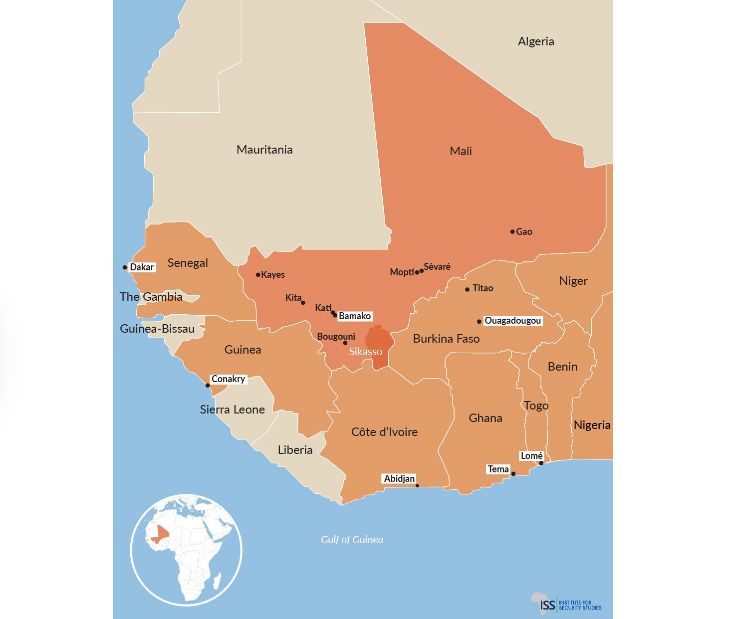
On 25 April, Mali faced a wave of coordinated attacks from Jama’at Nusrat al-Islam wal Muslimin (JNIM) and the Azawad Liberation Front (FLA). They targeted Kati, Mopti, Sévaré, Gao, and Bamako, leading to many injuries and the death of Defence Minister Sadio Camara.
In response, Malian authorities launched a counter-offensive. During this operation, they arrested several suspects. This included civilians, active soldiers, and some former military personnel.
Five days after the attacks began, JNIM started a blockade on the capital. They targeted western routes, cutting off the road between Kita and Bamako. This blockade has trapped many people and made it hard to get food and water.
The blockade has also stopped trade. The Kayes-Bamako route is no longer operational. Now, attacks on transport convoys have started along the Conakry-Bamako route, which used to be safer.
Since September 2025, Mali has been facing a strategy that aims to cut off essential supplies. JNIM has intensified attacks on fuel convoys in the south and west. This is damaging Mali’s commerce and trade. But it is also affecting neighbouring countries, threatening the economy of the region.
West African countries depend on trade. The ports of coastal states are important gateways for the central Sahel. The roads linking these ports to the Sahelian capitals are essential lifelines. Many of these roads pass through areas where JNIM operates.
The Dakar-Bamako corridor is crucial for both Senegal and Mali. It has been heavily impacted by insecurity in western Mali. Mali was Senegal’s biggest customer in 2024, taking 26.5 percent of Senegal's exports, which was about 802.8 billion FCFA or $1.42 billion. In the first nine months of 2025, Senegal’s exports to Mali were around 662 billion FCFA ($1.17 billion).
Senegal’s Directorate of Forecasting and Economic Studies says JNIM attacks in western Mali have hurt trade between the two countries since 2024. Between September and November 2025, the Port of Dakar saw daily blockages of around 120 containers headed for Mali. This caused an estimated monthly loss of 15 billion FCFA ($26.54 million) for Senegal. By late November 2025, over 2,000 containers were stuck in Dakar. By February 2026, around 4,000 empty containers were stranded in Bamako, as truck drivers feared the dangerous route back to Dakar.
This situation has seriously reduced Mali’s access to petroleum products, refined goods, cement, and food. It also affects the livelihoods of many drivers, traders, and freight forwarders. Other routes connecting ports in Côte d’Ivoire, Ghana, Togo, and Benin to the Sahel might face similar dangers.
In 2025, Mali continued to be Côte d’Ivoire’s top customer in the West African Economic and Monetary Union (WAEMU). The Abidjan-Bamako route is vital for supplying Mali with petroleum and food. By the end of 2025, about 1.47 million tonnes of goods passed through this route, which has also faced JNIM attacks in the Sikasso area.
Côte d’Ivoire also supplies Burkina Faso with mainly petroleum products, electricity, and fertilisers. Burkina Faso's imports come from or pass through Côte d’Ivoire, Ghana, and Senegal. On 14 February this year, a JNIM attack in Titao, northern Burkina Faso, killed seven Ghanaian tomato traders, highlighting the dangers on the road between the two countries.
With the terror threat highest in Mali, authorities have taken several steps. They now have military-escorted fuel convoys allowing 200 to 300 tanker trucks to enter weekly since last November. The government also made an agreement with Malian petroleum companies to speed up customs procedures and limit refuelling to fight the black market. They are also trying to reduce trade loads at the Dakar and Abidjan ports by moving trade to other ports.
Le Monde reported a truce between Bamako and jihadist groups until Eid al-Adha in exchange for 100 detainees accused of terrorism. But attacks have continued, and Mali’s army denied that any negotiations took place.
The 25 April attacks reveal the limits of Mali’s military response to terrorism. While JNIM and FLA can work together for major attacks, Sahelian and coastal states struggle to form alliances.
The regional effects of JNIM’s blockades show that there is a need for joint protection of trade routes. Governments and regional groups, like the Economic Community of West African States, need to stop JNIM tactics from spreading to other routes. Counter-terrorism efforts could help bring West Africa’s coastal and Sahelian states together.
Drop your comment
No comments yet — be the first to drop the gist 👇