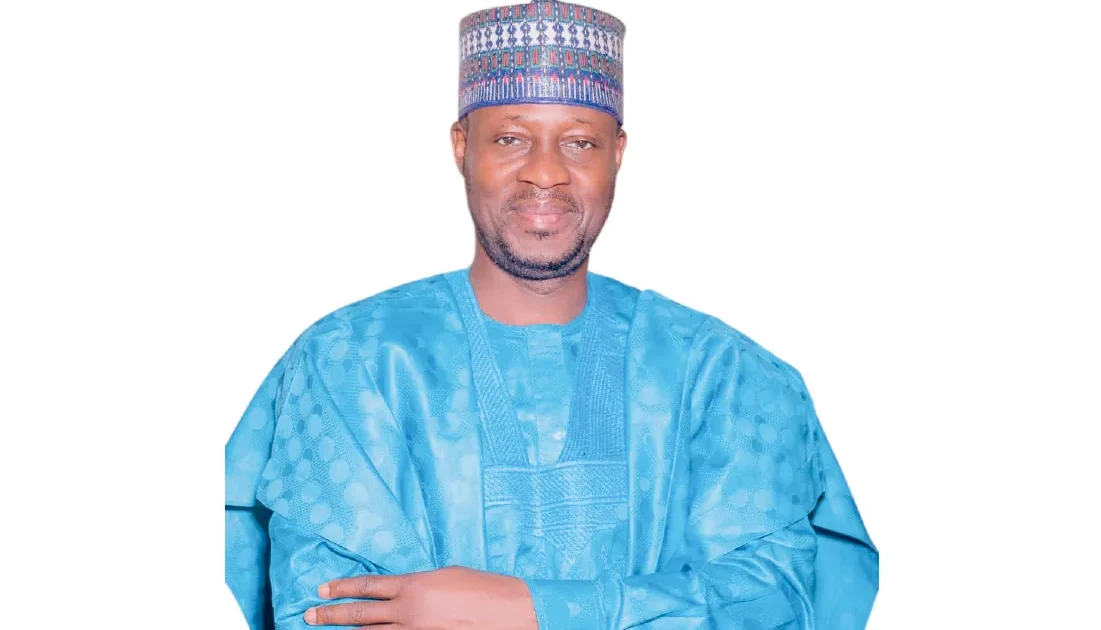
The governorship candidate of the Nigeria Democratic Congress in Kwara State, Prof. Abdulmumin Ajia, spoke with DARE AKOGUN about how the NDC plans to defeat the ruling All Progressives Congress and the Peoples Democratic Party in the 2027 election.
Ajia said, "I previously sought the governorship but did not proceed through the entire election. At the time, the Ò Tó Gẹ́ movement had become a powerful demand for change, and I accepted that opposition votes should not be unnecessarily divided. That was not an abandonment of public service, but a decision based on the political circumstances of that moment."
He added, "What has changed is that I am better prepared, more experienced and supported by a more formidable statewide infrastructure. I have spent the intervening years building institutions, teaching, managing organisations, creating educational opportunities and studying how government can deliver better results."
Ajia believes that Kwara has also changed. He noted that the expectations created by Ò Tó Gẹ́ have not been fully met, economic hardship has deepened, and many citizens no longer believe the choice must remain between APC and PDP.
He stated, "In 2027, I am not entering merely to make a statement. I am running to win and to govern."
Ajia pointed out that political parties may be new, but the problems, principles and people behind them are not. He said, "Kwara has experienced both APC and PDP. Citizens should judge every candidate by character, competence, record and programme, not merely by the age of the party."
The NDC aims to offer Kwara people a chance to build something different from the quarrels and failed habits of established parties. Ajia has nearly three decades of experience across education, business management, organisational leadership, entrepreneurship and public policy. He explained, "More importantly, we have developed the Forward Kwara Agenda with clear commitments on security, jobs, agriculture, education, healthcare, infrastructure and accountable government. We are asking for trust, but not blind trust. We are offering measurable commitments by which Kwarans can hold us accountable."
He added that they are building the NDC across the 16 local government areas and 193 wards through party executives, candidates, community organisers, volunteers, professional groups, women, young people and supporters of the Forward Kwara movement.
Ajia said, "We are not pretending that our structure is identical to parties that have controlled public resources for many years. We are building a people-based structure anchored in communities, polling units and credible local relationships."
He also mentioned that their campaign is funded through his personal contributions and lawful donations from friends, supporters and citizens who believe in the Forward Kwara Agenda. He made it clear, "We will not finance the campaign by promising away public contracts or mortgaging the state to political investors."
Ajia explained their strategy has five parts: present a credible candidate with a serious programme; build ward and polling unit organisation supported by reliable voter data and trained agents; mobilise citizens dissatisfied with APC but unwilling to return to PDP; build a broad coalition of young people, workers, farmers, traders, professionals and women; and protect every lawful vote through trained polling agents, documentation, legal preparation and real-time collation.
He acknowledged that APC has incumbency and PDP has an established network. Ajia said, "We have the opportunity to unite Kwarans who want something better than a choice between the past and the present."
Ajia's doors are open to individuals, civic groups and political organisations that genuinely share their commitment to moving Kwara forward. He stated, "We are prepared to cooperate and build a broad opposition coalition."
But he made it clear that the NDC will not merge with another political party. Ajia said, "We will retain our identity, principles and candidates. Cooperation must be based on the interests of Kwara people, not merely the distribution of positions among politicians."
He believes Ò Tó Gẹ́ was a legitimate public demand to end political domination and make government accountable to the people. But he warned that removing one political structure does not automatically create democracy.
Ajia expressed concern that Kwara may have replaced one political system with excessive concentration of power around the governor. He said, "When party institutions, succession decisions, public appointments and government access depend too heavily on one individual, a new form of godfatherism emerges."

He insists the solution is not another personality cult. Ajia said, "Forward Kwara will build institutions, encourage an independent legislature, empower local governments, ensure transparent appointments and competitive procurement, and promote meaningful citizen participation."
He emphasized, "Kwara must belong to its people, not to any political machine, sitting governor or future governor, including me."
Ajia mentioned that the Ilorin Masterplan must not justify concentrating development only in the capital. He said, "Every local government area should have a defined economic role, infrastructure plan and measurable service standards."
He plans to develop urban extensions around the 16 local government headquarters based on their population and economic potential. Ajia said they will establish production corridors connecting farms, processing centres, markets and transport routes, rehabilitate feeder roads and bridges, and expand rural water, primary healthcare, schools, broadband and decentralised electricity.
Additionally, Ajia said they will create Community Matching Infrastructure Funds, allowing communities to identify and monitor priority projects. He said, "We will publish ward-by-ward project locations, budgets, contractors and completion status."
He acknowledged that it would be unfair to claim that nothing has been done. Ajia said, "Some roads have been built and some renovated. But the questions are: Where are the projects? How much did they cost? Were they completed to specification? Are they being maintained, and have they improved the lives of the intended beneficiaries?"
He pointed out that a renovated classroom is valuable, but it is not enough if children cannot read at the expected grade level, teachers are unsupported or the school lacks water and toilets. He added, "A paved road is useful, but its economic impact is limited if feeder roads connecting farms and markets remain impassable."
Ajia would give the current administration five out of ten. He said, "That recognises some visible work but also reflects the gap between available resources and the results experienced by ordinary people. It deserves credit for the construction and rehabilitation of some roads, renovation and expansion of some public facilities, including schools, and greater attention to the physical appearance of parts of Ilorin and other locations."
However, he believes it has fallen short in converting government spending into broad-based jobs, productivity and household economic security. Ajia said, "Development also remains uneven, with many rural communities lacking dependable roads, water, healthcare, electricity and security."
He believes government should be judged not only by what it commissions but by whether people are safer, children are learning, businesses are growing and families can afford necessities.
Ajia announced that Forward Kwara will introduce a public Delivery Compact. He said, "Every major project will have a published cost, contractor, location, timeline and measurable outcome. We will distinguish between projects announced, those under construction, and those completed and independently verified."
He urged Kwara people, saying, "You are not powerless. Politicians depend on your frustration, your absence from polling units, and your willingness to exchange four years of your future for a small amount of money. The money offered for your vote cannot pay your rent, create a job, fund your education or provide reliable electricity. Once your vote is sold, your bargaining power is also sold."
Ajia is asking young people in Kwara to register, collect their voter cards, organise within their communities, interrogate every candidate, and vote. He said, "Forward Kwara offers skills, enterprise support, agricultural value-chain jobs, digital opportunities, sports development and meaningful participation in government."
He concluded, "Do not merely demand space at the table. Use your numbers to decide who sits at the table."
Drop your comment
No comments yet — be the first to drop the gist 👇