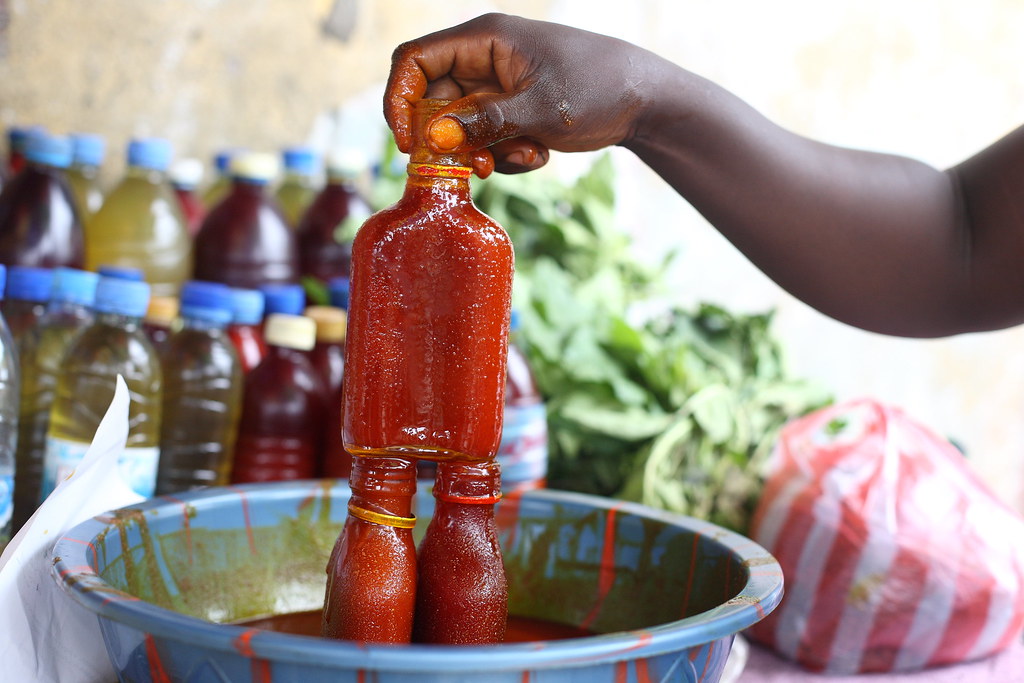
The Lagos State Consumer Protection Agency (LASCOPA) has warned residents about new ways of mixing palm oil with other substances. They are urging people to be careful when buying palm oil in markets.
The agency also said it will increase market checks across the state. This is to protect consumers from unsafe and bad products.
The warning came after a talk at the 2026 Lagos State Food Safety Conference and Exhibition. Nurah Oseni, a senior lecturer at Auchi Polytechnic, gave a presentation on the topic.
Ms Oseni spoke about ‘Palm Oil Adulteration: Emerging Risks, Detection Strategies and Regulatory Control.’ She highlighted that palm oil is easy to adulterate. She mentioned that new methods make it hard to spot fake products through simple checks.
"Palm oil is particularly vulnerable to adulteration because of its high trading volume, consumers’ association of deep-red colour with quality, price differences, informal market practices, and challenges in detecting sophisticated adulterants," she said.
Ms Oseni pointed out that using harmful dyes like Sudan and Azo to change the color of palm oil is a new risk. This warning is part of larger worries about food safety in Nigeria. The National Agency for Food and Drug Administration and Control has also raised alarms about mixing palm oil with dangerous substances like azo dyes. They also worry about keeping track of unbranded food sold in open markets.
She mentioned that mixing palm oil with recycled oils, like used cooking oil, is also a problem. Some mixtures contain several adulterants meant to trick basic quality checks.
Ms Oseni also warned about fake product labels and batch records. She said these could make it hard to trace products in the supply chain.


She advised consumers to visually check palm oil before buying, but warned that looks alone cannot confirm if a product is fake. She explained that palm oil might separate into layers, with the bottom layer often looking orange to red-yellow instead of deep red.
However, she stressed that just looking at the color or appearance of palm oil is not enough to determine its safety. To help find adulterated palm oil, the lecturer suggested a step-by-step system. This includes risk-based screening, quick tests, and lab analysis.
She said this system should also have proper sampling and chain-of-custody procedures. Ms Oseni proposed a five-step framework for Lagos: “Risk Map, Sample, Screen, Confirm and Act.”
She stated that this framework should have an intelligence database on adulteration. It should also clearly define roles for processors, traders, labs, regulators, researchers, and consumers.
Afolabi Solebo, the General Manager and CEO of LASCOPA, said the agency is committed to protecting consumers from unsafe and low-quality products. He urged Lagos residents to report any suspected fake palm oil and dishonest traders through the agency’s official channels.
"We urge Lagosians to shine their eyes and report suspected adulterated palm oil and unscrupulous traders through the Agency’s official channels," he said.
He added that market checks will be stepped up across the state.



Drop your comment
No comments yet — be the first to drop the gist 👇