
The Lagos State Government has told people living in low-lying and flood-prone areas to move to higher ground. This comes after the Nigerian Hydrological Services Agency issued a new seven-day flood alert.
The government said this step is important to avoid loss of lives and property.
Tokunbo Wahab, the Commissioner for the Environment and Water Resources, shared this news in a statement on Monday. The statement was released by Kunle Adeshina, the ministry’s Director of Public Affairs.
The alert affects Lagos and 14 other states. In Lagos, vulnerable areas include Eti-Osa, Lagos Island, Oke-Ira Nla in Ajah, Kirikiri, Ilaje Waterfront Jetty, and Jetty Terminal B.
Wahab said the government is taking the NiHSA flood warning very seriously. They are monitoring the areas listed and other riverine, low-lying, and flood-prone communities.
He urged residents to act quickly and not wait for floodwaters to rise. He emphasized that early preparation and moving temporarily could save lives and property.
"We are urging Lagosians, particularly those living in flood-prone and low-lying areas, not to take this warning lightly. When the signs point to danger, the safest decision is to move early. No property is worth risking a life," Wahab said.
The commissioner advised residents in flood-prone areas to move to higher ground and stay there until the heavy rains pass.
He also warned communities along the Ogun River and other big waterways to be extra careful. Rainfall and rising water levels in connected rivers can affect communities downstream in Lagos.
Wahab mentioned places like Isheri North, Kara, Itowolo, Ajegunle, Majidun, Ogolonto, parts of Agboyi, and other areas downstream of Isheri Olofin should stay alert between September 19 and 25.
He told residents living near rivers, lagoons, wetlands, and drainage channels to keep an eye on official flood forecasts. They should be ready to move temporarily when floods are about to happen.
According to him, the NiHSA report warned that rising river levels could lead to flooding in vulnerable areas. This could also affect schools, healthcare centers, markets, farms, and places of worship.

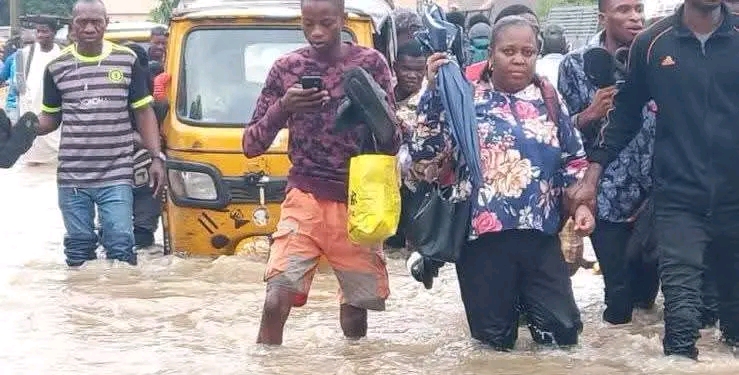

Wahab called on local governments, emergency management agencies, community leaders, and residents to set up early-warning and response plans.
He encouraged them to move people, livestock, and valuable items to safer places when needed.
The commissioner said the state government will keep monitoring river levels, rainfall patterns, and other water-related issues with federal agencies.
He added that regular cleaning and checking of drainage systems across the state will continue.
Wahab asked residents to support the government's flood prevention efforts by not dumping waste in drains, canals, and waterways. Blocked drainage can worsen flooding and delay water from receding.
He also warned against walking or driving through flooded roads and fast-moving water. Those in vulnerable areas should plan for temporary relocation when official warnings are given.
The commissioner stressed that protecting lives and property is the government's top priority. He urged residents to treat flood warnings as important safety information that requires immediate action.
He assured Lagos residents that the government will keep working to reduce flood risks and provide updates as the situation changes.
PUNCH Online reported on Monday that over 8,000 communities and 4,500 schools in 15 states are at risk of flooding from September 19 to 25. This was based on the latest National Flood Advisory from the NHSA.
The agency warned that rising river levels could cause flooding in vulnerable areas, affecting schools, healthcare facilities, markets, religious buildings, and farms.
The agency listed states likely to be affected, including Imo, Cross River, Delta, Ebonyi, Benue, Anambra, Akwa Ibom, Edo, Enugu, Bayelsa, Kogi, Abia, Taraba, Rivers, and Lagos.



Drop your comment
No comments yet — be the first to drop the gist 👇